
Exterior Painting Guide 2026: Hire a Pro, Avoid Hidden Costs, and Get Transparent Quotes
Your home’s curb‑appeal depends on a flawless paint job—but the hiring process often feels like a maze of phone tag, vague estimates, and expensive lead‑gen…
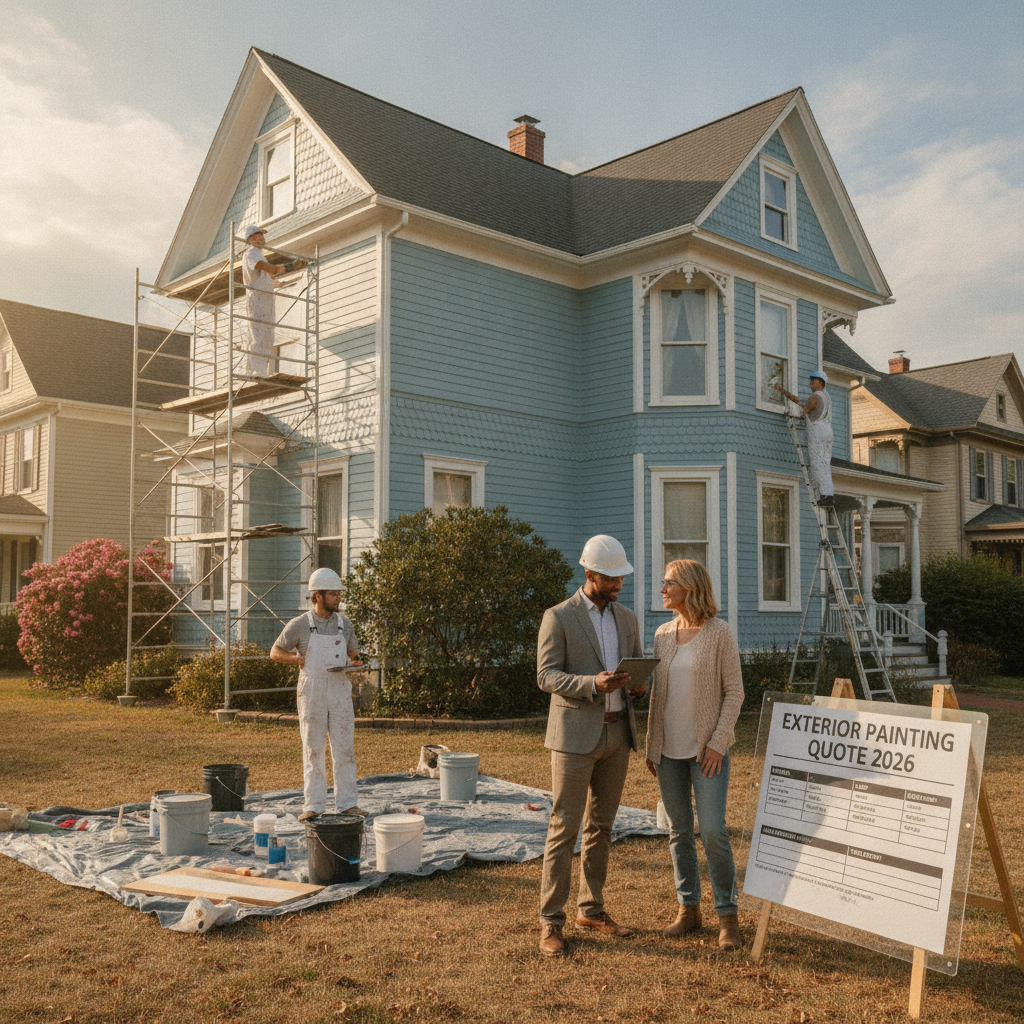
Your home’s curb‑appeal depends on a flawless paint job—but the hiring process often feels like a maze of phone tag, vague estimates, and expensive lead‑gen platforms. This guide shows you exactly what to look for, how to protect your budget, and why an AI‑native workflow like PLMBR is reshaping the market.
Introduction
It’s a sunny Saturday in Boston. You notice the once‑bright white siding is fading, the trim is peeling, and the curb appeal of your townhouse is slipping. You grab your phone and start searching for “exterior painter near me.” Within seconds you’re flooded with ads, each promising “instant quotes” or “guaranteed satisfaction.”
But the reality quickly turns sour:
- Phone tag – You leave voicemails, get callbacks at odd hours, and still can’t pin down a firm price.
- Vague estimates – Most quotes come back as “$X‑plus‑tax,” with no breakdown of prep work, paint type, or labor hours.
- Lead‑fee traps – Platforms such as Angi or Thumbtack charge $100‑$200 per lead, yet only <10 % of those leads convert into jobs (ResultCalls).
The average exterior paint job costs $4,500‑$6,000 nationally (PaintViz), and the hidden fees from low‑quality lead sources can add 15‑30 % to that total.
If you’ve ever felt stuck in this loop, you’re not alone. Homeowners in New York, Philadelphia, and across the Northeast are demanding a better, more transparent way to hire painters. The answer is an AI‑driven workflow that eliminates phone tag, replaces vague estimates with line‑item booking packets, and secures payment in escrow until the job is verified.
Enter PLMBR, the AI‑native home services workflow and payments platform that puts the homeowner in control and gives painters qualified jobs without the per‑lead fee nightmare.
What Homeowners Need to Know About Exterior Painting
1. The Full Scope of an Exterior Paint Job
| Phase | Typical Tasks | Why It Matters |
|---|---|---|
| Inspection & Surface Prep | Power washing, scraping loose paint, sanding, caulking cracks, lead‑paint testing (if built before 1978) | Proper prep is the single biggest factor in paint longevity; skipping it leads to premature peeling and extra re‑work. |
| Masking & Protection | Covering windows, doors, landscaping, and HVAC units | Prevents paint overspray and protects delicate features. |
| Priming | Applying primer to bare wood, metal, or repaired areas | Ensures adhesion, reduces the number of top‑coat layers needed, and meets VOC compliance in many states. |
| Top‑Coat Application | Two to three coats of low‑VOC exterior paint, typically acrylic latex | Determines final color, durability, and resistance to UV/weather. |
| Clean‑up & Final Walk‑Through | Removing masking, disposing of waste, touch‑ups, homeowner sign‑off | Guarantees the job meets the agreed scope before payment release. |
Scroll to see all columns →
2. Seasonal Timing and Weather Constraints
- Optimal seasons – Late spring to early fall (April‑October) when humidity is moderate and temperatures stay above 50 °F.
- Weather windows – Most contractors need 2–3 consecutive dry days for each coat; rain or high humidity can add 1‑2 days per coat.
3. Paint Types and VOC Regulations
- Low‑VOC paints (≤ 50 g/L) are now mandatory in New York, Massachusetts, and many other states. The EPA’s VOC rules have tightened by 15‑20 % between 2024‑2026, making compliance a cost factor you’ll see on the quote.
- Premium finishes (e.g., elastomeric, silicone‑based) cost 20‑35 % more but offer superior crack‑bridging and water resistance for historic homes.
Cost / Risk / Hiring Reality
Understanding the true cost of an exterior paint job helps you compare quotes objectively. Below is a typical cost breakdown for a 2,500 sq ft two‑story home in the Northeast.
| Item | Average Cost (USD) | Range (Low‑End → High‑End) | Risk if Not Included |
|---|---|---|---|
| Surface Prep (Power wash, scraping, sanding) | $1,200 | $800‑$1,600 | Poor adhesion, early peeling |
| Masking & Protection | $300 | $200‑$400 | Paint overspray, damage to landscaping |
| Primer | $600 | $400‑$800 | Staining, reduced durability |
| Top‑Coat Paint (Low‑VOC, 2‑coats) | $1,800 | $1,400‑$2,400 | Color inconsistency, early fading |
| Labor (hours × $85/hr) | $2,200 | $1,800‑$2,600 | Incomplete work, overtime charges |
| Compliance Fees (VOC, lead‑paint testing) | $250 | $150‑$350 | Legal penalties, insurance issues |
| Progressive Billing & Escrow Fees | $100 | $80‑$150 | Payment disputes, cash‑flow gaps |
| Total | $7,550 | $6,150‑$9,100 | — |
Scroll to see all columns →
Key takeaways
- Prep work alone can be 15‑20 % of the total price. A low‑ball quote that omits it is a red flag.
- Escrow and progressive billing (milestone payments) protect both parties and usually add less than 2 % to the overall cost.
How to Vet Providers Without Getting Burned
- Check Licensing & Insurance – Verify a valid contractor’s license on your state’s licensing board (e.g., NY State Department of Labor – Home Improvement Contractors). Ensure liability insurance and workers’ comp are up to date.
- Review Compliance History – Look for EPA lead‑paint certifications or VOC compliance statements. In Massachusetts, the MassDEP requires proof of low‑VOC paint usage for residential projects.
- Ask for Structured Booking Packets – A credible painter will provide a line‑item quote that lists prep, primer, paint, labor, and any permits. Vague “$X‑plus‑tax” quotes are a sign of the old lead‑gen model.
- Validate References & Portfolio – Request at least three recent residential projects with before/after photos. A reputable contractor should have a digital portfolio or a link to a third‑party review site (e.g., BBB, Angie's List).
- Confirm Timeline & Milestones – A professional workflow includes a clear schedule with milestones (e.g., “Prep complete by Day 3, first coat by Day 5”).
Pro‑Tip: If a contractor can’t explain how they break down the cost or refuses to provide a written packet, walk away.
Where The Old Workflow Breaks
| Pain Point | Traditional Process | Consequence |
|---|---|---|
| Phone Tag | Homeowner calls multiple listings, leaves voicemails, chases callbacks. | Delays hiring, creates frustration, leads to missed seasonal windows. |
| Vague Estimates | “$5,000 plus tax” with no scope detail. | Scope creep, surprise bills, disputes after work is done. |
| Lead‑Fee Traps | Platforms charge $100‑$200 per lead (Angi, Thumbtack). | Contractors inflate prices to cover lead cost, hurting homeowners. |
| Dead Leads | Shared leads have <10 % conversion, yet cost $30‑$60 each (ResultCalls). | Contractors waste time on unqualified inquiries. |
| Payment Uncertainty | Up‑front cash or post‑job check; no escrow. | Homeowners risk incomplete work; contractors risk non‑payment. |
| Compliance Blind Spots | No built‑in check for VOC limits or lead‑paint testing. | Potential fines, insurance issues, and liability. |
Scroll to see all columns →
These failures stem from a lead‑gen‑first mindset where the platform’s revenue depends on feeding as many cheap leads as possible, not on the quality or completion of the job.
How PLMBR Changes This Workflow
1. AI‑Driven Conversational Intake
- Homeowners describe the problem in plain English, attach photos, and the AI automatically identifies the trade, location, and urgency.
- Smart follow‑up questions (e.g., “Is your home built before 1978?”) surface only when they improve match quality, eliminating endless back‑and‑forth.
2. Semantic Matching & Zero‑Dead‑Leads
- Using vector embeddings, PLMBR matches you with qualified, vetted painters within minutes—no shared leads, no wasted callbacks.
3. Booking Packets – Structured, Line‑Item Quotes
- Each painter generates a booking packet inside the chat thread (see
messages_packet_card.png). The packet lists prep, primer, paint type, labor hours, compliance fees, and a payment schedule. - Homeowners can compare packets side‑by‑side (
compare_packets.png) and instantly see where costs differ.
4. In‑Context Messaging & Agent Coordination
- All communication lives in a single thread. The Provider Agent drafts replies for contractors, while a Seeker AI Agent (Premium) can outreach to multiple painters simultaneously and surface status updates (
seeker_agent_outreach.png).
5. Escrow‑Backed Progressive Billing
- Funds are authorized via Stripe and held in escrow until each milestone is marked “complete.” Homeowners release payment step‑by‑step, reducing risk for both sides.
6. Compliance Management Built‑In
- Providers upload insurance, workers comp, and licensing documents. The platform tracks expiration dates and prompts for VOC‑compliant paint selections automatically.
7. Zero Lead Fees – Profit‑First for Contractors
- Because PLMBR charges a transaction fee only on completed jobs, painters keep 100 % of the quote amount. This eliminates the need to inflate prices to cover lead costs, translating to lower totals for homeowners.
In short, PLMBR replaces the broken “lead‑gen pipeline” with an end‑to‑end workflow: AI intake → qualified match → structured packet → escrow → milestone billing → dispute resolution—all inside a single, transparent interface.
Questions to Ask Before Hiring
- What is included in your prep work?
- Which paint brand and VOC rating will you use?
- Can you provide a line‑item booking packet? (Ask to see the packet in the PLMBR platform for consistency.)
- How do you handle lead‑paint testing and disposal?
- What is your payment schedule and do you use escrow?
- Do you have current liability insurance and workers comp?
- Can you share three recent residential projects with before/after photos?
- What is the expected timeline, including weather buffers?
If a provider answers confidently and can point you to their PLMBR profile (provider_public_profile.png), you’re likely dealing with a contractor who values transparency and efficiency.
Conclusion
Exterior painting shouldn’t be a gamble of phone tag, surprise fees, and unreliable leads. By understanding the full scope, real costs, and critical compliance steps, you can protect your budget and ensure a finish that lasts for years.
The old lead‑gen model—exemplified by platforms that charge $100‑$200 per dead lead and deliver vague “$X‑plus‑tax” quotes—is fundamentally broken. PLMBR flips the script with an AI‑native workflow that delivers qualified painters, structured booking packets, escrow‑backed milestone billing, and zero lead fees.
Ready to experience a frictionless exterior paint project?
- Visit the PLMBR homepage to learn more about the platform.
- Find Exterior Painting pros on PLMBR for vetted, AI‑matched contractors in New York, Boston, Philadelphia, and beyond.
- Compare quotes on PLMBR and see the line‑item breakdown side‑by‑side.
Your home’s next chapter deserves a fresh, flawless coat—and a hiring process that finally works for you.
External Resources
- EPA – Volatile Organic Compounds (VOC) Regulations
- U.S. Consumer Product Safety Commission – Lead Paint Regulations
- National Association of the Remodeling Industry (NARI) – Painting Best Practices
- Better Business Bureau – Home Services Reviews
Happy painting!