
How to Hire a House‑Cleaning Pro in 2024: Pricing, Pitfalls, and Why Pay‑Per‑Lead Is Killing the Industry
Your home deserves spotless results — and a hiring process that doesn’t feel like a nightmare.
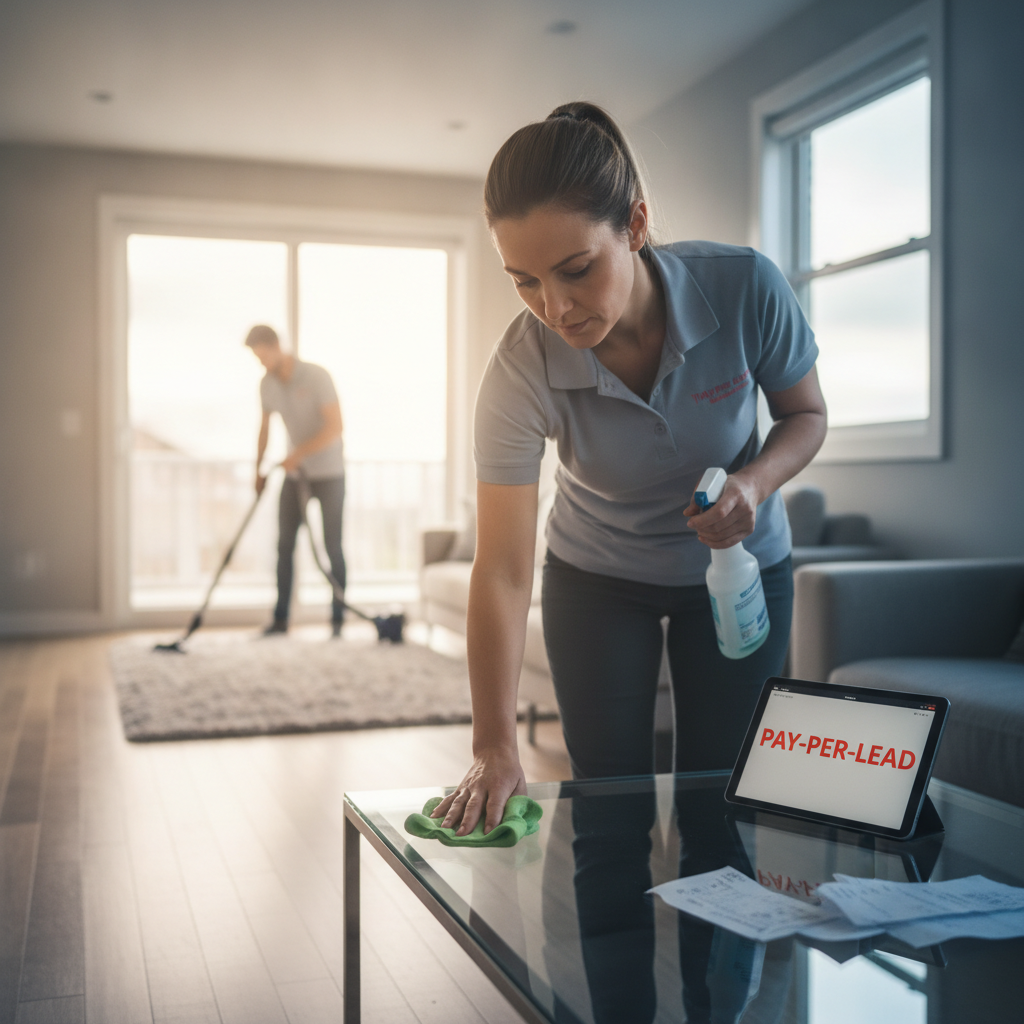
Your home deserves spotless results — and a hiring process that doesn’t feel like a nightmare.
Introduction
You’re scrolling through reviews, sending a dozen emails, and still stuck in endless phone tag. When the cleaner finally shows up, the price on the invoice looks nothing like the “$‑‑‑” estimate you were given. You’re not alone. A 2024 consumer survey found that 30 % of homeowners cite “unclear scope” and “price surprise” as deal‑breakers when hiring a cleaning service.
The root cause? The industry is still built on an outdated pay‑per‑lead model that rewards quantity over quality. Platforms such as Thumbtack and Angi charge cleaners $10‑$100 + per lead, yet most leads never convert into jobs. Providers end up inflating prices to cover the fee, while homeowners get vague quotes and no guarantee of work.
At the same time, the market is booming—80 % of U.S. families expect to use a cleaning service by 2024 and the residential cleaning market is projected to exceed $468 B by 2027. Yet providers face 75 %‑200 % annual staff turnover and razor‑thin margins, leaving them stuck in a race to the bottom.
Enter PLMBR, the AI‑native home services workflow and payments platform that eliminates dead‑lead fees, delivers structured, line‑item quotes, and holds payments in escrow until the job is done. Below is a premium, step‑by‑step guide that shows you how to hire a house‑cleaning pro the right way—and why PLMBR’s workflow is the game‑changer the industry desperately needs.
What Homeowners Need To Know About House Cleaning
- Service scopes vary wildly. A “standard cleaning” can mean anything from vacuuming two rooms to scrubbing every surface in a 2,500 sq ft home.
- Pricing isn’t uniform. Rates depend on city, home size, frequency, and the level of deep‑cleaning required (e.g., oven, carpet, windows).
- Turnover is high. Cleaning crews often change weekly, which can affect consistency and reliability.
- Payment risk is real. Traditional platforms rarely hold funds; you may pay upfront and still receive sub‑par work.
Understanding these fundamentals helps you ask the right questions and spot red flags before a contract is signed.
Cost / Risk / Hiring Reality
| Item | Typical Range (2024) | Hidden Risks | How PLMBR Addresses It |
|---|---|---|---|
| Hourly rate | $25‑$45 per hour (varies by city) | Overtime charges, unclear minimums | Structured booking packets list every hour and any minimums up front. |
| Deep‑cleaning (2‑hr home) | $120‑$250 total | Surprise add‑ons (e.g., “extra windows”) | Line‑item pricing makes every task visible before you approve. |
| Lead‑fee (competitor platforms) | $10‑$100+ per lead (Thumbtack, Angi) | No guarantee of work; cost passed to you via higher quotes | Zero lead fees for providers, which translates to more competitive pricing for you. |
| Escrow / payment hold | Rare on traditional sites; often pay‑up‑front | Cash‑flow risk, difficulty disputing | PLMBR uses Stripe‑powered escrow; funds released only after you confirm completion. |
| Dispute resolution | Inconsistent, often phone‑based | Long wait times, unclear outcome | AI‑mediated dispute system provides evidence packs and fast recommendations. |
Scroll to see all columns →
Pro‑Tip: When a quote looks too low, ask for a detailed breakdown. Hidden fees are the most common source of “price surprise.”
How To Vet Providers Without Getting Burned
- Check licensing and insurance. Even though most states don’t require a license for residential cleaning, reputable firms carry liability insurance and workers’ comp. Verify expiration dates—PLMBR automatically tracks them for you.
- Read verified reviews, not just star ratings. Look for specific mentions of punctuality, thoroughness, and how the provider handled any issues.
- Ask for a structured quote. A professional packet should include:
- Scope of work (room‑by‑room checklist)
- Line‑item pricing (hourly, flat‑rate, optional add‑ons)
- Estimated duration and number of cleaners
- Billing schedule (up‑front, milestone, or post‑service)
- Confirm availability via calendar sync. Providers who integrate Google Calendar or Outlook are less likely to double‑book.
- Test communication speed. A quick response to your initial inquiry usually predicts reliable on‑site service.
If a provider can’t supply a detailed packet or hesitates to share insurance details, it’s a red flag—especially on platforms that charge per lead and have no incentive to be transparent.
Where The Old Workflow Breaks
| Broken Step | Symptoms for Homeowners | Why It Happens |
|---|---|---|
| Intake | Long phone calls, repeated questions, photo uploads lost | Platforms rely on manual data entry; no AI to extract key details. |
| Matching | You’re shown dozens of “top‑rated” cleaners, many of whom are out of town or unavailable | Keyword‑based search, not semantic matching. |
| Quoting | “$‑‑‑” estimate, vague scope, “we’ll call you back with a price” | Lead‑gen sites treat the quote as a lead‑capture tool, not a contract. |
| Outreach | You chase providers, sending follow‑up texts and emails | No AI agent to coordinate multi‑provider outreach. |
| Payment | Up‑front cash, no escrow, surprise invoices | Traditional platforms lack integrated billing. |
| Dispute | You’re stuck on the phone with a broker, no clear path to resolution | No in‑chat dispute workflow. |
Scroll to see all columns →
These friction points not only waste time but also drive up costs—cleaners add a “communication premium” to cover the hassle, and homeowners end up paying more for less certainty.
How PLMBR Changes This Workflow
1. Conversational AI Intake
- What it does: You describe the cleaning issue in plain English, attach photos, and the AI instantly identifies the trade, location, urgency, and any missing details.
- Benefit: No more endless back‑and‑forth; the system asks only the questions that truly improve match quality.
2. Semantic Search & Matching
- What it does: Using vector embeddings, PLMBR finds the best‑fit cleaners based on distance, availability, ratings, and trust signals—not just keyword matches.
- Benefit: You see only providers who can actually take the job, cutting the list from dozens to a handful of qualified matches.
3. AI Agent Outreach (Premium)
- What it does: A personal AI agent contacts multiple cleaners simultaneously, tracks each provider’s response, and surfaces only the actionable items for you.
- Benefit: Zero phone tag. The agent flags when a provider asks a clarifying question, so you never miss a detail.
4. Booking Packet Comparison
- What it does: Cleaners generate structured, line‑item quotes (the “booking packet”) directly from the conversation context. You can compare packets side‑by‑side, seeing exact scope, pricing, and terms.
- Benefit: Transparent pricing eliminates “price surprise” and gives you bargaining power.
5. In‑Context Messaging & Escrow Payments
- What it does: All communication, packet review, billing requests, and dispute threads live inside a single chat thread. Payments are held in Stripe‑backed escrow and released only after you confirm the job is complete.
- Benefit: One unified workspace, no separate invoicing tools, and a safety net that protects both parties.
6. Progressive Billing for Larger Jobs
- What it does: For multi‑day deep cleans or recurring contracts, you can set milestone‑based payments (e.g., 30 % upfront, 70 % on completion).
- Benefit: Aligns incentives—cleaners get paid as they deliver, and you retain control over funds until you’re satisfied.
7. Zero Lead Fees for Providers
- What it does: Cleaners only pay a small platform fee on completed jobs; there’s no charge for receiving leads.
- Benefit: Providers can quote more competitively, and you benefit from lower overall pricing.
Together, these features transform the chaotic, fee‑laden funnel of traditional lead‑gen sites into a streamlined, AI‑driven workflow that puts you—the homeowner—in the driver’s seat.
You can see the platform in action on the PLMBR homepage, explore house‑cleaning pros on PLMBR, and compare quotes side‑by‑side.
Questions To Ask Before Hiring
- Can you provide a detailed booking packet? Look for line‑item scope, pricing, and terms.
- What insurance and licensing do you carry? Request copies and check expiration dates.
- How do you handle payments? Confirm that funds will be held in escrow until completion.
- Do you use a calendar integration? This ensures real‑time availability and reduces double‑booking.
- What is your policy for missed appointments or unsatisfactory work? A clear dispute resolution process (AI‑mediated or otherwise) is a must.
- Do you offer progressive billing for larger jobs? This indicates flexibility and professionalism.
If a provider can answer these confidently, you’re likely dealing with a business that embraces modern workflow standards—exactly the kind of partner PLMBR’s platform is built to support.
Conclusion
Hiring a house‑cleaning professional in 2024 doesn’t have to be a gamble. By understanding pricing realities, vetting providers rigorously, and recognizing where the old pay‑per‑lead workflow fails, you can protect your budget and your peace of mind.
PLMBR eliminates the biggest pain points: vague estimates, endless phone tag, hidden fees, and insecure payments. Its AI‑native intake, semantic matching, structured booking packets, and escrow‑backed billing give you transparent, reliable service—without the costly lead fees that cripple both providers and homeowners.
Ready to experience a cleaner home and a cleaner hiring process? Visit the PLMBR blog for more guides, explore house‑cleaning professionals on PLMBR, and start comparing quotes today.
References
- Mero – “Top 5 challenges for janitorial companies” – insights on turnover and margins.
https://www.mero.co/blog/no-bs-guide-top-5-challenges-for-janitorial-companies-we-learned-after-700-conversations-and-how-to-solve-them - TimeConnect – “Challenges Small Cleaning Businesses Face and How to Overcome Them” – market size and adoption data.
https://timeconnect.net/blog/challenges-small-cleaning-businesses-face-and-how-to-overcome-them - ClicksGeek – “Lead Generation for Cleaning Companies” – lead‑fee pricing ranges.
https://clicksgeek.com/lead-generation-for-cleaning-companies - Federal Trade Commission – Hiring a House‑Cleaning Service – consumer‑protection guidelines.
https://www.consumer.ftc.gov/articles/0209-hiring-a-house-cleaning-service - Better Business Bureau – Angi Trustpilot Rating – competitor complaint data.
https://www.trustpilot.com/review/angi.com
Take control of your home’s cleanliness with a workflow built for transparency, safety, and real value.