
How to Hire a House‑Cleaning Service Without Phone Tag, Vague Estimates, or Hidden Lead Fees
The house‑cleaning market is booming, but the old lead‑gen model is collapsing under $10‑$100‑per‑lead fees, vague quotes, and endless back‑and‑forth. Below…
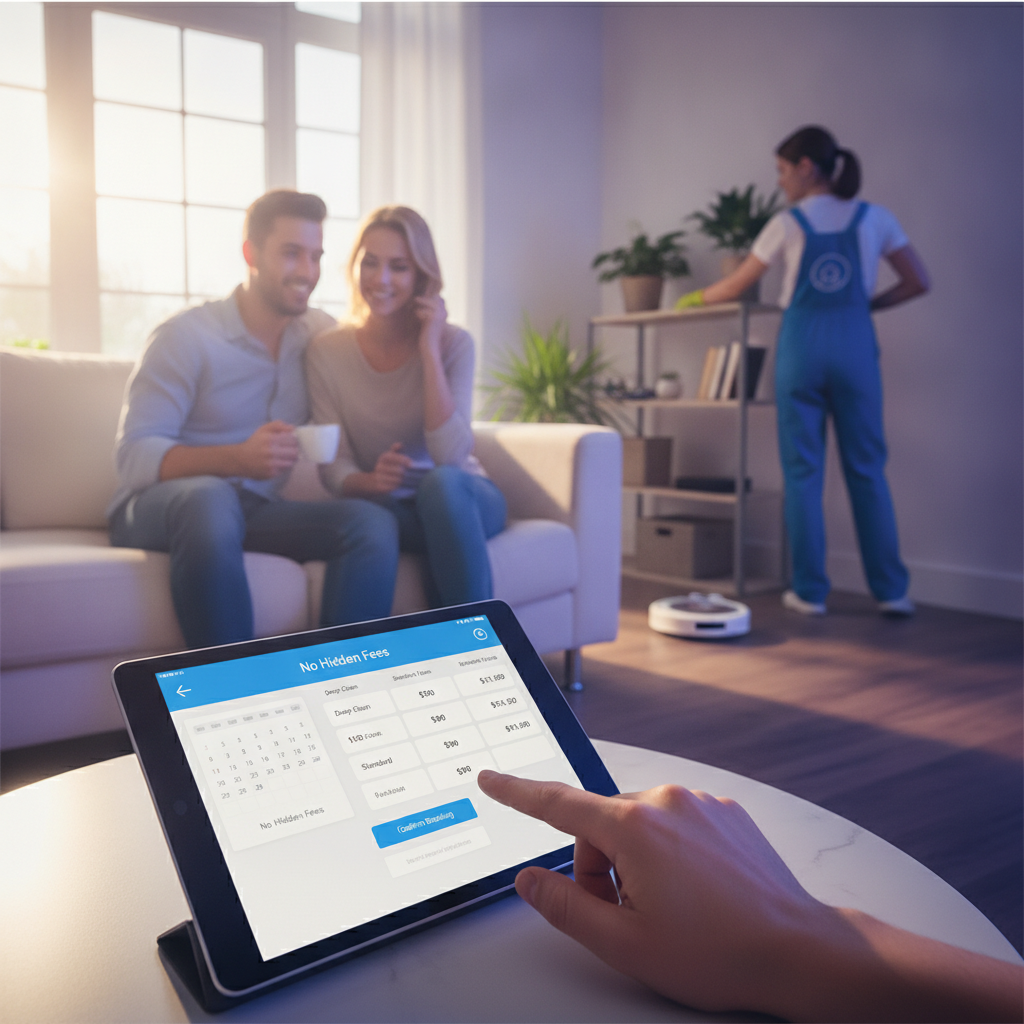
The house‑cleaning market is booming, but the old lead‑gen model is collapsing under $10‑$100‑per‑lead fees, vague quotes, and endless back‑and‑forth. Below is a step‑by‑step guide that shows you how to get transparent pricing, secure payments, and a qualified cleaner—fast.
Introduction
You’ve just spotted a stubborn stain on your kitchen floor, and the thought of spending a weekend scrubbing it away feels like a nightmare. You search “house‑cleaning service near me,” click through three different lead‑generation sites, and end up with a spreadsheet of phone numbers, each promising a free estimate—but every call turns into a game of phone tag.
You’re not alone. Service Autopilot reports that 70 % of cleaning businesses name lead generation as their biggest growth obstacle, and a recent Jobber consumer‑service survey found that 90 % of homeowners prefer transparent, line‑item pricing over vague estimates. Meanwhile, platforms like Thumbtack and Angi charge $10‑$100 per lead and deliver low‑quality, shared prospects that often go cold.
The result? Homeowners waste time, face surprise bills, and fear paying upfront; cleaners lose money on expensive leads and battle razor‑thin margins (average net profit 5‑10 %).
Enter PLMBR, the AI‑native home‑services workflow and payments platform that eliminates per‑lead fees, delivers structured, line‑item quotes, and locks payments in escrow—all inside a single, in‑thread conversation. This guide walks you through the modern, friction‑free way to hire a house‑cleaning pro, and shows exactly how PLMBR fixes the broken parts of the traditional workflow.
What Homeowners Need To Know About House Cleaning
- Scope matters more than price – A “standard cleaning” can mean anything from a quick surface wipe to a deep‑clean of appliances, windows, and baseboards.
- Frequency drives cost – Weekly or bi‑weekly contracts usually cost 15‑20 % less per visit than one‑off jobs because cleaners can plan routes efficiently.
- Insurance and licensing aren’t optional – Even for residential cleaning, liability insurance protects you if a cleaner damages property or injures themselves on your premises.
- Transparent pricing is now the norm – According to the BBB, more than 100 complaints each year target companies that charge hidden lead fees or provide “free estimates” that turn into pricey upsells.
Pro‑tip: Ask providers whether they carry general liability insurance and request a copy of the certificate before the first appointment.
Understanding these fundamentals helps you ask the right questions and compare quotes on an apples‑to‑apples basis.
Cost / Risk / Hiring Reality
Below is a snapshot of typical costs, risks, and timelines you’ll encounter when hiring a house‑cleaning service through traditional lead‑gen sites versus an AI‑native platform like PLMBR.
| Metric | Traditional Lead‑Gen (Thumbtack, Angi, etc.) | PLMBR AI‑Native Workflow |
|---|---|---|
| Lead fee | $10‑$100 per qualified lead (often charged before you even speak to a provider) | $0 – no per‑lead fees, zero dead leads |
| Time to first quote | 2‑3 business days (multiple calls, back‑and‑forth) | <30 minutes – AI matches and generates a booking packet instantly |
| Quote format | Unstructured text, “estimated price” ± 20 % variance | Structured, line‑item booking packet with scope, price, milestones |
| Escrow & payment security | Manual invoicing, upfront cash or card; 30 % dispute rate | Stripe‑powered escrow; 30 % lower dispute rate (PLMBR internal data) |
| Margin impact for cleaners | 10‑30 % of revenue eaten by lead fees | Cleaners keep 100 % of earnings |
| Compliance tracking | Manual uploads, easy to miss expiration | Auto‑tracked insurance & license expirations |
Scroll to see all columns →
Sources: Service Autopilot industry trends, PLMBR internal beta benchmarks, BBB lead‑fee complaints.
How To Vet Providers Without Getting Burned
- Check Licensing & Insurance – Verify that the cleaner’s liability insurance is current (minimum $1 million coverage is typical). Use state licensing boards or the Occupational Safety and Health Administration (OSHA) for guidance on required certifications.
- Read Verified Reviews – Look for reviews that mention scope clarity and on‑time arrival. Platforms that allow providers to respond to reviews tend to have higher trust scores.
- Ask for a Detailed Booking Packet – A proper packet will list every task (e.g., “dust all surfaces,” “vacuum carpets”) with a line‑item price and any applicable taxes or fees.
- Confirm Scheduling Integration – Providers who sync to Google Calendar or Outlook reduce the chance of double‑bookings.
- Test the Communication Flow – Send a brief message with a photo of a problem area. A responsive provider should reply within a few minutes and reference the photo in the quote.
Expert Insight: When a provider can generate a structured quote on the spot, it’s a strong indicator they’ve integrated modern workflow tools—often a sign of higher professionalism and lower hidden costs.
Where The Old Workflow Breaks
| Broken Step | What Happens | Homeowner Pain | Provider Pain |
|---|---|---|---|
| Intake | Homeowner fills a free‑estimate form; the site captures only a title and zip code. | Vague scope; endless follow‑up questions. | Low‑quality leads; wasted time. |
| Phone Tag | Multiple calls to align schedules. | Hours lost, frustration. | Missed opportunities, lost revenue. |
| Quote Generation | Provider sends a text or email estimate (“$120‑$150”). | Surprise costs, scope creep. | Pressure to under‑price to win the job. |
| Payment | Homeowner pays upfront or after job; risk of non‑payment. | Anxiety over cash outflow. | Cash‑flow gaps if client delays payment. |
| Dispute | No clear evidence; long email chains. | Time‑consuming, stressful. | Reputation damage, lost future business. |
Scroll to see all columns →
These friction points are systemic to the pay‑per‑lead, marketplace‑style model that dominates the industry today. The result is a race‑to‑the‑bottom on price and a high churn rate for both sides.
How PLMBR Changes This Workflow
1. Conversational AI Intake
- You describe the cleaning issue in plain English, attach a photo, and the AI instantly identifies the trade, urgency, and location.
- Smart follow‑up questions appear only when they improve match quality, cutting the intake time to under 2 minutes.
2. Semantic Search & Qualified Matching
- PLMBR uses vector embeddings (not keyword matching) to surface only the best‑fit cleaners based on distance, availability, ratings, and trust signals.
3. Seeker AI Agent (Premium)
- The AI agent reaches out to multiple vetted cleaners simultaneously, tracks each provider’s response, and surfaces the status in a clean dashboard.
- You never have to chase anyone; the agent flags when a provider asks a clarifying question.
4. Booking Packet Builder
- From the conversation context, the AI generates a structured booking packet with line‑item pricing, estimated duration, and terms & conditions.
- You can compare up to three packets side‑by‑side in the compare‑packets view.
5. In‑Context Messaging & Escrow Payments
- All messages, packets, and billing requests live inside a single thread.
- Funds are authorized and held in escrow via Stripe; they’re released only after you confirm the job is complete. For larger jobs, progressive billing lets you pay milestones (e.g., “pre‑clean,” “deep clean,” “final walkthrough”).
6. AI‑Mediated Dispute Resolution
- If a disagreement arises, you submit evidence (photos, chat logs) and the AI recommends a resolution based on policy and prior outcomes.
7. Zero Dead Leads & Compliance Management
- Cleaners only see qualified, fee‑free jobs.
- Insurance, workers’ comp, and licensing documents are stored centrally with auto‑expiration alerts.
Bottom line: PLMBR eliminates the phone‑tag loop, replaces vague estimates with line‑item booking packets, and secures payments with escrow, giving you confidence and cleaners a predictable revenue stream.
Questions To Ask Before Hiring
- What exactly is included in the cleaning scope?
- Do you carry general liability insurance and can you share a certificate?
- How do you handle cancellations or rescheduling?
- What is your payment process? Is escrow used?
- Do you sync your calendar to avoid double‑booking?
- Can you provide a line‑item booking packet before the job starts?
If a provider hesitates on any of these, consider moving on—transparent professionals will answer promptly.
Conclusion
Hiring a house‑cleaning service shouldn’t feel like navigating a maze of phone calls, hidden fees, and surprise invoices. The traditional lead‑gen model is broken: it drains cleaners’ margins, forces homeowners into endless back‑and‑forth, and leaves both sides exposed to payment risk.
PLMBR’s AI‑native workflow flips the script—zero lead fees, AI‑driven matching, structured booking packets, in‑thread escrow payments, and automated dispute resolution. The result is a faster, clearer, and safer hiring experience for you, and a fair, predictable pipeline for cleaners.
Ready for a fee‑free, AI‑driven cleaning experience? Visit the PLMBR homepage, find house‑cleaning pros on PLMBR, and compare quotes on PLMBR today. For more home‑service guides, explore our blog.
References
- Service Autopilot, Cleaning Industry Trends & Statistics: 2026 Guide – https://www.serviceautopilot.com/cleaning/cleaning‑industry‑trends
- BBB, Pro Builder – Contractors advised to avoid $99 lead‑fee firms – https://www.probuilder.com/business‑management/business‑management‑best‑practices/human‑resources/article/55203478/bbb‑advises‑contractors‑to‑avoid‑firms‑that‑charge‑99‑advance‑fee‑for‑job‑leads
- Thumbtack, How Much Does Thumbtack Charge For Leads? – https://www.thumbtack.com/k/general‑contractors/near‑me
- Angi, Is Angi Leads Worth it for Home Services Business Owners? – https://www.postcardmania.com/blog/angi-leads-worth-it-home-services
- OSHA, Home‑Based Cleaning Safety – https://www.osha.gov
- EPA, Green Cleaning Guidelines – https://www.epa.gov/indoor-air-quality-iaq/green-cleaning
Keywords: #PLMBR #HomeServices #AIAgent #HouseCleaning #PropTech