
Pressure‑Washing Made Simple: Pricing, Vetting, and the AI‑Native Platform That Eliminates Phone‑Tag
When you call three pressure‑washing companies, you end up with three different price sheets, three rounds of back‑and‑forth, and a payment that’s collected…
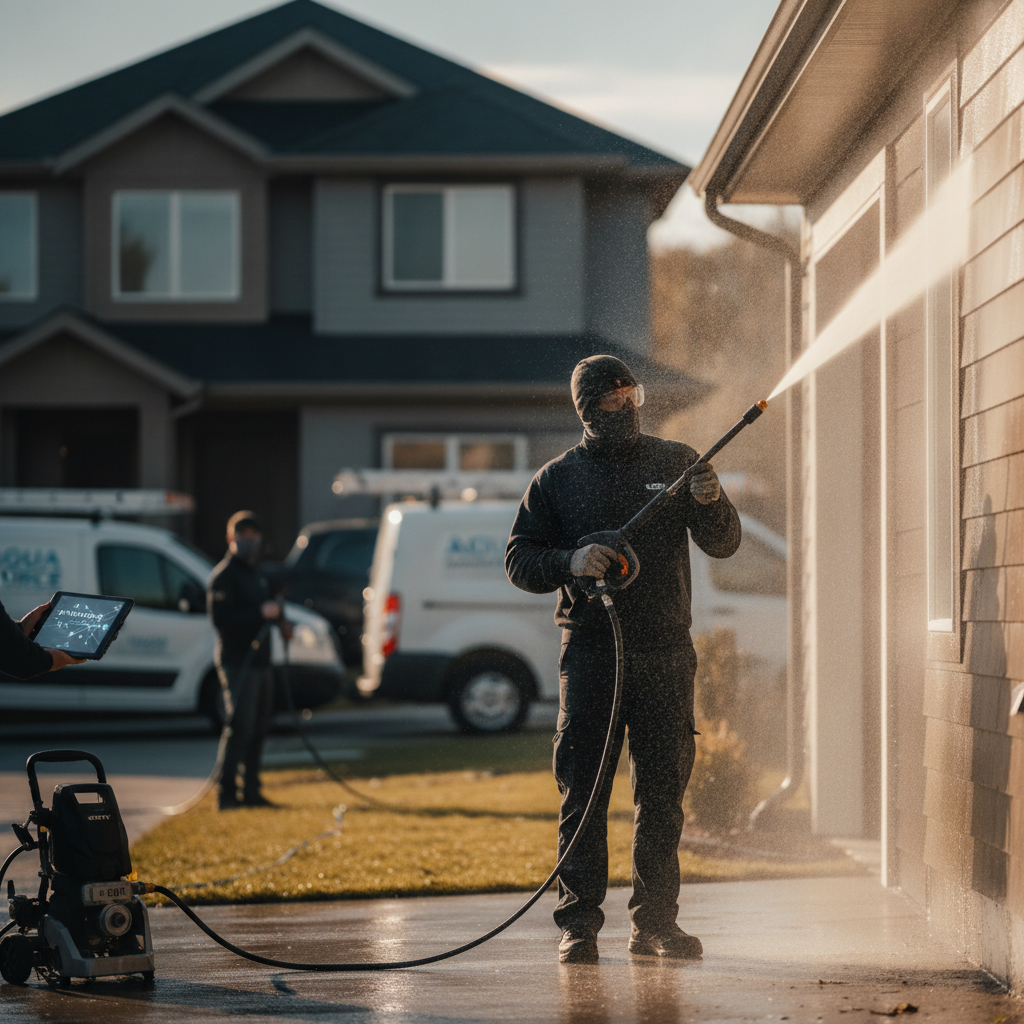
When you call three pressure‑washing companies, you end up with three different price sheets, three rounds of back‑and‑forth, and a payment that’s collected before the job is even done. That chaotic workflow is why 70 % of homeowners say transparent pricing would make them pay more (Housecall Pro 2025). It’s also why many contractors spend $300‑$2,500 per month on leads that never convert, driving a $1,400‑$2,500 cost‑per‑acquisition for each booked job (LeadTruffle 2026).
If you’re ready to stop guessing, stop chasing dead leads, and get a guaranteed, escrow‑backed quote in minutes, read on. This guide walks you through everything you need to know about pressure‑washing—costs, risks, how to vet pros, where the old hiring workflow breaks, and how the AI‑native home services workflow and payments platform PLMBR flips the script.
What Homeowners Need To Know About Pressure Washing
Pressure washing (also called power washing) uses high‑pressure water (often 1,500–3,000 psi) to strip grime, mildew, and oil from exterior surfaces. It’s the fastest way to restore curb appeal, improve safety, and protect paint or siding from long‑term damage.
| Surface | Typical PSI range | Frequency recommendation |
|---|---|---|
| Driveways & sidewalks | 2,500‑3,000 | Every 1‑2 years |
| Decks & patios (wood) | 1,500‑2,000 (wide‑fan tip) | Every 2‑3 years |
| Siding (vinyl, brick) | 1,800‑2,500 | Every 2‑3 years |
| Concrete patios | 2,500‑3,000 | Every 1‑2 years |
Scroll to see all columns →
Why the Job Size Matters
A standard 2,000 sq ft driveway usually costs $0.12‑$0.25 per sq ft, translating to $240‑$500. Smaller jobs (e.g., a 400 sq ft patio) can be as low as $80‑$120, but many providers bundle “travel fee” or “equipment fee” that inflates the quote. Understanding the per‑square‑foot baseline helps you spot hidden costs.
Common Homeowner Pain Points
- Phone‑tag and vague scope – “We’ll need to see the job first” without a clear follow‑up timeline.
- Surprise bills – Additional “extra‑services” added after the work is done.
- Unclear payment timing – Paying full price upfront, then chasing a refund if the job is unsatisfactory.
- Regulatory worries – In New York, runoff rules now limit pressure > 150 psi without a permit, and fines can reach $5,000 per violation (NY DEC 2024).
If any of these sound familiar, you’re not alone. The next sections show how to navigate the market and protect yourself.
Cost / Risk / Hiring Reality
Below is a snapshot of the typical cost components, hidden risks, and the financial impact of traditional lead‑gen platforms.
| Cost Component | Typical Range | Hidden Risk | Traditional Platform Example |
|---|---|---|---|
| Base labor & water | $0.08‑$0.35 / sq ft (≈ $150‑$500 per job) | Under‑pricing can mean corners cut on water‑use compliance | Angi: $15‑$85 lead fee plus membership $300/yr |
| Travel / Equipment surcharge | $30‑$80 per job | “Extra” fees appear after the quote | Thumbtack: $18‑$200 per lead, many are dead |
| Escrow / payment hold | $0 (if paid after completion) | Cash‑flow risk for contractor; risk of non‑payment for homeowner | No escrow; 45 % of contractors report late/disputed payments (HomeAdvisor PRO review) |
| Progressive billing | Milestone‑based (e.g., 50 % after prep, 50 % after finish) | Reduces risk of “pay‑first‑work‑later” disputes | Rarely offered on legacy sites |
| Compliance & insurance | $0‑$150 (annual policy) | Non‑compliance leads to fines, liability | Platforms rarely verify insurance or permits |
Scroll to see all columns →
Key takeaway: The total cost of hiring a pressure‑washing pro is not just the line‑item price; it includes hidden fees, payment risk, and compliance exposure. A platform that makes every component visible—and protects both sides—delivers real value.
How To Vet Providers Without Getting Burned
-
Check Licensing & Insurance
- In NY, a pressure‑washing contractor must hold a General Contractor License and proof of liability insurance (minimum $1 M).
- Ask for a digital copy and verify expiration dates. PLMBR automatically tracks compliance for each provider.
-
Ask for a Structured Booking Packet
- A booking packet breaks the scope into line‑item tasks, pricing, milestones, and terms.
- If a provider only gives a one‑page “estimate,” request a detailed packet before committing.
-
Validate Environmental Compliance
- Verify the contractor follows NY DEC runoff regulations (water‑use logs, low‑pressure settings when near storm drains).
- Look for a water‑runoff mitigation plan in the packet.
-
Read Real Reviews, Not Just Star Ratings
- Look for reviews that mention timeliness, clean‑up, and payment experience.
- Platforms that aggregate reviews often filter out “verified” comments; PLMBR’s in‑context messaging shows the actual quote and communication history.
-
Confirm Payment Protection
- Choose a provider that accepts Stripe‑backed escrow or progressive billing. This ensures funds are released only after you confirm the work meets the agreed scope.
Pro‑Tip
Never sign a contract that omits a “milestone completion” clause. A simple 50/50 split (pre‑work deposit, post‑work release) cuts the risk of paying for unfinished work in half.
Where The Old Workflow Breaks
| Stage | Typical Experience | Why It Fails |
|---|---|---|
| Intake | Homeowner describes problem via phone or email; provider asks repetitive questions. | Inefficient, leads to “information loss” and missed details. |
| Matching | Platforms share a pool of leads; contractors chase the same homeowner. | Lead fatigue – many pros waste time on the same low‑quality lead. |
| Quoting | Provider gives a rough estimate (“$300‑$500”). | Vague scope → surprise add‑ons. |
| Communication | Phone calls, texts, separate email threads. | Phone‑tag prolongs decision making. |
| Payment | Homeowner pays upfront via cash or credit; provider gets paid regardless of outcome. | Cash‑flow risk for homeowner, payment disputes for provider. |
| Dispute | Homeowner files a complaint with the platform; resolution can take weeks. | No clear evidence chain; high frustration. |
Scroll to see all columns →
These broken steps are the exact reason PLMBR exists. The platform replaces each friction point with an AI‑driven, escrow‑protected workflow.
How PLMBR Changes This Workflow
1. Conversational AI Intake (Seeker‑Side)
- Homeowner uploads a photo of the driveway and types a short description.
- The AI instantly identifies the trade, location, and urgency, then asks only the follow‑up questions that improve match quality (e.g., “Is there a nearby storm drain?”).
Result: No more endless back‑and‑forth; the job description is complete in under two minutes.
2. Semantic Search & Smart Matching
- PLMBR uses vector embeddings (not keyword matching) to surface providers who have the right equipment, the correct insurance, and a proven record in your city (Boston, New York City, Philadelphia, etc.).
3. AI‑Powered Booking Packets
- From the chat transcript, the platform auto‑generates a structured quote with line‑item pricing, milestone dates, and terms pulled from a legal library.
- Providers can edit the packet, but the baseline data stays consistent across all bids, enabling true “apples‑to‑apples” comparison.
4. In‑Context Packet Comparison
- Homeowners view multiple packets side‑by‑side (see
compare_packets.png). The UI highlights differences in price per sq ft, milestones, and environmental compliance.
5. Escrow‑Backed Payments & Progressive Billing
- Funds are authorized via Stripe and held in escrow until the homeowner marks the job “complete.”
- For larger jobs (e.g., multi‑surface cleaning), PLMBR supports milestone billing (e.g., 40 % after prep, 60 % after finish).
6. AI Agent Outreach (Premium)
- For premium seekers, an AI agent contacts multiple vetted providers simultaneously, tracks each reply, and surfaces any unanswered questions in a single dashboard (
seeker_agent_outreach.png).
7. Dispute Resolution Built Into the Thread
- If a homeowner flags an issue, the AI suggests evidence packs (photos, packet terms) and routes the case to a fast‑track resolution team.
Bottom‑Line Benefits
| Stakeholder | Before PLMBR | After PLMBR |
|---|---|---|
| Homeowner | Phone‑tag, vague quotes, cash‑upfront risk | Transparent, side‑by‑side packets, escrow‑protected payment |
| Provider | Pay‑per‑lead fees, dead leads, admin‑drag | Zero lead fees, qualified jobs only, automated packet builder |
| Both | Manual follow‑up, dispute lag | AI‑driven workflow, instant evidence, faster close rate |
Scroll to see all columns →
Questions To Ask Before Hiring
- Can you provide a line‑item booking packet with milestones?
- Do you hold a current liability insurance and workers‑comp certificate? (Ask for a copy.)
- How do you manage water‑runoff compliance in NY/MA?
- What payment method do you use? Is escrow available?
- Do you integrate with field‑service software (Jobber, ServiceTitan) for scheduling?
- Do you offer progressive billing for larger jobs?
If a provider hesitates on any of these, that’s a red flag. The right pro will welcome transparency—it’s a sign of a mature, trustworthy business.
Conclusion
Pressure washing should be a quick, hassle‑free way to boost your home’s curb appeal—not a marathon of phone calls, surprise fees, and payment anxiety. By understanding per‑square‑foot pricing, vetting providers with a structured booking packet, and demanding escrow‑backed payment, you protect both your wallet and your peace of mind.
The legacy lead‑gen model—pay‑per‑lead, shared leads, vague estimates—has become a profit‑draining black hole for contractors and a source of frustration for homeowners. PLMBR’s AI‑native workflow eliminates those pain points by:
- Turning a single photo and description into a transparent, line‑item quote within minutes.
- Matching you only with qualified, compliant pros in your city.
- Holding your payment in escrow until you confirm the job meets the agreed scope.
Ready to experience a stress‑free pressure‑washing quote? Visit the PLMBR homepage, find pressure‑washing pros on PLMBR, and compare quotes on PLMBR today. For more home‑service guides, explore our blog.
Sources
- Housecall Pro “Home Service Customer Service Report” (2025) – homeowner preferences for transparent pricing.
- LeadTruffle “Angi Leads Cost & ROI” (2026) – CPA analysis for traditional platforms.
- HomeAdvisor PRO Review – contractor complaints about dead leads and pay‑per‑lead fees.
- NY State Department of Environmental Conservation – Pressure‑Washing Runoff Regulations (2024).
- EPA Water‑Related Regulations – national guidance on pressure‑washing environmental impact.
(All links are live as of 31 July 2026.)