
The 2026 Deck & Porch Playbook: Trends, Costs, and How PLMBR’s AI Workflow Eliminates the Old Lead‑Gen Headaches
Imagine this: you’ve finally decided to turn your backyard into a year‑round oasis—think a multi‑level deck with a built‑in fire pit, smart lighting, and a…
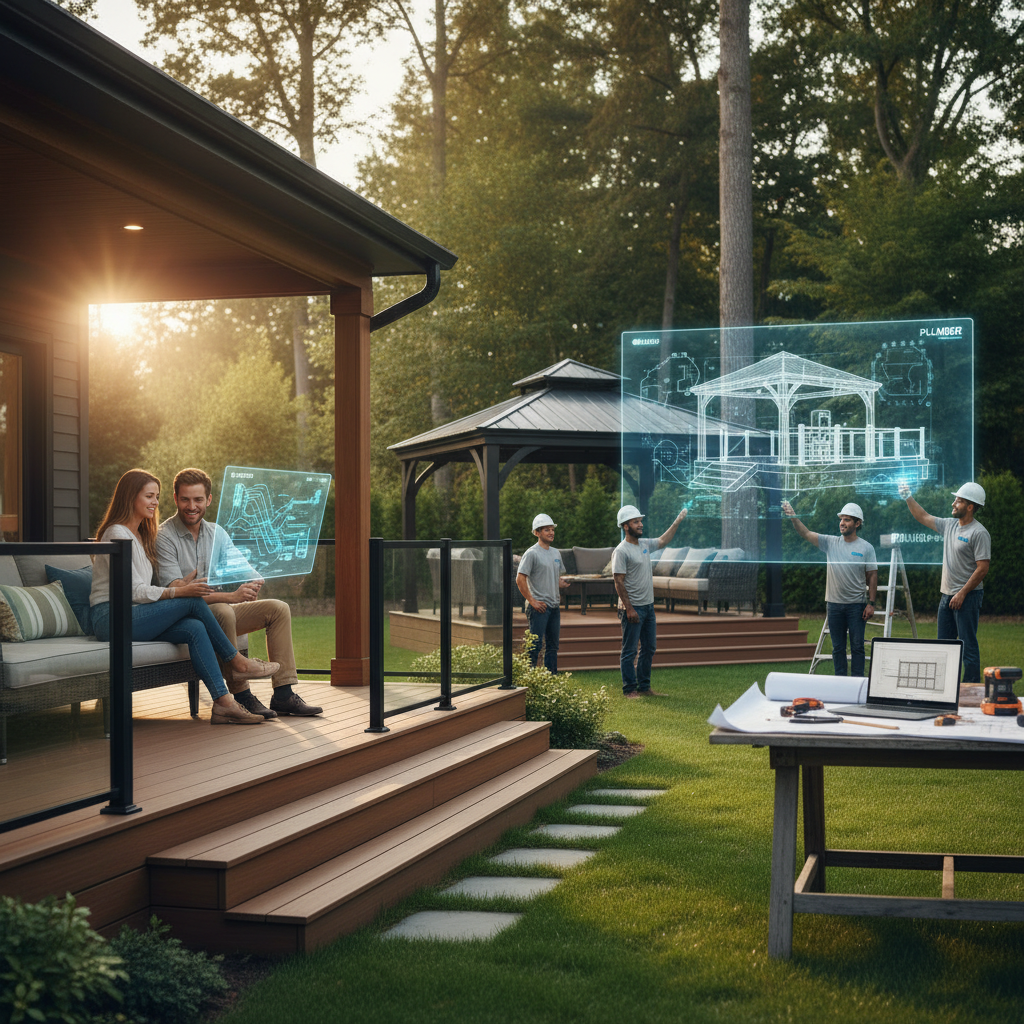
Imagine this: you’ve finally decided to turn your backyard into a year‑round oasis—think a multi‑level deck with a built‑in fire pit, smart lighting, and a pergola that lets you enjoy the Boston summer and the New York winter. You start looking for a contractor, but soon you’re stuck in a loop of phone tag, vague “ball‑park” estimates, and lead‑fee invoices that disappear into thin air.
You’re not alone. 85 % of U.S. households now have at least one outdoor living space (2025 Outdoor Living Trend Report), yet the hiring process for decks and porches still feels like a relic from the dial‑up era. This guide walks you through the latest design trends, the real costs and risks, how to vet providers without getting burned, and—most importantly—how PLMBR’s AI‑native workflow solves every friction point that still haunts the industry.
What Homeowners Need To Know About Decks & Porches
1. The Outdoor‑Living Boom Is Real
The pandemic accelerated the desire for usable outdoor space. Grand View Research projects a 5 % CAGR for the decks market from 2023‑2033, driven by higher disposable income and a cultural shift toward “home is the new office.” Homeowners are no longer adding a simple platform; they’re building multi‑zone, low‑maintenance extensions that serve as kitchens, lounges, and even home offices.
2. Materials Have Moved Past Wood
- Composite & PVC dominate: ≈60 % of new deck material sales are now composite (Ladiesburg Lumber, 2026). These products offer recycled‑content credits, UV resistance, and a 25‑year warranty, dramatically reducing long‑term maintenance.
- Sustainable options: Many manufacturers now label decks with LEED‑compatible recycled content, a selling point for eco‑conscious buyers.
3. Multi‑Zone & Smart‑Tech Integration
Modern decks often contain:
- Cooking zone – built‑in grill, prep counter, and waterproof outlets.
- Lounge zone – sectional seating, fire pit, and weather‑proof speakers.
- Climate‑control zone – retractable awnings, misting systems, and infrared heaters.
Smart integrations (Wi‑Fi‑controlled lighting, IoT thermostats, and sensor‑driven safety rails) are now standard in high‑end builds (Dutchmen Decks, 2026).
4. Year‑Round Usability Is Expected
Pergolas with integrated heating, motorized roof panels, and insulated railing systems let homeowners enjoy the space 12 months a year—a top request in the Veranda 2026 porch trends article.
5. Permits and Compliance Matter
Most municipalities require structural, electrical, and fire‑code permits for decks over a certain size or height. Failure to obtain proper permits can result in costly retrofits or fines.
Pro tip: Keep a digital folder of all permit applications, contractor licenses, and insurance certificates. PLMBR’s compliance dashboard will eventually automate expiration alerts.
Cost / Risk / Hiring Reality
| Item | Typical Range | Key Drivers | Risk If Not Managed |
|---|---|---|---|
| Deck size (sq ft) | 200 – 1,200 | Square footage, number of levels | Under‑budgeting leads to change orders |
| Material cost | $15‑$45 per sq ft | Composite vs. wood, recycled content | Low‑quality wood = early replacement |
| Labor cost | $30‑$55 per hour | Local labor market, complexity | Inaccurate labor estimates inflate final price |
| Total project cost | $15,000 – $45,000 (average) | Size, material, design features | Surprise bills >20 % of original quote |
| Permitting fees | $200‑$1,200 | City, scope, inspections | Unpermitted work may be ordered torn down |
| Timeline | 4‑10 weeks | Weather, material lead time, subcontractor availability | Delays increase financing costs |
| Escrow / payment risk | N/A | Payment method, milestone billing | Up‑front payment can expose homeowner to fraud |
Scroll to see all columns →
These numbers are drawn from industry pricing guides and the Grand View Research decks market report. The data shows why homeowners need transparent, line‑item quotes and a secure payment flow—both hallmarks of PLMBR’s platform.
How To Vet Providers Without Getting Burned
-
Check Licensing & Insurance
- Verify state contractor licenses (e.g., New York Department of Labor License Lookup).
- Request copies of general liability and workers‑comp insurance; confirm they are current.
-
Review Portfolio & References
- Look for before/after photos that match your desired style (composite, multi‑level, smart‑tech).
- Ask for at least three recent homeowner references and follow up.
-
Scrutinize the Quote Structure
- A solid quote breaks down materials, labor, permits, and contingency.
- Beware of “all‑inclusive” numbers with no line items; they often hide scope creep.
-
Confirm Warranty Coverage
- Reputable deck builders will stand behind material warranties (often 25 years) and workmanship warranties (1‑5 years).
-
Leverage Online Reputation, But Don’t Rely Solely on Star Ratings
- Look for patterns in BBB complaints or FTC consumer alerts.
- A high rating on a lead‑gen marketplace may not reflect actual performance because many platforms sell leads, not vetted pros.
-
Use an AI‑Assisted Matchmaking Service
- PLMBR’s semantic search matches you with providers based on trade, distance, availability, and verified trust signals—cutting out the “random list” you get from traditional directories.
Where The Old Workflow Breaks
| Pain Point | Traditional Process | Why It Fails |
|---|---|---|
| Phone‑tag | Homeowner calls multiple pros; each returns calls at different times. | Leads to weeks of delays and missed windows for weather‑sensitive projects. |
| Vague Estimates | “Around $20k” after a brief site visit. | No line‑item breakdown → surprise change orders and scope drift. |
| Lead‑Fee Traps | Contractors pay $50‑$150 per lead on platforms like Angi, often for cold leads that never convert. | Increases homeowner costs and forces pros to chase quantity over quality. |
| Fragmented Communication | Emails, text messages, PDFs scattered across apps. | Important documents (permits, warranty, payment requests) get lost, causing disputes. |
| Payment Risk | Up‑front cash or post‑completion checks with no escrow. | Homeowners risk fraud; contractors risk non‑payment. |
| Compliance Gaps | Contractors manually track insurance expiration. | Lapse can lead to liability exposure or halted work. |
Scroll to see all columns →
These breakdowns are why the legacy lead‑gen model is becoming obsolete—the market now expects transparency, speed, and security.
How PLMBR Changes This Workflow
1. Conversational AI Intake
- What it does: You upload a photo of the existing patio, type “I want a multi‑level deck with a fire pit and smart lighting,” and the AI automatically identifies the trade, urgency, and asks only the follow‑up questions that improve match quality.
2. Semantic Search & Matching
- Instead of keyword matching, PLMBR uses vector embeddings to surface the best‑fit providers based on distance, availability, verified ratings, and trust signals (insurance, licenses, past job performance).
3. Booking Packet Builder (Provider AI)
- Providers receive a structured quote template that auto‑populates line items (materials, labor, permits, contingency). The AI also pulls material pricing from web sources and the provider’s historical data, ensuring consistency.
4. Compare‑Packets Side‑by‑Side
- Homeowners can view up to three booking packets in a single table—each with scope, line‑item pricing, terms, and milestone billing schedule. No more guessing which “$20k” is more comprehensive.
5. In‑Context Messaging
- All chats, packet attachments, billing requests, and dispute forms live inside the same thread. A provider can drop a permit PDF directly into the conversation, and the homeowner can approve a milestone payment without leaving the chat.
6. Escrow‑Backed Payments & Progressive Billing
- Powered by Stripe, funds are authorized and held until the homeowner marks a milestone as complete. For a $30k project, you might release $10k after framing, $10k after decking, and the final $10k after the fire‑pit installation.
7. AI‑Agent Outreach (Premium)
- If you opt for the premium plan, a personal AI agent contacts multiple vetted providers simultaneously, tracks each response, and surfaces ready‑to‑review packets—all without you lifting a finger.
8. Zero Lead Fees & Compliance Dashboard
- Providers only pay a transaction fee when a job is completed, eliminating the wasteful lead‑fee model. The platform also auto‑reminds providers of insurance and license expirations, reducing compliance risk.
Pro tip: When you receive your first booking packet on PLMBR, compare the material breakdown (e.g., composite decking @ $35/sq ft) against market averages from the Ladiesburg Lumber 2026 trends report to ensure you’re getting a fair price.
Questions To Ask Before Hiring
-
What specific materials will you use, and why?
- Look for composite brands with recycled‑content percentages.
-
Can you provide a line‑item quote with labor, permits, and a contingency?
- A transparent packet should show at least a 10 % contingency for unexpected site conditions.
-
How do you handle permits and inspections?
- Confirm who files the paperwork and who pays the city fees.
-
What is your milestone payment schedule?
- Ask for a schedule that aligns with foundations, framing, decking, and finish.
-
Do you have current liability insurance and workers‑comp coverage?
- Verify expiration dates; PLMBR will flag any lapses automatically.
-
Will you integrate with my existing smart‑home ecosystem?
- If you want Wi‑Fi lighting or thermostat control, ensure the provider has experience with those systems.
-
What warranty do you offer on workmanship?
- A good contractor will back their work for 1‑5 years beyond the material warranty.
Conclusion
Your deck or porch should be a seamless extension of your home—not a source of endless phone calls, vague estimates, and financial risk. The 2026 design trends—composite materials, multi‑zone layouts, and smart‑tech integration—demand a hiring process that can capture complex scope, compare transparent quotes, and protect both parties financially.
That’s exactly where PLMBR’s AI‑native home services workflow and payments platform steps in. By turning the chaotic, lead‑fee‑driven model on its head, PLMBR gives you:
- Fast, AI‑driven matching that eliminates phone‑tag.
- Structured booking packets for crystal‑clear pricing.
- In‑context messaging that keeps every document in one place.
- Escrow‑backed, progressive billing that secures your money until work is verified.
- Zero lead fees for providers, meaning you get only the most qualified, motivated pros.
Ready to stop chasing quotes and start building the outdoor space you’ve imagined?
Get started now at the PLMBR homepage, find vetted deck & porch pros on our service page, and compare quotes instantly at the PLMBR compare hub.
For more expert guides on home‑service projects, visit our blog.
References
-
Grand View Research – Decks Market Report – market size, CAGR, material trends.
https://www.grandviewresearch.com/industry-analysis/decks-market-report -
Veranda – “The 7 Biggest Porch and Patio Trends for 2026” – design preferences and multi‑zone living.
https://www.veranda.com/outdoor-garden/a69739522/patio-and-porch-trends-2026/ -
Ladiesburg Lumber – “2026 Trends in Deck Building” – composite dominance and supplier insights.
https://www.ladiesburglumber.com/pro-tips/2026-trends-in-deck-building/ -
Dutchmen Decks – “Deck Design Trends for 2026” – sustainability and smart‑tech integration.
https://www.dutchmendecks.com/blogs/deck-design-trends-for-2026 -
EPA – Indoor Air Quality – guidelines for outdoor structures and ventilation.
https://www.epa.gov/indoor-air-quality-iaq -
National Association of the Remodeling Industry (NARI) – contractor licensing and best practices.
https://www.nari.org -
Better Business Bureau – Home Improvement – consumer protection tips for hiring contractors.
https://www.bbb.org
Your dream deck is just a click away—let PLMBR handle the hassle so you can enjoy the view.