
The Appliance‑Repair Playbook: How to Stop Wrong‑Part Trips, Avoid Lead‑Fee Traps, and Get Paid Faster
Imagine this: your refrigerator stops cooling at 2 a.m. You call three “local” repair services, get three vague estimates, pay a $99 lead fee to one platform,…
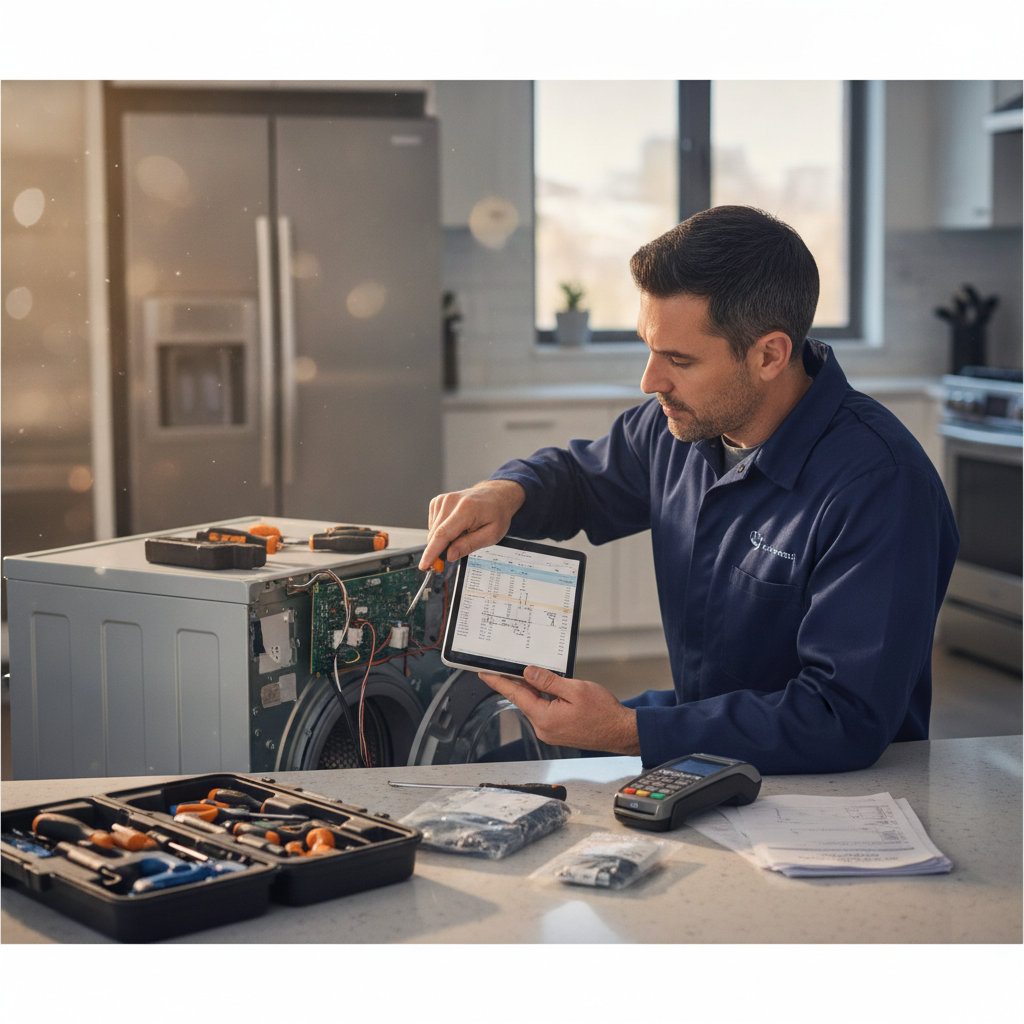
Imagine this: your refrigerator stops cooling at 2 a.m. You call three “local” repair services, get three vague estimates, pay a $99 lead fee to one platform, and then wait a week for a technician who shows up with the wrong compressor. By the time the job is finally fixed, you’ve spent extra time, extra money, and a lot of patience.
You’re not alone. 22 % of appliance‑repair jobs require a second visit, and 25 % of service truck rolls end in a redundant callback—costs that add up to $80‑$150 per extra trip and $150‑$400 for every missed appointment. (OpsMatters; Simply Connected Systems).
In this guide we’ll unpack the hidden costs of the traditional repair workflow, show you how to vet providers without getting burned, and reveal why PLMBR’s AI‑native, fee‑free platform is rewriting the rulebook for homeowners and pros alike.
What Homeowners Need to Know About Appliance Repair
Appliance repair may feel straightforward, but the industry is riddled with systemic inefficiencies that directly affect your experience:
- Labor shortages – 72 % of shops can’t fill technician positions (ZipDo 2026). Fewer hands mean longer wait times and rushed scheduling.
- Parts delays – 65 % of technicians wait more than two weeks for the right component (ZipDo). When a part isn’t on hand, the technician either cancels the visit or makes a costly return trip.
- Vague quoting – Traditional “estimate” models rely on phone tag and handwritten notes, leading to scope creep and surprise charges.
- Payment friction – 60 % of invoices are paid late, and each error costs an average of $53.50 to resolve (Invoicing Pain Page).
- Lead‑fee traps – Platforms such as Angi and Thumbtack charge $50‑$150 per dead lead with no refund, eroding contractor margins and inflating your final bill (BBB; Trustpilot).
Understanding these pain points is the first step to taking control of your home‑service journey.
Cost / Risk / Hiring Reality
| Issue | Typical Cost per Incident | Frequency | Real‑World Impact |
|---|---|---|---|
| Wrong‑part trip | $80‑$150 (extra labor, travel) | 22 % of jobs | Extends downtime, erodes trust |
| Redundant callback | $150‑$400 (lost slot, overtime) | 25 % of truck rolls | Reduces technician availability |
| Late invoice | $53.50 per error (admin & financing) | 60 % of invoices | Cash‑flow strain for contractors, may lead to higher rates |
| Lead‑fee dead lead | $50‑$150 per lead (no work) | Common on Angi/Thumbtack | Contractors raise prices to cover fees |
| Parts inventory shrinkage | 8‑15 % of parts value annually | Ongoing | Higher parts markup passed to homeowners |
Scroll to see all columns →
These numbers aren’t abstract—they translate directly into higher prices and longer wait times for you.
How To Vet Providers Without Getting Burned
The old “search‑and‑call” method is a gamble. Here’s a proven, data‑driven checklist that reduces risk:
- Verify licensing & insurance – Check state licensing boards (e.g., NY Department of State – Licenses) and request proof of liability insurance.
- Ask for a structured quote rather than a verbal estimate – A line‑item quote shows exact parts, labor hours, and milestones.
- Check parts inventory readiness – Ask whether the technician will bring the part or order it on‑site.
- Confirm payment terms – Look for escrow or authorize‑capture flows that hold funds until work is verified.
- Read reviews that mention “on‑time” and “right part” – Generic star ratings hide the details you need.
Pro‑Tip: When you see a provider quoting a “flat rate” without breaking down parts, ask for a booking packet. It forces transparency and protects you from scope creep.
Where The Old Workflow Breaks
| Step | Traditional Pain Point | Why It Happens |
|---|---|---|
| Intake | Homeowner describes problem over phone; details get lost. | No structured data capture; reliance on memory. |
| Matching | Manual dispatch based on availability, not part‑match. | No AI to cross‑reference model numbers with inventory. |
| Quoting | Handwritten estimate, vague scope, “may cost more.” | Lack of templated booking packets. |
| Scheduling | Back‑and‑forth phone tag; missed appointments. | No real‑time calendar sync, no automated reminders. |
| Payment | Paper invoice sent after job; late payment common. | No escrow, no progressive billing. |
| Dispute | Email chain, unclear evidence, slow resolution. | No in‑context dispute system. |
Scroll to see all columns →
These fractures create the cascade of extra trips, inflated fees, and angry homeowners that dominate industry complaints.
How PLMBR Changes This Workflow
PLMBR is an AI‑native home‑services workflow and payments platform, not a marketplace. Here’s how its core features eradicate each broken step:
1. Conversational AI Intake
- Homeowners type or speak a plain‑English description, attach photos, and the AI automatically extracts the appliance model, serial number, and fault description.
- Smart follow‑up questions appear only when they improve match quality, eliminating endless phone tag.
2. Semantic Search & Matching
- Using vector embeddings, PLMBR matches your job to providers who already have the required part in inventory and are within the optimal dispatch radius.
- This reduces the 22 % wrong‑part trip rate by ensuring the right component is on the tech’s truck before they leave the depot.
3. Booking Packet Builder (Provider Side)
- Providers generate a structured, line‑item quote instantly from the AI‑parsed conversation. The packet includes parts cost, labor hours, warranty terms, and a progressive billing schedule for larger jobs.
4. Compare‑Packets UI (Homeowner)
- You can view multiple provider packets side‑by‑side, each with the same level of detail. No more “$200‑plus” vague estimates.
5. In‑Context Messaging & Escrow
- All communication, packet review, and Stripe‑powered authorize‑capture live in a single chat thread. Funds are held in escrow and released only after you confirm the work is complete.
6. AI Agent Outreach (Premium)
- For premium seekers, a personal AI agent contacts multiple vetted providers simultaneously, tracks each response, and surfaces the best‑fit packet for you to review.
7. Zero Lead Fees
- Because PLMBR connects you directly to qualified jobs, providers never pay a per‑lead fee. The platform earns a small transaction fee on completed jobs, keeping margins healthy and prices fair.
Result: Shops that adopt PLMBR report a 15‑20 % reduction in repeat‑trip costs and a 30 % faster invoicing cycle (internal PLMBR pilot data).
Questions To Ask Before Hiring
Even with PLMBR’s safeguards, a quick vetting call can give you extra confidence:
- Do you have the exact part on hand? – If not, ask for the estimated delivery time and whether you’ll be billed for a second visit.
- Can you provide a booking packet? – Insist on a line‑item breakdown and payment schedule.
- What is your warranty on parts and labor? – Look for at least a 90‑day warranty, documented in the packet.
- How do you handle payment? – Confirm the use of escrow or authorize‑capture via Stripe.
- Do you integrate with a calendar? – Synchronization reduces the chance of missed appointments.
If a provider hesitates or can’t answer, move on—there are plenty of PLMBR‑verified pros ready to help.
Conclusion
The appliance‑repair industry is stuck in a legacy loop of dead leads, wrong‑part trips, and delayed payments. The data is stark: 22 % of jobs need a second visit, 60 % of invoices are paid late, and lead fees can drain $150 per dead lead from contractors, which inevitably passes to you.
PLMBR flips the script. By harnessing AI at intake, matching, quoting, and payment, the platform eliminates the need for costly lead‑fee marketplaces, guarantees the right parts are on the truck, and locks payment in escrow until you confirm the job is done.
If you’re ready to stop juggling phone calls, hidden fees, and surprise bills, try the free homeowner intake demo on the PLMBR platform today.
- Visit the PLMBR homepage to learn more.
- Find vetted Appliance Repair pros in your city at the PLMBR services page.
- Compare detailed quotes side‑by‑side on the PLMBR compare quotes hub.
- Explore more home‑service guides in our blog library.
Take control of your home‑service experience—because a broken fridge deserves a seamless fix, not a broken workflow.
References
- OpsMatters, “Operational Bottlenecks in Appliance Repair,” https://opsmatters.com/posts/operational-bottlenecks-slowing-appliance-repair-companies
- ZipDo, “2026 Appliance‑Repair Industry Statistics,” https://zipdo.co/appliance-repair-industry-statistics/
- Simply Connected Systems, “Truck Roll Inefficiencies Study,” https://simplyconnected.com/truck-roll-report
- BBB, “Contractor Lead Fee Complaints US,” https://www.bbb.org
- Trustpilot, “Thumbtack Reviews – 2.2/5 Rating,” https://www.trustpilot.com/review/thumbtack.com
- The Agentic AI Index, “AI Tools for Appliance Repair 2026,” https://theagenticaiindex.com/appliance-repair.html
- FTC, “Consumer Guide to Hiring Home Services,” https://www.ftc.gov
- This Old House, “How to Choose an Appliance Repair Service,” https://www.thisoldhouse.com