
The Complete Homeowner’s Guide to Building Decks & Porches in 2024: Costs, Hiring Tips, Permits, and How AI‑Powered PLMBR Eliminates the Old Pain Points
Your outdoor oasis shouldn’t feel like a maze of phone calls, vague estimates, and surprise bills. This guide walks you through everything you need to…
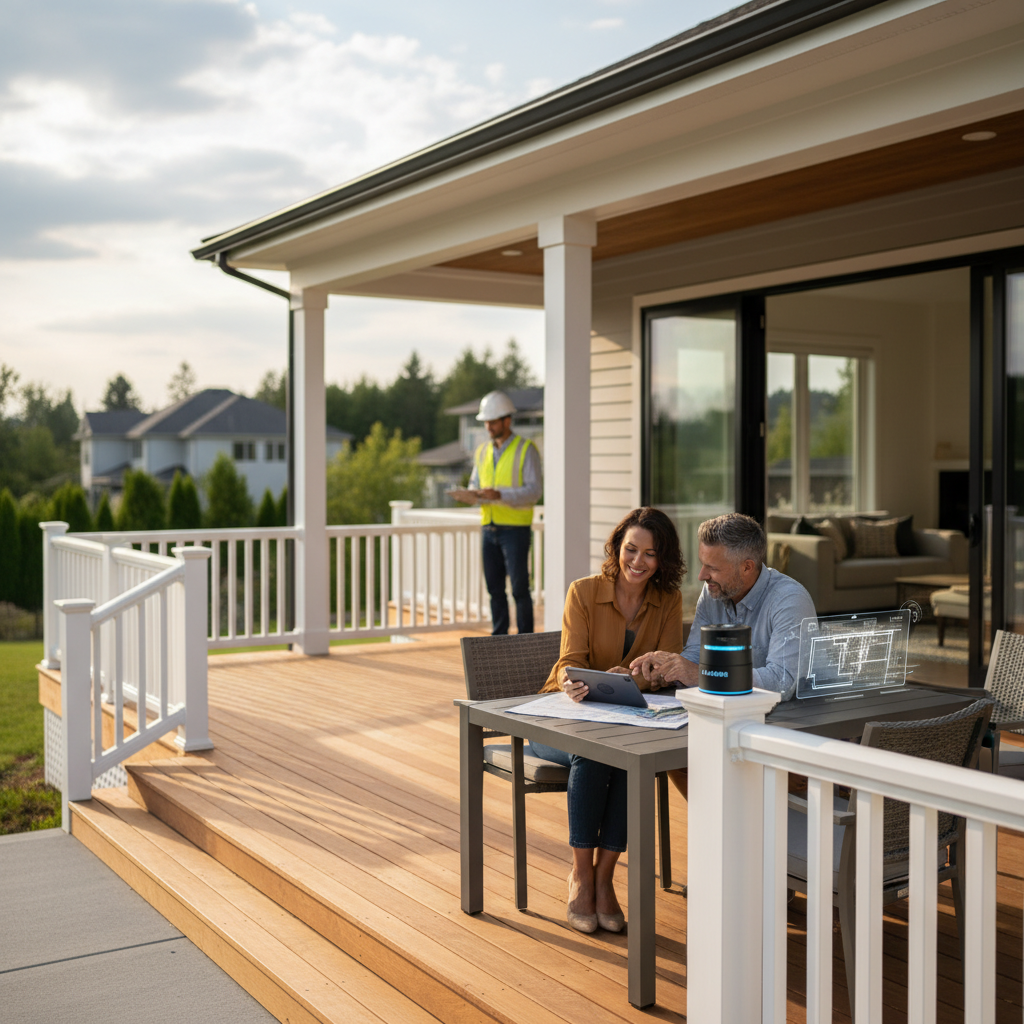
Your outdoor oasis shouldn’t feel like a maze of phone calls, vague estimates, and surprise bills. This guide walks you through everything you need to know—and shows why the AI‑first workflow from PLMBR is changing the game.
Introduction
Imagine you’ve just bought a new home in Boston and the back yard feels empty. You picture summer evenings on a spacious deck, a cozy porch for coffee, and family barbecues that become the neighborhood highlight. You start searching “deck cost 2024 New York” and instantly hit a wall of conflicting numbers. A HomeAdvisor 2023 consumer survey found 62 % of homeowners cite “lack of transparent pricing” as their biggest frustration when hiring a deck contractor【HomeAdvisor 2023 Consumer Survey】.
At the same time, the U.S. decks market is booming—$14.5 B in 2024 and projected to reach $24.5 B by 2033, growing at a 6 % CAGR【Grand View Research – Decks Market Report】. Yet the traditional lead‑gen model that powers sites like Angi or Thumbtack still forces you into endless phone tag, vague “ball‑park” quotes, and per‑lead fees that inflate your final price.
This guide cuts through the noise. We’ll break down the real costs, permit requirements, how to vet providers, and—most importantly—show how PLMBR’s AI‑native workflow replaces chaos with structured, escrow‑backed booking packets and transparent, side‑by‑side quote comparison.
What Homeowners Need To Know About Decks & Porches
1. Deck vs. Porch: Functional Differences
| Feature | Deck | Porch |
|---|---|---|
| Typical Height | 0‑8 ft above grade (often on a slab or posts) | Ground‑level or slightly raised, attached to the house |
| Primary Use | Outdoor living, entertaining, sunbathing | Transition space, weather protection, curb appeal |
| Common Materials | Composite, PVC, pressure‑treated lumber, hardwood | Wood, fiber‑cement, brick, stone, composite flooring |
| Permitting | Usually requires a building permit if > 200 sq ft or > 3 ft high | Often requires a permit for structural changes or when adding utilities |
Scroll to see all columns →
Both structures add property value—the National Association of Home Builders (NAHB) estimates a 10‑15 % ROI on well‑executed deck projects.
2. Seasonal Timing & Weather Considerations
- Northeast (NY, MA, PA): Peak building window runs April – October. Winter installs risk frost‑heave and delayed inspections.
- Material Choice: Composite decking tolerates freeze‑thaw cycles better than untreated wood, reducing long‑term maintenance.
3. Sustainability Trends
Homeowners are increasingly opting for recycled wood‑plastic composites (WPC) and low‑maintenance hardwoods certified by the Forest Stewardship Council (FSC). According to Grand View Research, eco‑friendly decking materials are projected to grow 8 % annually as consumers seek greener options【Grand View Research – Decks Market Report】.
Cost / Risk / Hiring Reality
Understanding the financial landscape helps you set a realistic budget and spot red flags. Below is a snapshot of typical costs for a 650 sq ft deck—one of the most common sizes for suburban backyards.
| Category | Low‑End (Pressure‑Treated) | Mid‑Range (Composite) | High‑End (Premium Hardwood) |
|---|---|---|---|
| Materials | $12 – $18 / sq ft | $20 – $30 / sq ft | $35 – $45 / sq ft |
| Labor | $15 – $25 / sq ft | $18 – $30 / sq ft | $25 – $40 / sq ft |
| Permits & Inspections | $150 – $400 (city fee) | $150 – $400 | $150 – $400 |
| Total Estimated Cost | $17,500 – $24,500 | $24,800 – $34,200 | $39,300 – $55,500 |
| Typical Quote Variation | Up to +30 % between contractors | Up to +25 % | Up to +20 % |
Scroll to see all columns →
Pro‑Tip: The largest source of surprise is often scope creep—additional framing, railing upgrades, or lighting that weren’t included in the original estimate.
Real‑World Quote Variability
A Reddit thread titled “Deck Pricing Reality Check” captured homeowner quotes ranging from $72 k to $102 k for a 650 sq ft deck built with high‑grade composite materials【Reddit – Deck Pricing Reality Check】. The spread reflects inconsistent quoting practices and reinforces why a structured, line‑item approach is essential.
Risk Factors
- Hidden Permit Costs – Some municipalities charge extra for structural review or require engineering stamps.
- Material Overruns – Ordering 5 % extra is standard, but many contractors forget to factor waste.
- Payment Timing – Up‑front cash or “pay‑after‑completion” models expose homeowners to unfinished work or, conversely, leaves contractors cash‑flow strapped.
How To Vet Providers Without Getting Burned
1. Look for Verified Credentials
| Credential | Why It Matters | Where to Verify |
|---|---|---|
| State Contractor License | Legal authority to perform work | State licensing board (e.g., NY Department of Consumer Affairs) |
| Liability Insurance & Workers’ Comp | Protects you from claims if a worker is injured | Request certificates; verify expiration |
| Professional Membership (e.g., NARI, NAHB) | Indicates commitment to industry standards | Membership directories |
Scroll to see all columns →
2. Use Structured Quote Comparisons
Traditional lead‑gen platforms provide only a “ball‑park” figure. Instead, demand a booking packet that breaks down:
- Scope of work (demolition, framing, railing)
- Line‑item pricing (materials, labor, permit fees)
- Timeline & milestones
- Payment schedule (including any progressive billing)
When you have at least two such packets, you can compare apples‑to‑apples—something PLMBR automates with its AI Booking Packet Builder.
3. Check Past Work & References
- Ask for photo‑documented portfolios that match your project size.
- Contact three recent clients and ask specific questions about schedule adherence and change‑order handling.
4. Evaluate Communication Speed
A provider that replies within 24 hours and uses a single messaging thread (instead of scattered emails/phone calls) demonstrates a streamlined workflow. PLMBR’s in‑context messaging consolidates photos, packets, and chat in one place, eliminating the “lost‑in‑inbox” problem.
Where The Old Workflow Breaks
| Step | Typical Pain Point | Real‑World Consequence |
|---|---|---|
| Lead Generation | Pay‑per‑lead fees ($50‑$150) inflate contractor costs, which are passed to you | Higher overall quote |
| Initial Contact | Phone tag, multiple callbacks, vague “I’ll send a quote” promises | Weeks of waiting, frustration |
| Quote Creation | Hand‑crafted estimates, missing line items, “ball‑park” ranges | Scope creep, surprise bills |
| Payment | Up‑front cash or unsecured credit card holds | Risk of non‑completion or contractor cash‑flow issues |
| Project Management | Separate email threads, lost photos, unclear status updates | Miscommunication, delays |
| Dispute Resolution | No formal process; often ends in legal action | Time‑consuming, costly |
Scroll to see all columns →
These breakdowns are systemic—they affect both homeowners (who lose time and money) and contractors (who waste admin hours chasing dead leads). The competitor/legacy model simply isn’t built for transparency or efficiency.
How PLMBR Changes This Workflow
1. AI‑Driven Conversational Intake
You describe the issue in plain English, attach photos, and the AI instantly identifies the right trade, location, and urgency.
- Smart follow‑up questions only appear when they improve match quality, reducing back‑and‑forth.
2. Semantic Search & Perfect Matching
Using vector embeddings, PLMBR finds providers who actually fit your criteria—trade, distance, availability, and verified trust signals—rather than a generic list of any contractor in the city.
3. Booking Packets – Structured, Comparable Quotes
The AI Booking Packet Builder creates a line‑item quote that includes:
| Item | Details | Example (650 sq ft Composite Deck) |
|---|---|---|
| Materials | Composite decking, joists, fasteners | $18,700 |
| Labor | Framing, decking, railing installation | $22,500 |
| Permits | City of Boston building permit | $350 |
| Milestones | 30 % deposit, 40 % after framing, 30 % on completion | — |
| Terms | 12‑month warranty on labor, 5‑year material warranty | — |
Scroll to see all columns →
You can compare multiple packets side‑by‑side within the platform, instantly seeing where prices diverge and why.
4. Zero‑Lead‑Fee, Qualified Jobs
Providers only see real, qualified homeowners—no dead leads, no wasted outreach. This eliminates the $50‑$150 per lead surcharge that inflates traditional platform costs.
5. In‑Context Messaging & Progress‑Based Billing
All communication, photos, and progressive billing requests live inside a single chat thread. The Stripe‑powered authorize‑and‑capture escrow holds funds until each milestone is confirmed, protecting both parties.
6. AI‑Mediated Dispute Resolution
If a disagreement arises, the platform auto‑generates an evidence pack, suggests resolutions, and escalates only if needed—saving you from costly legal battles.
7. Seamless Provider Integration
For contractors, PLMBR syncs with Google Calendar, Outlook, or field‑service tools like Jobber, ensuring availability is reflected in real‑time rankings.
Bottom line: PLMBR transforms the fragmented, high‑friction deck‑building journey into a single, transparent workflow—from intake to escrow‑backed payment.
Questions To Ask Before Hiring
- Is your license current for this city? Verify with the state board.
- Can you provide a full booking packet? Look for line‑item breakdowns and milestones.
- How do you handle permits? Ask who files, the expected timeline, and any associated fees.
- What is your warranty on labor and materials? A reputable contractor will offer at least a 12‑month labor guarantee.
- Do you accept escrow‑backed payments? If not, you may be exposed to risk.
- How do you manage change orders? A clear process (e.g., written approval before work) prevents scope creep.
- Can you share three recent client references? Contact them to confirm timeliness and quality.
Having these answers before the first on‑site visit puts you in control and shortens the decision timeline.
Conclusion
Building a deck or porch in 2024 should feel like an exciting home‑improvement project—not a marathon of phone calls, vague estimates, and surprise bills. The market’s $14.5 B size and 6 % CAGR growth shows demand is high, but 62 % of homeowners still struggle with opaque pricing【HomeAdvisor 2023 Consumer Survey】. Traditional lead‑gen platforms exacerbate the problem with per‑lead fees and fragmented communication.
PLMBR’s AI‑native workflow eliminates those pain points by:
- Delivering instant, AI‑matched providers
- Generating structured booking packets for transparent, side‑by‑side comparison
- Providing escrow‑backed, milestone‑based billing that protects both parties
- Consolidating every interaction—photos, messages, disputes—into a single in‑context thread
By following the steps in this guide and leveraging PLMBR’s platform, you’ll secure a qualified contractor, stay within budget, and watch your dream deck or porch come to life with confidence.
Ready to skip the phone tag and get clear, comparable quotes today? Visit the PLMBR homepage, browse Decks & Porches pros on PLMBR, and compare quotes on PLMBR. For more expert guides, explore the PLMBR blog.
Helpful External Resources
- EPA – Sustainable Building Materials: https://www.epa.gov/smm
- OSHA – Construction Safety Standards: https://www.osha.gov/construction
- National Association of the Remodeling Industry (NARI): https://www.nari.org
- This Old House – Deck Building Basics: https://www.thisoldhouse.com/decks
Empower your home improvement journey with data, transparency, and AI‑driven peace of mind.