
The Complete Homeowner’s Guide to Hiring a Locksmith in 2024: Costs, Risks, and How AI Is Fixing the Broken Workflow
If you’ve ever been locked out of your front door at 2 a.m., you know the panic of endless phone tag, vague estimates, and the fear of paying for a job that…
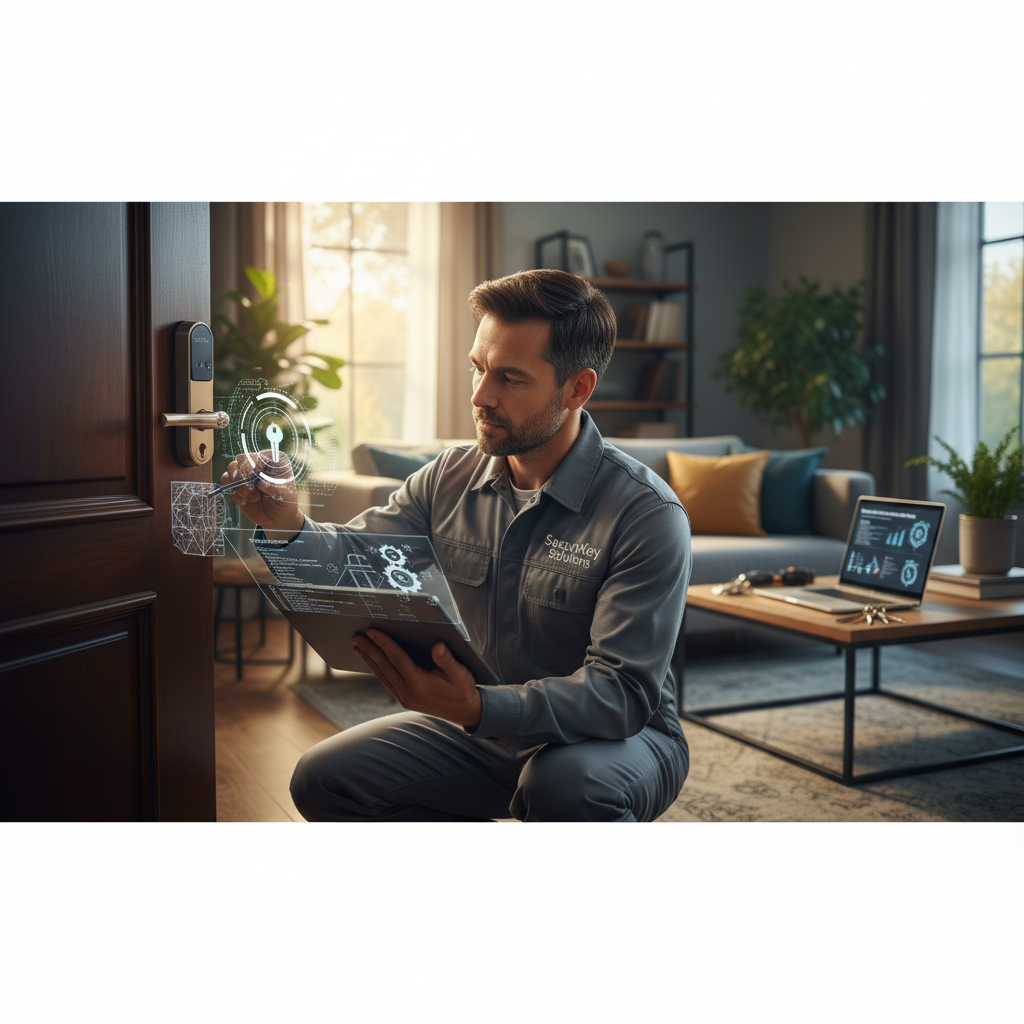
If you’ve ever been locked out of your front door at 2 a.m., you know the panic of endless phone tag, vague estimates, and the fear of paying for a job that never happens. In the U.S., more than 16,000 lock‑out emergencies occur every day — yet the hiring process for a reliable locksmith is still stuck in the analog era. This guide walks you through what you need to know, how to protect your wallet, and why an AI‑native platform like PLMBR is finally delivering the speed, transparency, and payment security homeowners deserve.
What Homeowners Need To Know About Locksmiths
1. The trade is more than “turn a key.”
Locksmiths today work with three broad categories of hardware:
- Mechanical locks (deadbolts, pin‑tumbler locks) – still the backbone of residential security, accounting for a $7.75 B market in 2025 and projected to exceed $11 B by 2035【Research Notes – Mechanical‑lock market】.
- Smart/e‑locks (Bluetooth, Wi‑Fi, biometric) – rapidly growing as homeowners adopt keyless entry, voice‑assistant integration, and remote access.
- Specialty systems (high‑security cylinders, vaults, commercial access control).
Understanding which type you need determines the skill set required and the price structure of the job.
2. Licensing is a patchwork, not a guarantee.
Only 15 states mandate formal, state‑level licensing for locksmiths; the rest rely on city or county permits, leaving a confusing “trust signal” gap for consumers【LocksmithKeyless – Licensing】. In states without a universal license, reputable pros differentiate themselves with:
- Verified liability insurance and workers’ compensation.
- Membership in industry groups like the Associated Locksmiths of America (ALOA).
- Positive BBB or FTC‑approved reviews.
If you live in New York, Massachusetts, or Pennsylvania—states that do require licensing—you can ask to see the license number and verify it on the state’s licensing board website.
3. Technology is reshaping the service model.
Traditional locksmiths relied on word‑of‑mouth and cheap PPC ads (which convert at ~10.22 %, far above the industry average)【Amra & Elma – Marketing Stats】. New AI‑driven platforms are now able to:
- Parse a homeowner’s description and photos to automatically identify the correct trade.
- Match you with providers based on distance, real‑time availability, and verified trust signals.
- Deliver structured, line‑item quotes—no more “$150‑plus” guesses.
This shift is the foundation of PLMBR’s AI‑native workflow.
Cost / Risk / Hiring Reality
| Service | Typical Cost Range (USD) | Common Risk / Hidden Fee | Recommended Payment Guard |
|---|---|---|---|
| Rekey a standard deadbolt | $45 – $90 | May require additional hardware if old pins are damaged | Use escrow‑backed payment; release after confirmation |
| Replace a deadbolt (mechanical) | $80 – $180 (parts + labor) | Unexpected door‑frame repair | Request a detailed booking packet with line items |
| Emergency lock‑out (after‑hours) | $90 – $150 (travel + labor) | “After‑hours surcharge” often vague | Verify surcharge is itemized in the packet |
| Smart‑lock installation | $120 – $250 (device + programming) | Compatibility issues with existing doors | Ask for a tech‑compatibility checklist in the quote |
| Master‑key system for multi‑unit building | $350 – $800+ | Complex programming can inflate labor hours | Ensure milestone‑based billing (e.g., 30 % upfront, 70 % on completion) |
Scroll to see all columns →
Pro‑Tip: Always compare at least three structured quotes side‑by‑side. The difference in total price is often less than the difference in scope clarity.
How To Vet Providers Without Getting Burned
-
Check Licensing & Insurance
- Ask for the state license number (if applicable) and verify it on the official board.
- Request proof of liability insurance and workers’ compensation; reputable pros upload these documents to their online profiles.
-
Read Verified Reviews, Not Just Star Ratings
- Look for detailed reviews that mention specific tasks (e.g., “rekeyed three doors in under 30 minutes”).
- Cross‑reference with the Better Business Bureau and FTC consumer alerts for any complaints.
-
Confirm Specialty Expertise
- If you need a smart‑lock or high‑security cylinder, ask the provider to show recent certifications or training (e.g., ALOA’s Certified Locksmith designation).
-
Demand a Structured Booking Packet
- A modern packet includes:
- Scope of work (exact doors, lock types).
- Line‑item pricing (parts, labor, travel).
- Terms & conditions, including warranty.
- Platforms that generate these packets automatically—like PLMBR—eliminate the “best‑guess” estimates that cause surprise bills.
- A modern packet includes:
-
Verify Payment Protection
- Choose providers who accept Stripe‑backed escrow or similar hold‑until‑completion mechanisms. This protects you from being charged before the job is verified.
Where The Old Workflow Breaks
| Pain Point | Why It Happens | Real‑World Impact |
|---|---|---|
| Phone Tag & Back‑And‑Forth | Homeowners call multiple listings; providers return calls at different times. | Hours or days lost during emergencies. |
| Vague, “Best‑Guess” Estimates | Traditional lead‑gen sites only collect a zip code and a brief description, then let providers guess. | Surprise fees, scope creep, and mistrust. |
| Pay‑Per‑Lead Traps | Platforms like Angi or Thumbtack charge providers per lead, incentivizing quantity over quality. | Providers receive dead leads, raise prices, and homeowners get low‑quality quotes. |
| Unverified Licensing | No central verification; anyone can claim to be a locksmith. | Increased risk of fraud, property damage, or security breaches. |
| Payment Up‑Front, No Guarantee | Many locksmiths request cash or credit before work begins. | Homeowners vulnerable to no‑show or incomplete jobs. |
| No Unified Communication | Emails, texts, and phone calls scattered across channels. | Important documents (photos, quotes) get lost, leading to disputes. |
Scroll to see all columns →
These breakdowns are why 90 % of homeowners say they would switch to a platform that guarantees transparent quotes and secure payments—if one existed.
How PLMBR Changes This Workflow
1. AI‑Powered Conversational Intake
- You describe the problem in plain English, attach photos, and PLMBR’s AI instantly identifies the correct trade, urgency, and location.
- No more endless forms; the system asks only the follow‑up questions that truly improve match quality.
2. Semantic Search & Precise Matching
- Using vector embeddings, PLMBR matches you with qualified, licensed locksmiths within minutes, ranking them by distance, availability, and verified trust signals.
3. Structured Booking Packets (Side‑by‑Side Comparison)
- Each provider receives the same AI‑generated brief and returns a line‑item packet that includes parts, labor, travel, and any optional milestones.
- You can compare packets in a single view, see exactly what you’re paying for, and select the best fit.
4. AI Agent Outreach (Premium for Seekers)
- An optional AI agent contacts multiple locksmiths on your behalf, follows up on unanswered messages, and surfaces any clarifying questions in a clean status board.
5. Escrow‑Backed Payments & Progressive Billing
- Funds are held in a Stripe‑powered escrow until you confirm the job is completed to satisfaction.
- For larger installations (e.g., whole‑home smart‑lock upgrades), you can set milestone payments (e.g., 30 % on delivery, 70 % on final programming).
6. In‑Context Messaging & Dispute Resolution
- All communication—photos, quotes, billing requests, and dispute forms—live inside a single thread.
- If a disagreement arises, the AI‑mediated dispute system pulls the relevant evidence and recommends a resolution, dramatically reducing friction.
7. Zero‑Dead‑Lead Guarantee for Providers
- Locksmiths on PLMBR only see homeowners with qualified jobs, eliminating the wasteful pay‑per‑lead model that erodes margins (average net margin for locksmith firms is ≈ 16 %【Research Notes – Industry margins】).
By re‑architecting the entire hiring loop—from intake to payment—PLMBR turns a historically chaotic process into a transparent, fast, and secure experience for both homeowners and providers.
Questions To Ask Before Hiring
- Are you licensed in my state (or city) and can you provide the license number?
- Do you carry liability insurance and workers’ compensation?
- Can you provide a detailed booking packet with line‑item pricing?
- What is your policy on escrow or hold‑until‑completion payments?
- Do you have experience with the specific lock type I need (mechanical vs. smart)?
- How do you handle after‑hours service and associated surcharges?
- Will you sync the appointment with my calendar (Google, Outlook, etc.)?
Having these answers up front saves you from surprise fees and ensures the provider is a legitimate, qualified professional.
Conclusion
Locksmith services are essential, but the traditional hiring process is riddled with phone tag, vague quotes, and risky payment practices. The market’s steady growth—$2.7 B in 2022 and >16,000 daily emergencies—combined with a fragmented licensing landscape and the rise of smart‑lock technology, demands a smarter solution.
PLMBR delivers that solution with an AI‑native workflow that eliminates dead leads, provides side‑by‑side structured quotes, and secures payments through escrow. The result? Faster response times, transparent pricing, and peace of mind for homeowners—and a fair, lead‑free pipeline for locksmiths.
Ready to experience a frictionless lock‑out rescue?
- Visit the PLMBR homepage
- Find Locksmith pros on PLMBR in your city
- Compare quotes on PLMBR and choose the right partner for your needs
For more home‑service guides, explore our blog archive.
References
- Industry size & growth: Locksmith Industry Changes In the Past 30 Years – Apex Access Security
- Licensing landscape: Navigating the Patchwork: The State of Locksmith Licensing in 2026 – LocksmithKeyless
- Marketing & conversion stats: TOP 20 LOCKSMITH MARKETING STATISTICS 2025 – Amra & Elma
- Industry analysis: Locksmiths – US Industry Report – IBISWorld
- Consumer protection: Federal Trade Commission – Consumer Information on Home Services
- Professional standards: Associated Locksmiths of America (ALOA)
Empower yourself with data, demand structured quotes, and let AI do the heavy lifting. Your next lock‑out doesn’t have to be a nightmare.