
The Complete Homeowner’s Guide to Stress‑Free Appliance Repair in 2024
Your fridge is humming, the dryer won’t spin, and you’re tired of endless phone tag. Here’s how to get a transparent, cost‑controlled fix – and why the…
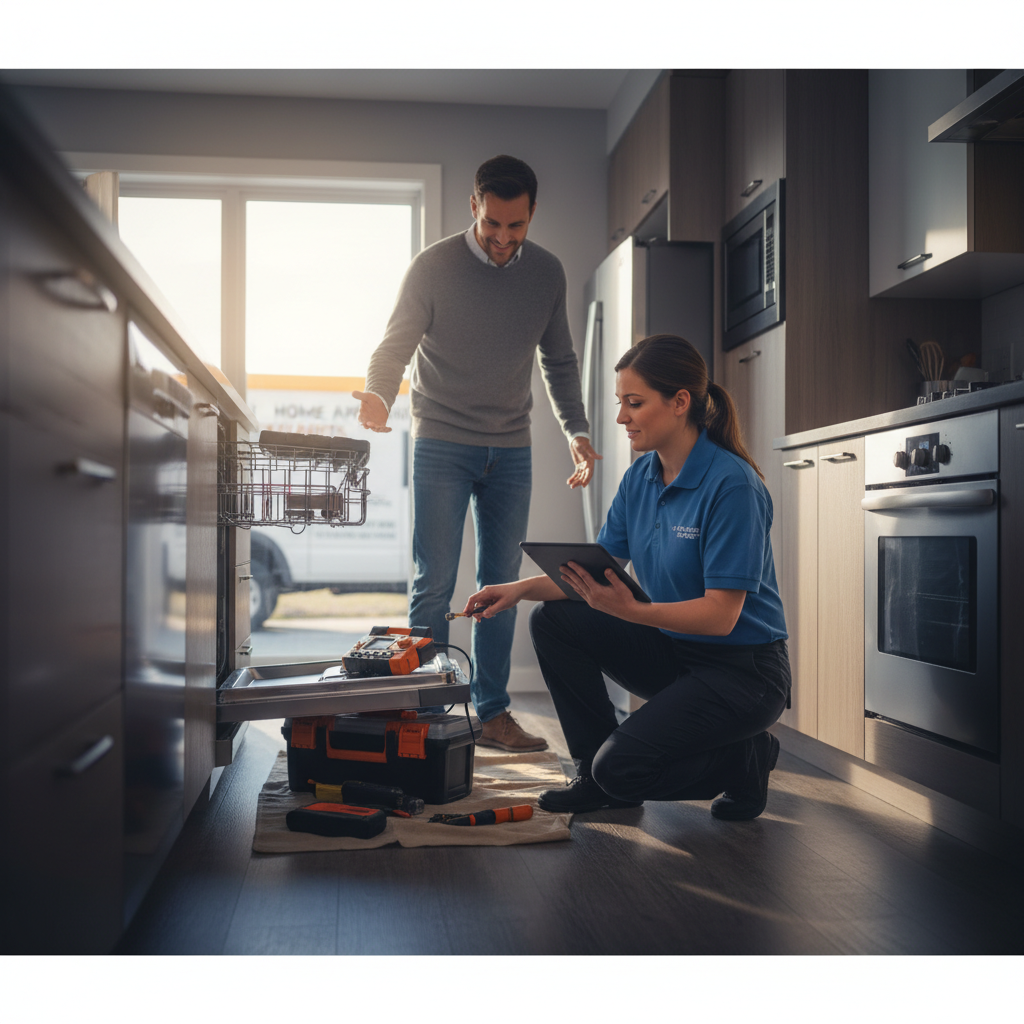
Your fridge is humming, the dryer won’t spin, and you’re tired of endless phone tag. Here’s how to get a transparent, cost‑controlled fix – and why the AI‑native platform PLMBR is reshaping the whole process.
Introduction
Imagine you’re juggling a work‑from‑home deadline when the kitchen freezer clicks off. You pick up the phone, call the “best” local repair service you found on a generic directory, and spend the next hour navigating voicemail, back‑and‑forth scheduling, and a vague estimate that reads “$300‑$500.”
You’re not alone.
The U.S. appliance‑repair market is projected to reach $5.6 B by 2031 with a 2.6 % CAGR 1. Yet 68 % of homeowners say they’d choose repair over replacement only if the cost stays under $400 2. The mismatch between demand for affordable fixes and a fragmented, lead‑gen‑heavy marketplace creates a perfect storm of high‑priced spare parts, scarce skilled technicians, and opaque quotes.
If you’ve ever felt stuck between an inflated quote and the fear of paying upfront for a job that may never happen, this guide is for you. We’ll break down what you need to know, expose the weak points of the traditional workflow, and show how an AI‑powered platform like PLMBR can turn a chaotic repair request into a clear, escrow‑secured booking packet—no more phone tag, no more surprise bills.
What Homeowners Need To Know About Appliance Repair
Appliance repair isn’t a one‑size‑fits‑all service. Different appliances, ages, and brands bring distinct cost drivers and skill requirements. Below are the key categories you’ll encounter:
- Refrigerators & Freezers – The most expensive to fix because compressors and sealed‑system components are pricey. Typical repairs range $200‑$500 3.
- Washers & Dryers – Belt, motor, or sensor failures dominate. Expect $150‑$400 for a washer and $100‑$300 for a dryer.
- Dishwashers – Leaking hoses or electronic control boards usually run $120‑$350.
- Stoves & Ovens – Ignition or heating element issues fall in the $150‑$350 bracket.
Seasonal spikes matter, too. Heat‑pump and AC repairs surge in summer, while dryer and heater issues climb in winter, often inflating labor rates because technicians are booked solid.
Beyond price, consider safety and compliance. Appliances are connected to gas, electricity, and water lines; improper repairs can violate local building codes and even create fire hazards. Always verify that a technician holds the appropriate state licensing (e.g., New York’s Department of Labor licensing portal) and carries liability insurance.
Cost / Risk / Hiring Reality
Understanding the financial and risk landscape helps you set realistic expectations and avoid hidden fees. Below is a snapshot of the most common cost components and the associated risks for a typical mid‑range refrigerator repair.
| Cost Component | Typical Range | What Drives It | Risk if Not Transparent |
|---|---|---|---|
| Labor | $100‑$200 | Technician skill level, travel distance, urgency | Unexpected overtime or “after‑hours” surcharges |
| Parts | $80‑$250 | Spare‑part market (e.g., compressors up 12 % YoY) 4 | Mark‑up on OEM vs. aftermarket parts |
| Diagnostic Fee | $50‑$80 (often waived if you proceed) | Time spent troubleshooting | Duplicate charge if you switch providers |
| Travel/Call‑out | $30‑$70 | Distance, traffic, provider’s policy | Surprise “dispatch” fee after quote |
| Escrow/Payment Hold | 0% (if using PLMBR) | Funds held until job completion | Up‑front payment risk with traditional providers |
Scroll to see all columns →
Key risk takeaway: When quotes are delivered as a single lump sum, homeowners can’t see where the money goes, leading to scope creep and surprise bills. Structured, line‑item quotes eliminate that ambiguity.
How To Vet Providers Without Getting Burned
Finding a reliable technician used to feel like a lottery, but a systematic vetting process can dramatically improve outcomes:
-
Check Licensing & Insurance
- Verify the provider’s state contractor license (most states maintain searchable online databases).
- Ask for proof of liability insurance and workers’ compensation; these protect you if a technician is injured on your property.
-
Read Verified Reviews & Ratings
- Look beyond star counts. Scrutinize recent comments for mentions of timeliness, professionalism, and price accuracy.
- Platforms that aggregate verified post‑service feedback (e.g., Better Business Bureau) tend to be more trustworthy.
-
Confirm Experience with Your Appliance Brand
- Not all technicians are certified to service smart appliances from Samsung, LG, or Whirlpool. Ask specifically about brand certifications.
-
Ask for a Structured Quote Up Front
- Request a line‑item quote that breaks down labor, parts, and any additional fees. If a provider balks, it’s a red flag.
-
Use a Platform That Holds Funds in Escrow
- An escrow‑backed payment flow (as offered by PLMBR) ensures you only release money after the repair is verified complete, protecting you from upfront scams.
Pro‑Tip: When a technician offers a “flat‑rate” price, ask for a breakdown. If they can’t provide one, move on.
Where The Old Workflow Breaks
The traditional appliance‑repair journey is riddled with friction points:
| Step | Pain Point | Why It Happens |
|---|---|---|
| Intake | Phone tag, vague description | Homeowners must explain issues over multiple calls, leading to mis‑communication. |
| Matching | Keyword‑based search returns irrelevant providers | Platforms rely on simple text matching, ignoring trade‑specific expertise or geographic proximity. |
| Quote Generation | Ballpark estimates, no line items | Technicians manually draft estimates, often inflating to cover unknowns. |
| Communication | Disparate channels (phone, email, SMS) | No unified thread; important details get lost. |
| Payment | Up‑front cash or credit card charge | Homeowners bear risk if the job isn’t completed or is done poorly. |
| Dispute Resolution | Long, manual back‑and‑forth | No structured evidence collection; resolution can take weeks. |
Scroll to see all columns →
These gaps create dead leads (providers chasing unqualified homeowners) and ghosting (homeowners left in the dark after a quote). The result is a market where 22 % of service firms report “unable to fill jobs” for modern, smart‑appliance repairs 5, further driving up labor costs.
How PLMBR Changes This Workflow
PLMBR is an AI‑native home‑services workflow and payments platform that re‑engineers every step of the repair process:
| PLMBR Feature | Traditional Pain Point Solved |
|---|---|
| Conversational AI Intake | Homeowners describe the issue in plain English (with photos). The AI instantly identifies the correct trade, urgency, and location—no more phone tag. |
| Semantic Search & Matching | Vector‑based embeddings match you with the best‑fit technicians based on distance, ratings, and verified skill sets, not just keyword overlap. |
| AI Agent Outreach (Premium) | One click launches an AI‑driven outreach to multiple vetted providers. You receive status updates for each outreach, eliminating endless follow‑ups. |
| Booking Packet Builder | The platform generates a structured, line‑item quote (scope, parts, labor, milestones) that you can compare side‑by‑side with other providers. |
| In‑Context Messaging | All chats, packet views, and billing requests live inside a single thread, so nothing falls through the cracks. |
| Escrow‑Backed Payments | Funds are held securely via Stripe until you confirm the job is complete. Progressive, milestone‑based billing lets you pay as work is verified. |
| AI‑Mediated Dispute Resolution | Evidence packs and automated recommendations streamline any disagreements, cutting resolution time from weeks to days. |
| Zero Dead Leads for Pros | Providers only see qualified jobs—no per‑lead fees, no wasted outreach. |
Scroll to see all columns →
What this looks like in practice:
- You upload a photo of a leaking dishwasher and type “water leaking from bottom, won’t drain.”
- PLMBR’s AI tags it as a Dishwasher Repair, asks a follow‑up about the brand, then surfaces three top‑rated technicians in Boston.
- With a single tap, the Seeker AI Agent contacts all three, tracks their replies, and presents three booking packets side‑by‑side, each with a clear line‑item breakdown.
- You choose the best fit, authorize the escrowed payment, and the technician schedules the visit. Once the repair is complete, you release the funds with a single click.
No more guessing, no more chasing, and no risk of paying for a job that never happens.
Questions To Ask Before Hiring
Even with PLMBR’s safeguards, a quick checklist helps you stay confident:
- Is the technician licensed for my state and certified for my appliance brand?
- Can you provide a line‑item booking packet before work begins?
- What is the estimated timeline for parts delivery? (Ask especially for compressors or control boards.)
- Do you accept escrow‑backed payment, and how does progressive billing work for larger jobs?
- What is your policy for warranty on parts and labor?
- How will you communicate updates (in‑app messaging, phone, email)?
If a provider hesitates on any of these, you have a solid reason to keep looking.
Conclusion
Appliance repair shouldn’t feel like a gamble. The market’s $5.6 B size and rising spare‑part costs are real, but the old lead‑gen, phone‑tag model leaves homeowners exposed to vague pricing, dead leads, and payment risk.
By leveraging AI‑driven intake, semantic matching, structured booking packets, and escrow‑backed payments, PLMBR transforms the chaotic repair journey into a transparent, single‑thread workflow where you stay in control from the moment you describe the problem to the final payment release.
Ready for an AI‑powered, escrow‑secure appliance repair? Start now:
- Visit the PLMBR homepage
- Find vetted Appliance Repair pros in your city: Find Appliance Repair pros on PLMBR
- Compare multiple structured quotes side‑by‑side: Compare quotes on PLMBR
For more home‑service guides, explore our blog. Your home deserves a repair experience that’s as smart as your appliances—let PLMBR deliver it.
References
- 360 iResearch – Home Appliance Repair & Maintenance Service Market 2026‑2032
- Metastat Insight – US Home Appliance Repair and Parts Market
- FieldProxy – Appliance Repair Pricing Guide 2024
- EconMarketResearch – Home Appliance Repair Market Size and Growth 2035
- Sharetribe – How to build a marketplace for appliance repair
External Resources