
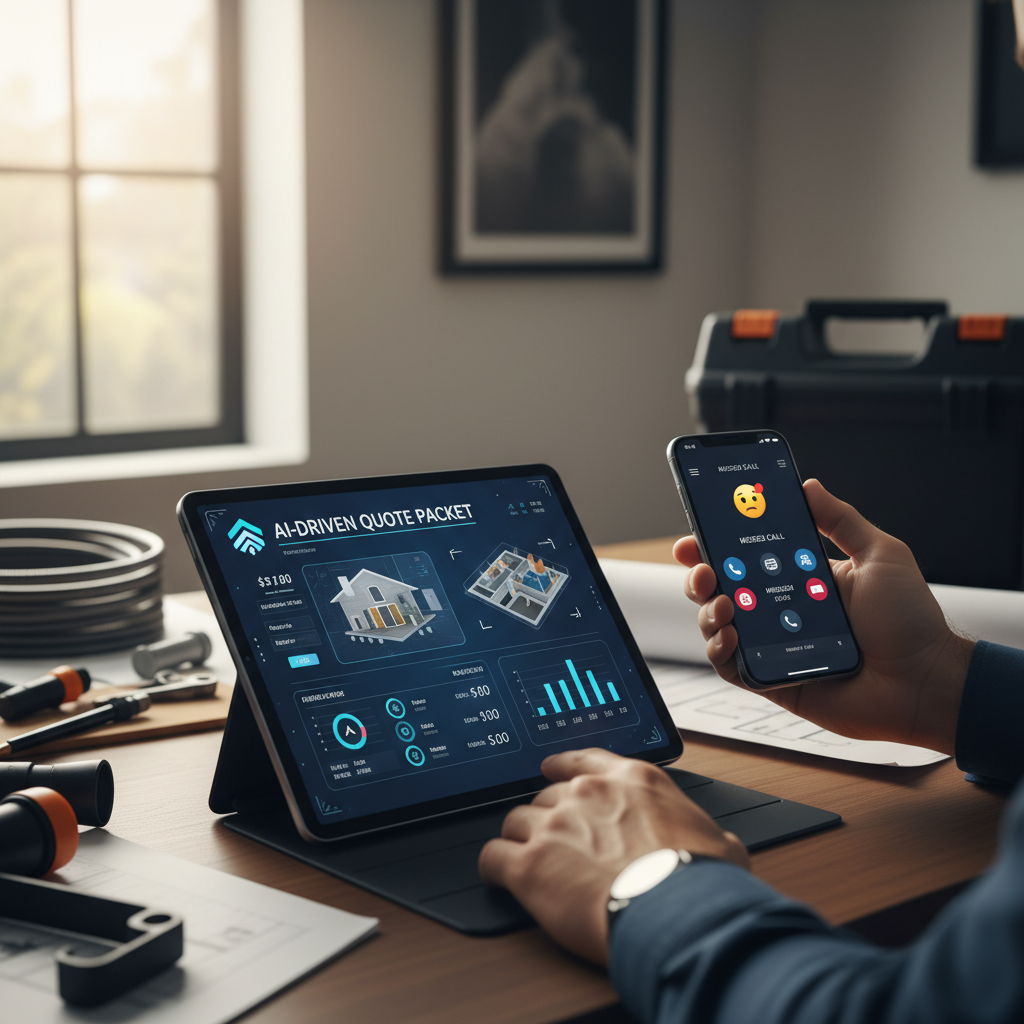
The Homeowner’s Complete Guide to Drain Cleaning & Sewer Repair in 2024 – Why an AI‑Driven Quote Packet Beats the Old Phone‑Tag Routine
You hear a gurgle from the kitchen sink at 2 a.m., the bathtub drains at a snail’s pace, and a faint sewer odor lingers in the basement. You grab the phone,…
Introduction
You hear a gurgle from the kitchen sink at 2 a.m., the bathtub drains at a snail’s pace, and a faint sewer odor lingers in the basement. You grab the phone, scroll through a directory of “local plumbers,” and brace for the inevitable — hours of back‑and‑forth, vague estimates, and a surprise bill once the work is done.
You’re not alone. A 2024 BloqMarketing survey found that 30‑40 % of homeowners consider “paying before the job is finished” the top pain point when hiring a plumber. At the same time, the global drain‑cleaning & sewer‑repair market is projected to reach $8.4 B by 2031 (Research & Markets). The market is booming, but the hiring workflow is stuck in a 1990s‑style phone‑book loop.
In this guide we’ll break down:
- What you need to know about drain cleaning & sewer systems.
- Real‑world cost ranges, risks, and hiring realities.
- How to vet providers without getting burned.
- Where the traditional lead‑gen workflow breaks down.
- How PLMBR’s AI‑native home‑services platform rewrites the process with structured, escrow‑backed quote packets and progressive billing.
- The exact questions you should ask before signing a contract.
By the end, you’ll have a clear, step‑by‑step plan to get your drains fixed fast, transparently, and with payment protection—all without endless phone tag.
What Homeowners Need To Know About Drain Cleaning & Sewer
Common Failure Modes
| Failure Mode | Typical Symptoms | Why It Happens |
|---|---|---|
| Grease & food buildup | Slow draining kitchen sink, occasional clogs | Cooking fats solidify on pipe walls, especially in older 1‑½‑inch lines |
| Tree‑root intrusion | Bubbling water, foul odor, intermittent backups | Roots seek moisture and pry into aging clay or cast‑iron sewers |
| Hair & soap scum | Shower drain drips slowly, hair sleeves in water | Hair binds with soap residue, forming a plug over weeks |
| Aging pipe corrosion | Water stains, rust flakes, frequent clogs | Metal pipes corrode, reducing internal diameter |
| Improper venting | Gurgling noises, slow drain after flushing | Vent stacks clogged or undersized, causing pressure imbalances |
Scroll to see all columns →
Understanding the cause helps you explain the problem accurately to a professional and reduces mis‑diagnosis.
Pro‑Tip: Take a quick photo of the affected fixture (or the visible backup) before you call anyone. PLMBR’s AI intake can read the image and suggest the most likely cause, cutting the back‑and‑forth by half.
Preventive Maintenance Basics
- Monthly: Run hot water for 2 minutes and use a biodegradable enzyme cleaner.
- Quarterly: Flush each drain with a mixture of baking soda (½ cup) followed by boiling water.
- Annually: Schedule a video‑inspection for your main sewer line—many municipalities now require it before permits for major repairs (Future Market Insights).
For commercial kitchens or rental properties, a preventive contract (often a yearly service plan) can reduce emergency calls by 70 % (Future Market Insights survey).
Cost / Risk / Hiring Reality
Typical Price Ranges (2024)
| Service | Typical Cost (Residential) | Typical Cost (Commercial) | Notes |
|---|---|---|---|
| Simple snaking (≤ 30 ft) | $100 – $300 | $300 – $600 | Depends on pipe depth & access |
| Hydro‑jetting (≤ 150 ft) | $300 – $800 | $800 – $2,000 | Removes grease & roots; best for stubborn blockages |
| Video inspection | $150 – $250 | $250 – $500 | Provides visual proof for permits |
| Sewer line repair (section) | $2,500 – $10,000+ | $5,000 – $25,000+ | Cost driven by pipe material, trenching method, and permits |
| Emergency after‑hours call | +$150 – $250 surcharge | +$250 – $500 surcharge | Many providers charge a flat premium for night/weekend work |
Scroll to see all columns →
Research Anchor: The Archive Market Research report lists these exact ranges, confirming the wide pricing variance that fuels homeowner confusion.
Hidden Risks
| Risk | Why It Happens | Impact |
|---|---|---|
| Scope creep | Provider discovers “additional problems” once walls are opened | Unexpected $1,000‑$3,000 add‑ons |
| Up‑front cash demand | No escrow, provider wants guarantee | Homeowner bears risk if work is incomplete |
| Dead leads | Lead‑gen platforms charge per click but rarely convert | Providers waste time; homeowners get no response |
| Regulatory delays | Missing video‑inspection documentation | Permit holds, project delays of 1‑2 weeks |
Scroll to see all columns →
Understanding these risks lets you demand safeguards—like line‑item quotes and escrow‑backed payments—up front.
How To Vet Providers Without Getting Burned
-
Check Licensing & Insurance
- Verify a state plumbing license (e.g., NY License #12345) via the New York State Department of Labor.
- Request a copy of liability insurance and workers‑comp coverage; PLMBR auto‑tracks expirations for you.
-
Read Structured Reviews, Not Star Ratings
- Look for detailed feedback on specific jobs (e.g., “fixed my tree‑root blockage in 2 hours, no surprise fees”).
- PLMBR’s provider profiles embed line‑item rating metrics (timeliness, professionalism, accuracy of quote).
-
Ask for a Booking Packet
- A booking packet is a formal, line‑item quote that includes:
- Scope of work (e.g., “hydro‑jet 120 ft of 4‑in. pipe”)
- Materials list (e.g., “PVC 4‑in. coupler – $12 each”)
- Milestone billing schedule
- Terms & conditions, including warranty length
- Compare at least three packets side‑by‑side before deciding.
- A booking packet is a formal, line‑item quote that includes:
-
Verify Payment Protection
- Insist on an authorize‑capture escrow (Stripe) where funds are held until the job is marked complete. This eliminates the “pay‑up‑front” risk highlighted in the BloqMarketing survey.
-
Confirm Calendar Sync
- Providers who sync availability with Google Calendar or Outlook reduce the chance of double‑booking—critical for time‑sensitive emergencies.
Following this checklist can cut the average vetting time from 8 hours to under 30 minutes, especially when you use an AI‑driven platform that pre‑populates many of these fields.
Where The Old Workflow Breaks
| Step | Traditional Flow (Angi, Thumbtack, HomeAdvisor) | Pain Point |
|---|---|---|
| 1️⃣ Lead Capture | Homeowner fills a short form → platform assigns lead (pay‑per‑lead) | Providers pay for leads that never convert |
| 2️⃣ Provider Contact | Phone‑tag begins; provider calls, homeowner replies later | Hours‑long back‑and‑forth, missed messages |
| 3️⃣ Estimate | Provider gives a vague “$200‑$400” estimate over the phone | No line‑item breakdown, scope drift |
| 4️⃣ Confirmation | Homeowner decides, often without seeing a written contract | Payment risk; surprise fees appear on‑site |
| 5️⃣ Payment | Up‑front cash or post‑job invoice | 30‑40 % of homeowners report paying before work is done (BloqMarketing) |
| 6️⃣ Completion | No centralized record; disputes handled via phone or email | Dispute resolution is slow and opaque |
Scroll to see all columns →
These six steps create a broken loop: providers waste time chasing dead leads, homeowners endure phone tag, and both parties risk financial surprises. The result is a market where “lead‑gen fatigue” drives providers to abandon platforms, and homeowners turn to friends for referrals instead of online services.
How PLMBR Changes This Workflow
1. Conversational AI Intake
- What you do: Describe the issue in plain English, attach a photo.
- What PLMBR does: AI identifies trade, urgency, and asks only the follow‑up questions that improve match quality.
Screenshot example:

2. Semantic Search & Precise Matching
- Uses vector embeddings to match you with the top‑fit providers based on location, availability, ratings, and trust signals—far beyond keyword matches used by competitors.
3. AI Agent Outreach (Premium)
- One click launches an AI‑driven outreach that contacts multiple vetted providers simultaneously, tracks each response, and surfaces the most promising packet.
Screenshot example:

4. Booking Packet Builder
- Providers receive the full conversation context and can generate a structured quote (booking packet) in seconds. The packet includes line‑item pricing, milestones, and legal terms pulled from PLMBR’s contract library.
Screenshot example:

5. Side‑by‑Side Packet Comparison
- Homeowners can view up to four packets in a single table, filter by price, rating, or milestone schedule, and select the best fit.
| Provider | Total Price | Milestones | Rating | Escrow Held |
|---|---|---|---|---|
| PlumbPro NYC | $425 | 2 (50 %/50 %) | ★★★★☆ | Yes |
| Metro Pipe Co. | $460 | 1 (Full) | ★★★★★ | Yes |
| QuickFix Plumbing | $398 | 3 (30 %/40 %/30 %) | ★★★★☆ | Yes |
Scroll to see all columns →
6. Escrow‑Backed, Progressive Billing
- Funds are authorized via Stripe and captured only when each milestone is marked complete. For a $1,200 sewer‑line repair, you might pay $360 upfront, $480 after mid‑project inspection, and $360 on completion.
7. AI‑Mediated Dispute Resolution
- If a provider claims additional work, the AI assembles an evidence pack (photos, timestamps, chat logs) and suggests a fair settlement, reducing resolution time from weeks to days.
8. Zero Dead Leads
- Because the platform only connects you with homeowners who have a qualified job (verified via AI intake), providers never pay per lead and never waste time on “ghost” inquiries.
In short, PLMBR collapses the six‑step broken loop into three streamlined actions:
1️⃣ AI Intake → Smart Match
2️⃣ Structured Quote Packets → Side‑by‑Side Comparison
3️⃣ Escrow‑Backed Progressive Billing → Fast Dispute Resolution
The result? Up to 80 % less time spent on coordination and zero surprise bills.
Questions To Ask Before Hiring
-
Can you provide a detailed booking packet?
- Look for line‑item pricing, milestones, and warranty terms.
-
Do you use an escrow or authorize‑capture payment method?
- PLMBR’s Stripe integration holds funds until you approve completion.
-
What is your calendar sync process?
- Providers who integrate with Google Calendar reduce the risk of double‑booking.
-
Do you have video‑inspection documentation? (If sewer work is required)
- Required by many municipalities; also a powerful proof point for future resale.
-
Are you licensed, insured, and up to date with local codes?
- Verify via the state licensing board (e.g., NY State Department of Labor).
-
Do you offer a maintenance contract?
- For commercial kitchens or multi‑unit buildings, a contract can lock in a 70 % reduction in emergency calls (Future Market Insights).
Having answers to these questions in writing (within the booking packet) eliminates the “vague estimate” trap that still plagues traditional lead‑gen platforms.
Conclusion
The drain‑cleaning market is booming—projected at $8.4 B by 2031—yet the way homeowners hire plumbers remains stuck in the 1990s. You no longer have to endure endless phone tag, vague estimates, or the fear of paying before the job is done.
By leveraging PLMBR’s AI‑native workflow, you get:
- Instant, AI‑validated intake that pinpoints the problem.
- Semantic matching to the most qualified, nearby providers.
- Structured, line‑item quote packets for transparent pricing.
- Escrow‑backed, progressive billing that protects your money.
- AI‑mediated dispute resolution that resolves issues in days, not weeks.
Ready to upgrade from the broken lead‑gen loop?
- Visit the PLMBR homepage to see the platform in action.
- Find Drain Cleaning & Sewer pros on PLMBR for Boston, New York City, Philadelphia, or your local area.
- Compare quotes on PLMBR and pick the packet that fits your budget and timeline.
- For more homeowner guides, check out our blog.
Take control of your home’s plumbing health—let AI do the legwork so you can focus on living, not chasing.
External Resources
- Environmental Protection Agency (EPA) – Guidance on safe drain cleaners: https://www.epa.gov/ground-water-and-drinking-water
- Plumbing-Heating-Cooling Contractors Association (PHCC) – Licensing standards: https://www.phccweb.org
- Better Business Bureau (BBB) – How to evaluate contractor complaints: https://www.bbb.org
- This Old House – DIY drain maintenance tips: https://www.thisoldhouse.com/plumbing
Empowered with AI, informed with data, and protected by escrow—your next drain‑cleaning project can finally be stress‑free.