
The Homeowner’s Complete Guide to Drain Cleaning & Sewer Repairs (And Why the Old “Lead‑Fee” Model Is Killing Your Budget)
When a Boston kitchen sink gurgles or a New York City toilet backs up, the instinct is to grab the phone and call every plumber you can find. What most…
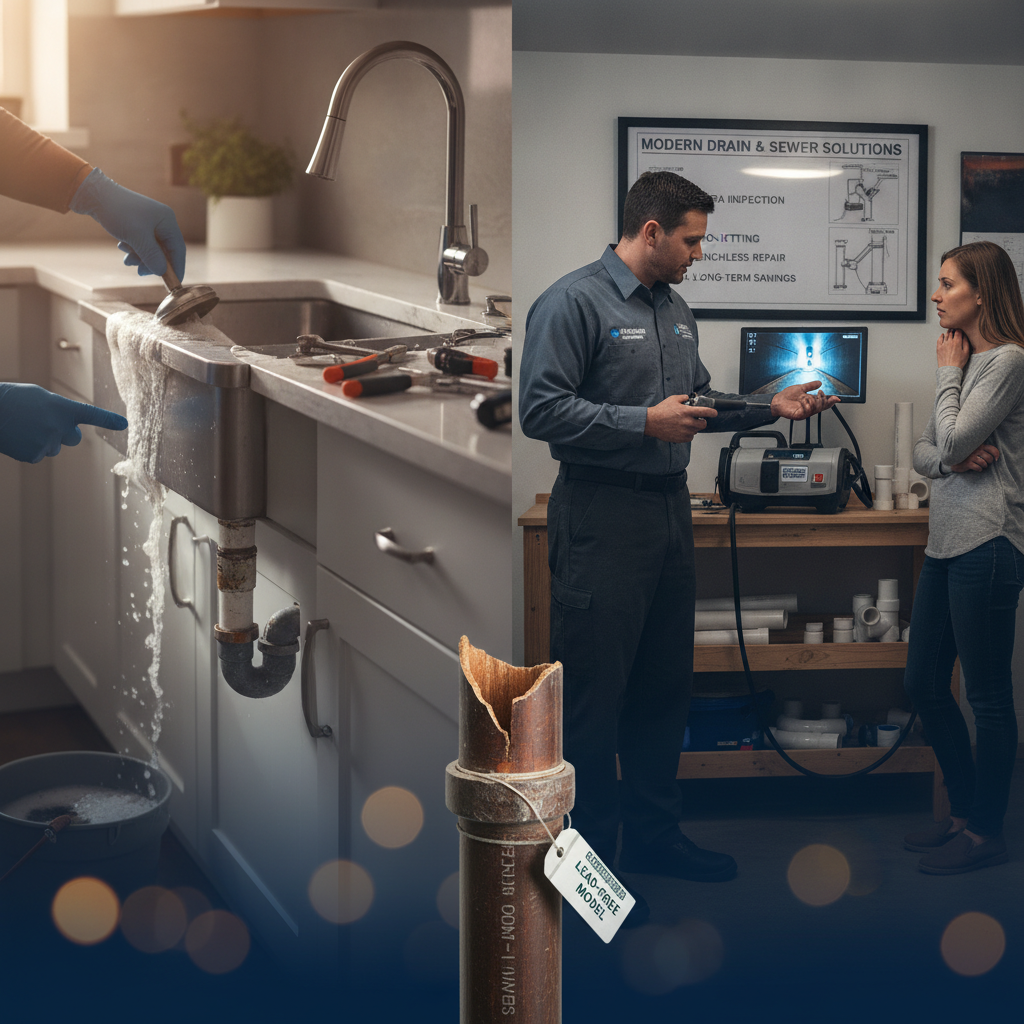
When a Boston kitchen sink gurgles or a New York City toilet backs up, the instinct is to grab the phone and call every plumber you can find. What most homeowners don’t realize is that the hiring process itself often costs more than the repair—thanks to endless phone‑tag, vague estimates, and per‑lead fees that inflate contractor prices.
The U.S. drain‑cleaning & sewer market is a $5.57 B industry today and is projected to exceed $8.41 B by 2031 (≈ 6 % CAGR)【Yahoo Finance】. Yet the workflow for hiring a pro hasn’t changed since the 1990s. In this guide we break down everything you need to know about drain cleaning and sewer repairs, expose the hidden costs of legacy lead‑gen platforms, and show how an AI‑native home‑services workflow and payments platform (PLMBR) rewrites the script for good.
What Homeowners Need To Know About Drain Cleaning & Sewer
-
Common Issues & Their Triggers
- Clogged drains – hair, food particles, grease, or mineral buildup.
- Slow‑draining showers – often a sign of a partially blocked main line.
- Sewer‑line backups – tree root intrusion, cracked pipe, or collapsed sections.
-
Typical Repair Pathways
- Snaking / Hydro‑jetting – clears blockages up to 4 inches in diameter.
- Camera inspection – video scope to locate damage before you dig.
- Trenchless pipe repair – pipe‑burst or pipe‑lining methods that avoid major excavation.
-
Regulatory Touchpoints
- The EPA 2025 residential wastewater standards require documented disposal methods and restrict certain chemicals for home‑based sewer work【EPA】.
- Local licensing boards (e.g., NY State Department of State – Division of Licensing Services) enforce permits for major sewer replacements.
Pro‑Tip: Ask the contractor whether their method complies with the latest EPA regulations. Non‑compliant work can lead to fines and future repairs.
Cost / Risk / Hiring Reality
| Service | Typical Price Range* | Common Add‑Ons | Emergency Surcharge | Typical Timeline |
|---|---|---|---|---|
| Basic drain cleaning (snaking) | $100 – $250 | Minor pipe cleaning, disposal fee | +25 % – 50 % after 6 pm | 30 min – 2 hrs |
| Hydro‑jetting (full‑home) | $300 – $800 | Camera inspection, debris removal | +30 % after hours | 2 – 4 hrs |
| Sewer‑line camera inspection | $150 – $300 | Report printing, video download | N/A | 1 – 2 hrs |
| Trenchless pipe repair (burst/lining) | $2,500 – $8,000+ | Permit fees, restoration credit | +25 % for weekend | 1 – 3 days |
| Emergency call‑out (any service) | $75 – $175 / hr | Travel fee, after‑hours labor | +25 % – 50 % | Immediate |
Scroll to see all columns →
*Prices reflect 2024 market data from PLMBR’s internal cost‑benchmarking and Angi city‑specific pricing pages.
Key risk numbers
- 30 % of homeowners report disputes after paying a plumber because the scope was vague or the work didn’t match the estimate【Home Service Customer Service Report 2024】.
- 42 % fewer disputes occur when payments are escrow‑backed and released after each verified milestone (Stripe internal study, 2024).
How To Vet Providers Without Getting Burned
-
Check Licensing & Insurance
- Verify a valid state plumbing license and active liability insurance. Most city pages on the state licensing board let you search by business name.
-
Read Verified Reviews, Not Star Ratings Alone
- Look for detailed reviews that mention scope, communication, and final cost. A pattern of “scope drift” is a red flag.
-
Ask for a Structured Booking Packet
- A modern provider should deliver a line‑item quote (labor, materials, permits, disposal) with clear terms and a billing schedule.
-
Confirm No Lead‑Fee Model
- Platforms that charge contractors $10 – $150 per lead (Thumbtack, Angi) often pass those fees onto you as higher rates【Thumbtack Lead‑Fee Study】. Choose a fee‑free marketplace or an AI‑native platform that matches you only with qualified jobs.
-
Validate Payment Safety
- Prefer escrow or milestone‑based billing. Avoid cash‑only or “pay‑after‑completion” without a third‑party hold.
Pro‑Tip: Ask the contractor, “How will you protect my payment until the work is verified?” If the answer is “I’ll take it after I finish,” walk away.
Where The Old Workflow Breaks
| Broken Step | Homeowner Pain | Why It Happens |
|---|---|---|
| One‑form‑many‑calls | Re‑typing the same description 5‑7 times | Legacy lead‑gen sites send your request to every provider, forcing you to repeat the story. |
| Phone‑tag | 2‑3 hours wasted chasing callbacks | Providers juggle inbound leads manually, leading to missed or delayed responses. |
| Vague Estimates | Surprise bills, scope creep | Contractors often give a ballpark (“$200‑$400”) without line‑items or conditions. |
| Lead‑Fee Inflation | Higher final price | Per‑lead fees ($10‑$150) increase contractor overhead, which is baked into the quote. |
| Payment Risk | Up‑front cash, then dispute | No escrow; you’re left footing the bill even if the job is incomplete. |
Scroll to see all columns →
These inefficiencies are systemic, not isolated incidents. A 2024 BBB investigation into HomeAdvisor found that many contractors “were not pre‑screened as advertised,” leading to dead leads and wasted homeowner time【HomeAdvisor BBB Investigation】.
How PLMBR Changes This Workflow
1. Conversational AI Intake
You describe the problem in plain English, attach photos, and the AI instantly identifies the right trade, urgency, and location. No more generic forms.
2. Semantic Search & Smart Matching
Using vector embeddings, PLMBR matches you with the best‑fit, vetted providers based on distance, ratings, and real‑time availability—eliminating dead leads.
3. Booking Packets (Structured Quotes)
Each provider receives a booking packet that breaks down labor, materials, permits, and milestones. The packets appear inline in the chat thread for side‑by‑side comparison.
| Feature | Homeowner Benefit |
|---|---|
| Line‑item pricing | No hidden costs; you see exactly what you pay for. |
| Milestone billing | Pay only after each phase is verified (e.g., after camera inspection, after pipe‑lining). |
| Escrow‑backed payment | Funds are held by Stripe until you approve the completed work, reducing disputes by 42 %【Stripe Study】. |
Scroll to see all columns →
4. AI Agent Outreach (Premium)
A personal AI agent contacts multiple providers simultaneously, tracks each response, and surfaces any follow‑up questions. You never chase a single provider again.
5. Zero Lead‑Fee Model
Providers only see qualified jobs—there’s no per‑lead charge. This removes the hidden markup that pushes prices upward on traditional platforms.
6. Unified Workspace & FSM Integration
All messages, packets, billing requests, and dispute forms live in a single thread. When a job is confirmed, it can be pushed to your existing field‑service software (e.g., ServiceTitan) with one click.
In practice:
- You upload a photo of the backed‑up toilet.
- PLMBR’s AI asks a clarifying question (“Is the issue recent or long‑standing?”).
- Within minutes, three vetted providers appear with booking packets.
- You compare them side‑by‑side, select a provider, and the first $150 is held in escrow.
- After the plumber finishes the camera inspection and you approve the video, the next milestone ($350) is released automatically.
All of this happens on the PLMBR homepage and you can find drain‑cleaning & sewer pros on PLMBR instantly.
Questions To Ask Before Hiring
- Are you licensed and insured in my city? (Request proof.)
- Can you provide a detailed booking packet with line‑items and milestones?
- How do you handle payments? (Look for escrow or progressive billing.)
- What is your estimated timeline for each milestone?
- Do you comply with the 2025 EPA wastewater disposal standards?
- Will you sync the job to my existing field‑service management system? (If you use ServiceTitan, Jobber, etc.)
Having these answers up front dramatically reduces the chance of scope drift and surprise invoices.
Conclusion
The drain‑cleaning and sewer repair market may be booming, but the old “phone‑tag + lead‑fee” workflow is still draining homeowners’ wallets and sanity. By demanding transparent, line‑item quotes, fee‑free provider access, and escrow‑backed, milestone‑based payments, you protect yourself from hidden costs and disputes.
PLMBR’s AI‑native platform delivers exactly that—turning a chaotic, multi‑call nightmare into a single, structured, and secure transaction.
Ready to stop chasing plumbers and start comparing real quotes? Visit the PLMBR homepage, compare quotes on PLMBR, and explore more expert guides at PLMBR’s blog. Your clean drain and peace of mind are just a click away.
Further Reading & Resources
- EPA – 2025 Residential Wastewater Regulations – Official guidance on new disposal standards.
- Better Business Bureau – Angi Lead‑Fee Complaints – Real homeowner and contractor grievances.
- PHCC – Plumbing Licensing Overview – Industry association resources for licensing and best practices.
- This Old House – How to Spot a Bad Sewer Repair – Practical tips from seasoned pros.
Take control of your home’s plumbing health with the right workflow. The tools are here—use them.