
The Homeowner’s Complete Guide to Hiring an Appliance Repair Pro (and Why Traditional Lead‑Gen Sites Fail)
Imagine this: Your refrigerator stops cooling in the middle of a Boston summer heat wave. You call three “local” repair services, leave voicemails, and spend…
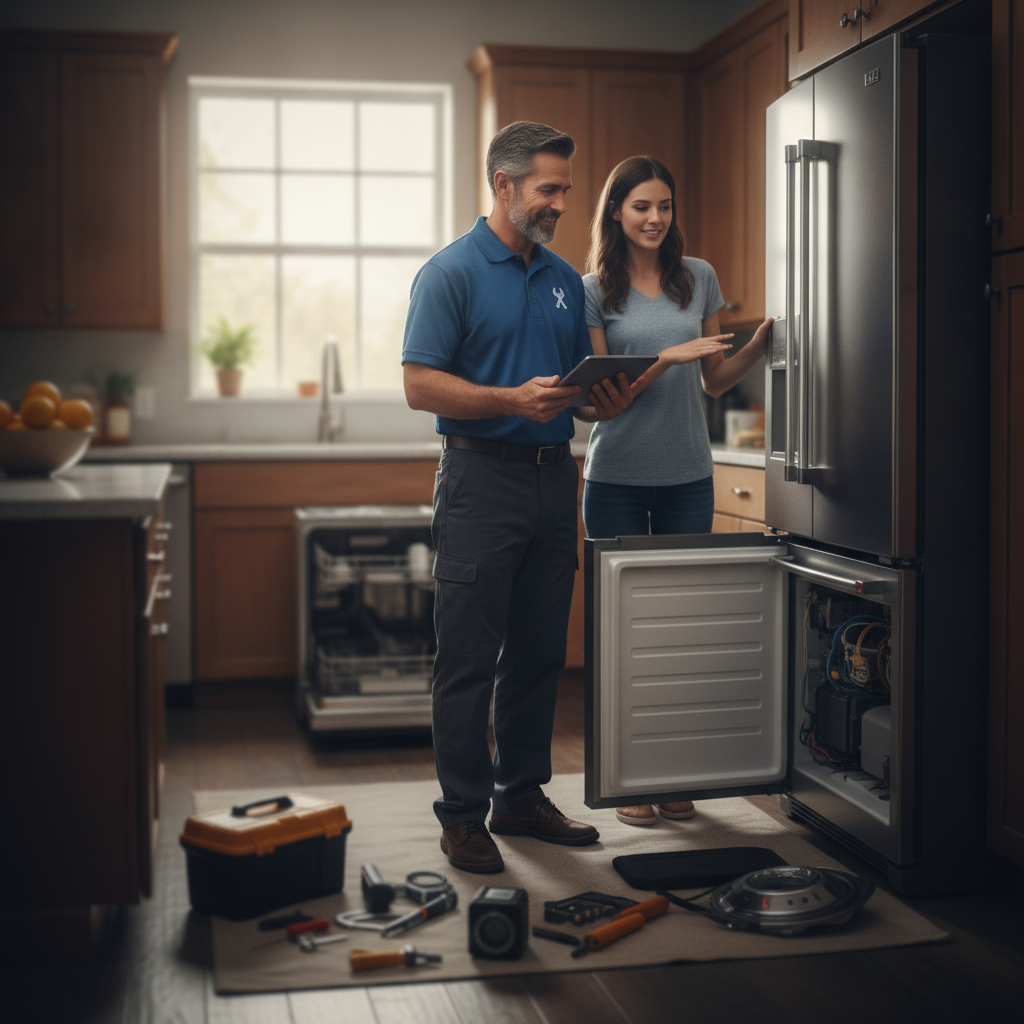
Imagine this: Your refrigerator stops cooling in the middle of a Boston summer heat wave. You call three “local” repair services, leave voicemails, and spend the next 48 hours chasing callbacks, vague price estimates, and a technician who shows up without the right part. By the time the job is finished you’ve paid an upfront fee, endured a surprise bill, and still aren’t sure the repair will hold.
You’re not alone. A 2023 Wall‑Street‑Journal report shows a 58 % year‑over‑year jump in appliance‑repair quote requests, yet the industry is still riddled with phone‑tag, low‑quality leads, and payment risk. In this guide we break down what you need to know, how to vet providers, where the old workflow breaks, and how PLMBR’s AI‑native home‑services workflow and payments platform eliminates those pain points.
What Homeowners Need To Know About Appliance Repair
Appliance repair covers a wide range of trades—refrigeration, ovens, dishwashers, washers & dryers, and small‑appliance fixes. While each device has its quirks, the hiring process shares common challenges:
- Diagnostic ambiguity – Most technicians need to see the appliance in person before pricing. That leads to multiple visits if the first estimate missed a part.
- Variable pricing – The same dryer repair can cost $150‑$500 depending on parts, labor, and regional market rates. Homeowners often cite “unclear pricing” as a top barrier (30‑40 % in consumer surveys).
- Payment risk – Traditional platforms require payment up‑front or rely on cash on completion, leaving you vulnerable to incomplete work or “ghosted” technicians.
- Lead‑fee trap for pros – Services like Angi and Thumbtack charge $10‑$200 per lead (see Thumbtack lead‑cost article) and still deliver low‑quality, non‑exclusive inquiries. Providers complain, and that cost is often passed to you.
Understanding these dynamics helps you ask the right questions and avoid common traps.
Cost / Risk / Hiring Reality
Below is a snapshot of typical costs, risk factors, and industry averages for common appliance‑repair jobs in the PLMBR launch markets (NY, MA, NH, PA).
| Appliance | Typical Labor Cost* | Parts Avg. | Total Avg. Price (USD) | First‑Time‑Fix Rate (Industry) | Common Risk |
|---|---|---|---|---|---|
| Refrigerator (compressor) | $120‑$200 | $250‑$400 | $370‑$600 | ≈ 75 % | Parts not on hand → second visit |
| Dryer (belt/roller) | $80‑$150 | $30‑$80 | $130‑$230 | ≈ 75 % | Misdiagnosed motor → extra charge |
| Dishwasher (pump) | $90‑$170 | $60‑$150 | $150‑$320 | ≈ 75 % | Hidden water‑damage fees |
| Oven (heating element) | $100‑$180 | $80‑$200 | $180‑$380 | ≈ 75 % | “Labor only” quotes hide part cost |
| Washer (control board) | $110‑$190 | $150‑$350 | $260‑$540 | ≈ 75 % | Warranty vs. out‑of‑pocket confusion |
Scroll to see all columns →
*Labor includes travel, diagnosis, and up to two hours of work.
Key takeaways
- First‑time‑fix rates hover around 75 % across the industry (Cryotos).
- Quote‑request volume is up 58 % YoY, meaning more demand and longer wait times for quality pros.
- Lead‑fee models add $10‑$200 per inquiry for providers, which drives up your eventual price.
How To Vet Providers Without Getting Burned
The old “call the first number that pops up” approach rarely works. Follow this systematic vetting process:
- Check licensing and insurance
- Verify the contractor’s state license number on the appropriate licensing board (e.g., NY Department of State) and confirm liability insurance coverage.
- Read verified reviews and dispute history
- Look for platforms that host in‑context, verified reviews tied to completed jobs, not generic star ratings.
- Ask for a structured booking packet
- A booking packet should list every line‑item (diagnostic fee, parts, labor, taxes), milestones, and terms. This eliminates “price‑shopper” surprises.
- Confirm escrow‑backed payment
- Choose a service that holds funds in escrow until you approve the completed work (see PLMBR’s Stripe‑powered flow).
- Evaluate response time and communication
- Providers who reply within an hour and use a unified messaging thread are usually better at staying on schedule.
Pro‑Tip: A provider that can instantly generate a booking packet from your photo‑rich description demonstrates both technical expertise and a modern workflow.
Where The Old Workflow Breaks
| Step | Typical Failure Mode | Homeowner Pain | Provider Pain |
|---|---|---|---|
| Intake | Phone‑tag, vague description, missing photos | Hours wasted, uncertainty | Missed leads, low conversion |
| Matching | Keyword search, multiple generic leads | Low relevance, repeated callbacks | Dead leads, wasted outreach |
| Quote | Hand‑written or “flat‑rate” estimate | Unclear scope, surprise costs | Time spent re‑negotiating |
| Messaging | Disparate email, SMS, voicemail | Lost context, miscommunication | Manual follow‑ups |
| Payment | Up‑front cash or unsecured card hold | Risk of non‑completion | Delayed cash flow |
| Dispute | No formal process, long phone battles | Stress, possible loss | Reputation damage |
Scroll to see all columns →
Why it matters: According to the BBB, 70 %+ of contractors report “low‑quality leads” and “payment disputes” as the top reasons for churn on platforms like Angi (Trustpilot rating 2.2/5). The fragmented workflow creates a feedback loop of mistrust that inflates prices for everyone.
How PLMBR Changes This Workflow
PLMBR replaces the broken chain with an AI‑native, end‑to‑end workflow that keeps every piece of the process inside a single, secure thread.
1. Conversational AI Intake
- You describe the issue in plain English, attach photos, and the AI instantly identifies the trade, urgency, and any missing details. No more endless phone calls.
2. Semantic Vector Matching
- PLMBR’s semantic search uses vector embeddings to surface only the most qualified, geographically close providers—eliminating irrelevant leads.
3. Booking Packet Builder (Provider‑Side AI)
- Once a provider engages, the AI drafts a structured, line‑item quote (scope, parts, labor, milestones). You receive a compare‑packets view side‑by‑side, so you can pick the best value instantly.
4. In‑Context Messaging & Agent Coordination
- All chats, photos, and packet cards appear inline. Premium seekers also get an AI Agent that contacts multiple providers simultaneously, tracks each response, and surfaces follow‑up questions only when needed.
5. Escrow‑Backed Payments & Progressive Billing
- Funds are authorized and held in Stripe Connect escrow. For larger jobs, PLMBR supports milestone‑based billing, releasing payment only after you approve each completed stage.
6. AI‑Mediated Dispute Resolution
- If something goes wrong, the platform auto‑generates an evidence pack and offers tiered resolution recommendations, cutting dispute time from weeks to days.
7. Zero Dead Leads for Providers
- Providers only see qualified, exclusive jobs—no more paying per lead that never converts. This translates into lower overhead and more competitive pricing for you.
Result: A faster, clearer, and safer hiring experience that aligns homeowner expectations with provider capabilities. Learn more on the PLMBR homepage or directly find appliance‑repair pros on PLMBR.
Questions To Ask Before Hiring
-
Can you provide a detailed booking packet?
- Look for line items, labor rates, parts cost, taxes, and a clear timeline.
-
How do you handle payment?
- Prefer escrow or progressive billing; avoid full upfront cash.
-
What’s your first‑time‑fix rate?
- A reputable pro should be transparent (industry average ≈ 75 %).
-
Do you have current insurance and licensing?
- Request copies; PLMBR auto‑tracks expiration dates for you.
-
Will you sync the job to my calendar or a field‑service app?
- Integration with Google Calendar or ServiceTitan reduces scheduling errors.
-
How do you manage parts inventory?
- Ask if they confirm part availability before the appointment—this cuts repeat visits.
Conclusion
Appliance repair is essential, but the hiring journey has been stuck in a 20‑year‑old loop of phone tag, vague estimates, and risky payments. The data is clear:
- 58 % increase in quote requests shows demand is soaring.
- 75 % first‑time‑fix rate indicates room for improvement through better dispatch and parts planning.
- Lead fees of $10‑$200 and low‑quality leads plague traditional marketplaces (Angi, Thumbtack).
PLMBR flips the script by delivering an AI‑first, fee‑free, structured‑quote workflow that protects homeowners and empowers providers. By using conversational AI intake, semantic matching, in‑context messaging, and escrow‑backed progressive billing, PLMBR removes the friction points that have made appliance repair a gamble for too long.
Ready to experience a smoother repair process? Visit the PLMBR homepage, explore the Appliance Repair category, and start comparing quotes in minutes. For more home‑service guides, check out our blog library.
Further Reading & Authority Sources
- Cryotos – CMMS Workflows for Appliance Repair Teams – https://www.cryotos.com/blog/cmms-workflows-appliance-repair-teams
- Fieldproxy – Appliance Repair Business Guide – https://www.fieldproxy.ai/resources/blog/appliance-repair-business-guide-from-manual-to-automated-operations-d1-25
- Better Business Bureau – Angi Reviews – https://www.bbb.org/angicomplaints
- U.S. Consumer Financial Protection Bureau – Home Service Payment Tips – https://www.consumerfinance.gov/consumer-tools/repair-and-renovation/
- This Old House – How to Choose a Repair Service – https://www.thisoldhouse.com/repair-services
Empower your home, protect your wallet, and let AI do the heavy lifting.