
The Homeowner’s Playbook for Deck & Porch Projects in the Northeast – Costs, Permits, Safety, and How to Hire the Right Pro
Dreaming of a summer‑ready deck in Boston or a cozy front porch in Philadelphia? You’re not alone. Outdoor‑living spaces have surged in value over the past…
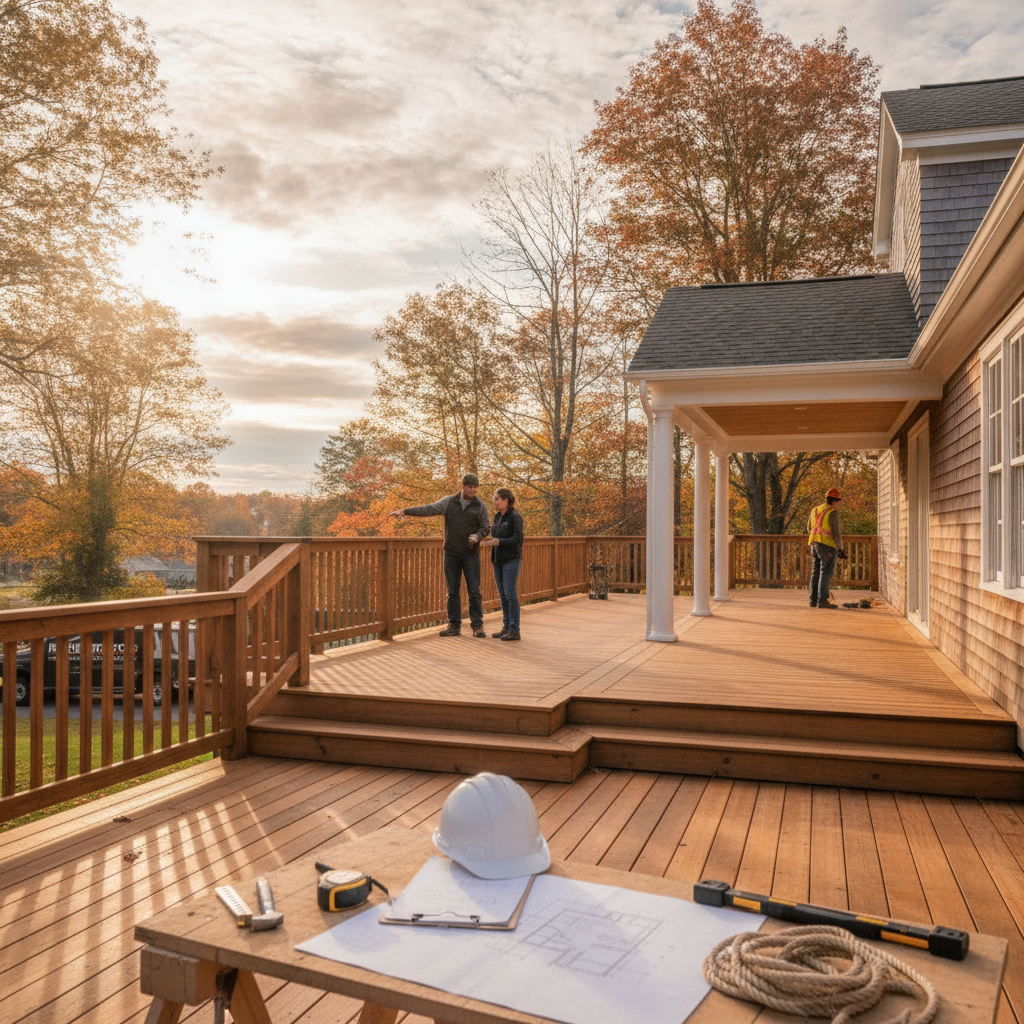
Dreaming of a summer‑ready deck in Boston or a cozy front porch in Philadelphia? You’re not alone. Outdoor‑living spaces have surged in value over the past decade, but the path from idea to finished project is still riddled with phone tag, vague estimates, and hidden lead‑fee traps. This guide walks you through every step—budget, permits, safety, and hiring—while showing why the old lead‑gen marketplace model no longer works and how PLMBR’s AI‑native workflow eliminates the headaches.
What Homeowners Need To Know About Decks & Porches
1. Design choices drive cost and code compliance
- Material matters: Pressure‑treated wood is the cheapest entry point (≈ $15‑$25 / sq ft) but requires regular sealing and typically lasts 10‑12 years. Composite decking costs $30‑$45 / sq ft and can last 25‑30 years with minimal upkeep.
- Railing requirements: In New York City, railings must be 36‑inches high with balusters spaced no more than 4 inches apart (NYC Building Code § 1103). Boston and Philadelphia have similar height rules, but Boston adds a 1.5‑inch minimum for baluster spacing to prevent children from slipping through.
- Load capacity: A standard residential deck must support 40 psf (pounds per square foot) plus a 150 psf concentrated load (e.g., a hot tub). Exceeding these limits without engineering approval can invalidate insurance and trigger costly retrofits.
Pro‑Tip: Sketch a rough layout in a free tool like SketchUp or the PLMBR wizard before you start. The AI intake will flag any design choices that clash with local code, saving you a permit surprise later.
2. Permit headaches are real—and expensive
Most municipalities in the Northeast treat decks over 100 sq ft and any porch addition as a building permit project. Permit fees range from $350 in rural Maine to $1,800 in Manhattan, depending on scope and inspection count. Failing to secure a permit can lead to:
- Fines ranging from $500‑$5,000.
- Forced removal of the structure, which can cost 2‑3× the original build.
- Resale complications – unpermitted work must be disclosed to buyers, often lowering the home’s market value.
The Minimal & Modern guide on deck vs. porch value outlines the exact permit thresholds for major Northeast cities.
3. Safety isn’t optional
According to Green & Healthy Maine Homes, “hundreds of thousands of people are injured each year in the U.S. due to deck failures.” Common failure points include:
| Failure Type | Typical Cause | Warning Signs |
|---|---|---|
| Rotting joists | Water intrusion, poor drainage | Soft spots, musty odor |
| Loose fasteners | Improper installation, corrosion | Wobbling boards, squeaks |
| Cracked railings | Over‑loading, wood splitting | Visible cracks, loose balusters |
| Inadequate footings | Frost heave, undersized pads | Settling, gaps at the base |
Scroll to see all columns →
A yearly inspection—especially after harsh New England winters—can catch these issues early and prevent accidents.
Cost / Risk / Hiring Reality
Below is a realistic snapshot for a 500 sq ft deck or porch project in three key Northeast markets. Figures include materials, labor, permits, and a 10 % contingency for unexpected site conditions (e.g., hidden utilities).
| City | Material (Composite) | Labor (per sq ft) | Permit | Total Estimated Cost | Typical Project Duration |
|---|---|---|---|---|---|
| Boston, MA | $22,500 (≈ $45 / sq ft) | $12,500 (≈ $25 / sq ft) | $1,200 | $36,200 | 4‑6 weeks |
| New York City, NY | $24,000 (≈ $48 / sq ft) | $13,500 (≈ $27 / sq ft) | $1,800 | $39,300 | 5‑7 weeks |
| Philadelphia, PA | $19,500 (≈ $39 / sq ft) | $10,500 (≈ $21 / sq ft) | $900 | $31,200 | 3‑5 weeks |
Scroll to see all columns →
Risk factors you should budget for:
- Site cleanup & demolition (≈ $1,200‑$2,500) if you’re replacing an existing structure.
- Utility locate fees (≈ $150‑$300) for underground gas, water, or electric lines.
- Weather delays – New England winters can push a spring start back 2‑4 weeks.
These numbers are based on industry averages from Personal Pride Construction and local contractor data.
How To Vet Providers Without Getting Burned
- Demand a structured quote – Look for a booking packet that breaks down scope, line‑item pricing, materials, timeline, and payment milestones. Vague PDFs or “ballpark” figures are red flags.
- Check licensing & insurance – Verify a contractor’s state license number on the relevant licensing board (e.g., Massachusetts Construction Trades Licensing Board) and confirm liability insurance is current.
- Read verified reviews – Peer‑review platforms are useful, but prioritize verified job‑completion reviews that reference specific tasks (e.g., “installed composite decking with hidden fasteners”).
- Ask for references – A reputable pro will gladly share 2‑3 recent homeowners they’ve worked with. Follow up with those references about timeline adherence and post‑completion support.
- Use an AI‑assisted platform – When you submit your project details to PLMBR, the AI intake extracts the essential information (trade, urgency, photos) and matches you with pre‑vetted providers who have passed insurance and licensing checks. You’ll receive multiple booking packets side‑by‑side, making comparison painless.
Where The Old Workflow Breaks
| Step | Typical Pain Point | Why It Happens |
|---|---|---|
| Intake | Homeowner describes issue via phone or free‑form email | No structured data; providers guess scope, leading to inaccurate quotes. |
| Matching | Leads are sold to dozens of contractors | Lead‑gen platforms charge per lead, incentivizing quantity over quality. |
| Quoting | Contractors send handwritten PDFs or vague spreadsheets | No standard format; hard to compare. |
| Negotiation | Endless back‑and‑forth emails, missed calls | Phone tag wastes time; no single thread for all communication. |
| Payment | Homeowner pays upfront or after completion, risking fraud | No escrow; disputes often end in costly arbitration. |
| Dispute | Manual paperwork, unclear responsibility | No centralized evidence or automated resolution path. |
Scroll to see all columns →
These breakdowns create a “lead‑fee nightmare” that contractors lament. As Shawn McCadden explains, “too many contractors are abdicating their marketing responsibilities to lead‑generation services… and then complain they’re under‑paid and over‑promised.”
How PLMBR Changes This Workflow
1. Conversational AI Intake
- What you do: Describe your deck or porch issue in plain English, attach photos, and the AI asks only the follow‑up questions that improve match quality.
- Result: A complete job brief is generated automatically, eliminating guesswork.
2. Semantic Search & Provider Matching
- Using vector embeddings, PLMBR finds the best‑fit contractors based on trade, distance, availability, and trust signals—far beyond simple keyword matches.
3. Booking Packets – Structured, Transparent, Comparable
- Each provider’s AI‑assisted packet includes line‑item pricing, material specs, timeline, warranty, and payment schedule.
- The platform renders these packets inline in the chat thread, so you can click “Compare” and see a side‑by‑side matrix—no more spreadsheet juggling.
4. AI Agent Outreach (Premium)
- For premium users, an AI agent contacts multiple vetted providers simultaneously, tracks each response, and surfaces any clarifying questions directly in the thread.
5. Escrow‑Backed Payments & Progressive Billing
- Funds are held in a Stripe‑powered escrow until milestones are approved. For a 500 sq ft deck, you might release 30 % after framing, 40 % after decking, and the final 30 % on completion. This protects both parties.
6. In‑Context Dispute Resolution
- If a problem arises, the AI mediates with evidence packs (photos, chat logs, packet terms) and suggests resolutions, dramatically cutting the time and cost of traditional dispute processes.
By removing pay‑per‑lead fees, guaranteeing zero dead leads, and delivering structured quotes in an escrow‑protected workflow, PLMBR turns a chaotic hiring experience into a predictable, transparent project journey. Learn more on the PLMBR homepage or explore Decks & Porches pros on PLMBR.
Questions To Ask Before Hiring
- Is my project within the 100 sq ft permit threshold for my city?
- Can you provide a detailed booking packet with line‑item costs and milestones?
- Do you have current liability insurance and workers’ comp? (Ask to see expiration dates.)
- What is your process for handling unforeseen site conditions? (Look for a written change‑order policy.)
- How do you schedule inspections, and will you obtain the final sign‑off?
- What payment structure do you use—progressive billing, escrow, or full upfront?
- Do you offer a warranty on materials and workmanship?
Having these answers up front keeps the project on schedule and prevents surprise bills.
Conclusion
Building or renovating a deck or porch in the Northeast doesn’t have to be a gamble. By understanding material choices, permitting requirements, safety inspections, and realistic budgeting, you lay the groundwork for a successful project. More importantly, ditch the outdated lead‑gen marketplace that fuels phone tag and vague estimates.
With PLMBR’s AI‑native workflow, you get:
- Accurate, side‑by‑side quotes (booking packets)
- Zero‑dead‑lead connections to vetted, insured contractors
- Escrow‑backed, milestone‑based payments that protect your money
- In‑context messaging and AI‑mediated dispute resolution
Ready to turn that backyard vision into reality without the stress? Visit the PLMBR homepage, find Decks & Porches pros on PLMBR, and start comparing structured quotes today. For more home‑service guides, check out our blog.
Your perfect deck is just a conversation away—let AI handle the chaos, so you can enjoy the sunshine.