
The Homeowner’s Playbook for Transparent, Fast, and Safe Appliance Repairs
Your fridge is humming, the dishwasher is leaking, and the dryer won’t spin. You need a fix—now—but the last time you called a repair service you were stuck…
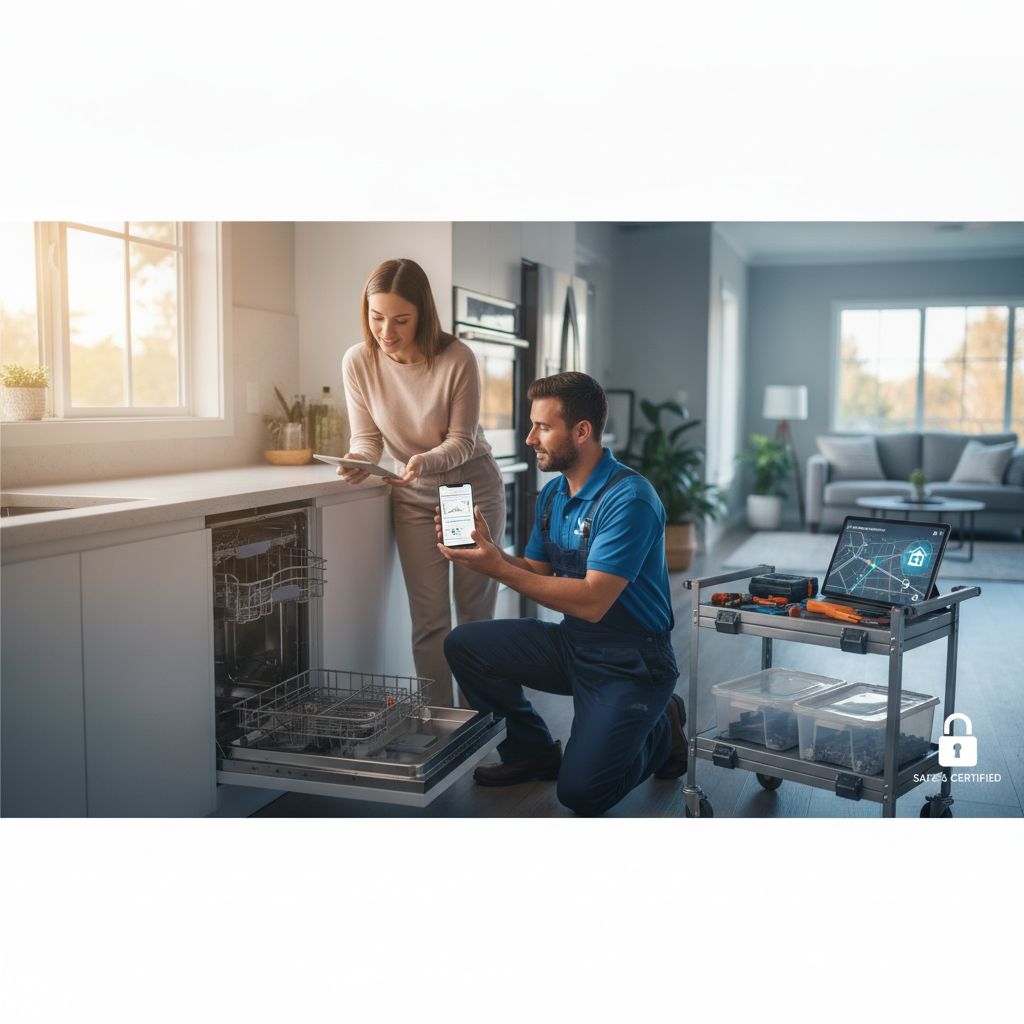
Your fridge is humming, the dishwasher is leaking, and the dryer won’t spin. You need a fix—now—but the last time you called a repair service you were stuck in endless phone‑tag, got a vague estimate, and worried about hidden fees. This guide shows you how to cut through the noise, compare real quotes, and protect your wallet—using the AI‑first workflow that’s reshaping the $7 billion U.S. appliance‑repair market.
Introduction
Imagine it’s a scorching July afternoon in Boston. Your refrigerator stops cooling, the milk is turning sour, and the kids are already asking for snacks. You grab your phone, search “fridge repair near me,” and are met with a flood of listings, each promising a “fast response” but offering nothing more than a phone number.
You call three providers, leave three voicemails, and end up waiting 48 hours for a callback. When a tech finally arrives, they give you a “$250‑plus” estimate that mixes parts, labor, and a vague “service call fee.” You’re left wondering:
- Is this price fair?
- Will the tech actually fix the problem?
- When do I pay?
You’re not alone. 60 % of U.S. homeowners have experienced a major appliance failure in the past five years (Consumer Reports). And 58 % of those end up replacing the unit rather than repairing it because the repair process feels risky and opaque.
The traditional lead‑gen model—where platforms sell each homeowner’s request to dozens of contractors for a per‑lead fee—creates exactly the chaos you just described. Contractors complain about “dead leads” and “pay‑per‑lead” fees that average $24.99 per call with less than 10 % conversion (99Calls). Homeowners, meanwhile, get shared‑lead saturation: the same request is sent to many techs, prompting a race to be first, not best.
Enter PLMBR, an AI‑native home‑services workflow and payments platform that eliminates phone‑tag, delivers structured, line‑item quotes, and holds funds in escrow until the job is verified. In the sections that follow, you’ll learn the fundamentals of appliance‑repair hiring, see the hard numbers, and discover how PLMBR flips the broken workflow on its head.
What Homeowners Need to Know About Appliance Repair
Appliance repair isn’t just about swapping a broken part; it’s a blend of technical expertise, parts availability, and clear communication. Here are the pillars every homeowner should understand before dialing a tech:
-
Diagnosing the Issue – Modern appliances (especially Wi‑Fi‑enabled models) generate 87 problems per 100 units, compared with 63 for non‑connected devices (JD Power 2025). Smart appliances often need firmware updates or sensor recalibration before a physical part is replaced.
-
Typical Cost Ranges – National data shows average repair tickets between $150 and $400 (BozmanFix). A simple dishwasher pump replacement might sit near $180, while a complex refrigerator compressor swap can exceed $500.
-
Parts Supply Challenges – Tariffs on Chinese and Mexican components have pushed part costs 5‑20 % higher in 2025 (IBISWorld). Expect longer lead times for specialty parts, especially for newer brands.
-
Technician Availability – The median age of appliance‑repair technicians is 47 years, and retirement is outpacing new vocational graduates (DataIntelo). This shortage can elongate response windows, especially for emergency jobs.
-
Warranty & Insurance – Many manufacturers offer a one‑year warranty on repairs, but only if the technician is certified and uses OEM parts. Always verify a provider’s licensing and insurance before signing a contract.
Understanding these factors lets you set realistic expectations and ask the right questions—saving time, money, and frustration.
Cost / Risk / Hiring Reality
Below is a snapshot of typical appliance‑repair scenarios, the associated costs, and the risk factors homeowners face when using traditional lead‑gen platforms.
| Appliance | Typical Repair Cost* | Common Risk with Traditional Platforms | Avg. Time to Quote (hrs) | Escrow / Payment Protection |
|---|---|---|---|---|
| Refrigerator (compressor) | $450‑$600 | Vague “$250‑plus” estimate; hidden parts markup | 24‑48 | ❌ No escrow; payment up‑front |
| Dishwasher (pump) | $180‑$250 | Multiple providers compete, leading to rushed, low‑quality work | 12‑24 | ❌ Pay‑per‑lead fee, no hold on funds |
| Washing Machine (drum motor) | $300‑$400 | Inaccurate diagnosis; tech may “guess” parts | 18‑36 | ❌ Payment after work, no dispute mediation |
| Dryer (thermal fuse) | $150‑$200 | Service‑area mismatch—tech shows up miles away | 8‑16 | ❌ No progressive billing for larger jobs |
| Smart Oven (Wi‑Fi module) | $120‑$180 | Firmware issue mis‑identified as hardware failure | 6‑12 | ❌ No AI‑driven diagnostics, longer wait |
Scroll to see all columns →
*Costs reflect national averages from BozmanFix and include labor plus parts.
Key takeaways:
- Vague estimates create scope drift and surprise bills.
- No escrow means you’re often paying before the job is verified, exposing you to fraud.
- Lead‑gen fees inflate provider costs, which are indirectly passed to you.
How to Vet Providers Without Getting Burned
A systematic vetting process protects you from low‑quality techs and hidden fees. Follow these steps:
-
Check Licensing & Insurance
- Verify the contractor’s state license (search your state’s licensing board).
- Confirm liability insurance and workers’ compensation; PLMBR’s compliance dashboard auto‑alerts you when documents expire.
-
Read Verified Reviews
- Look for verified, recent reviews that mention punctuality, professionalism, and whether the issue was truly resolved.
- Beware of “star‑inflated” platforms where every review is five‑stars.
-
Ask for a Structured Quote
- Request a line‑item “booking packet” that separates parts, labor, tax, and any optional services.
- A structured quote lets you compare apples‑to‑apples across providers.
-
Confirm Geographic Match
- Ensure the tech’s service radius covers your address. Mis‑routed leads waste time and may lead to “no‑show” scenarios.
-
Verify Payment Security
- Prefer platforms that hold funds in escrow (e.g., Stripe Connect) until you confirm the job is complete.
-
Test the Communication Speed
- Send a short inquiry and time the response. A reply within 2 hours usually indicates a provider that values promptness.
Pro‑Tip: When you receive a booking packet, cross‑check the part numbers with the manufacturer’s website. If the part price seems unusually low, it could be a refurbished or third‑party component.
Where the Old Workflow Breaks
Traditional home‑service marketplaces follow a lead‑gen funnel that looks like this:
- Homeowner submits a request → platform captures the lead.
- Platform sells the lead to multiple contractors for a per‑lead fee (≈ $24.99).
- Contractors race to call the homeowner, often before fully understanding the issue.
- Estimates are verbal or unstructured, leading to scope creep.
- Payments are collected upfront or after the fact, with no escrow.
- Dispute resolution is ad‑hoc, handled via phone or email.
Pain Points Illustrated
| Pain Point | Real‑World Example |
|---|---|
| Phone‑tag & delayed response | Homeowner waits 48 hours for a callback (common complaint on Trustpilot for Angi & Thumbtack). |
| Vague, unstructured quotes | “$300‑plus” estimate with no breakdown (reported by 58 % of consumers who replace instead of repair). |
| Dead or low‑quality leads | Contractors receive 20‑30 % irrelevant leads, wasting time (99Calls). |
| Hidden fees & surprise bills | After service, a tech adds a “travel surcharge” not disclosed upfront (frequent BBB complaint). |
| No payment protection | Homeowner pays full amount before work begins; tech never arrives (FTC consumer alerts). |
Scroll to see all columns →
These breakdowns erode trust and inflate costs for both sides of the market.
How PLMBR Changes This Workflow
PLMBR replaces the fragmented lead‑gen funnel with an AI‑first, end‑to‑end workflow:
| Step | Traditional Process | PLMBR’s AI‑Native Process |
|---|---|---|
| Intake | Free‑form text or phone call, often vague. | Conversational AI Intake: homeowner describes the issue in plain English, uploads photos; AI extracts trade, urgency, and location. |
| Matching | Broad keyword search; many irrelevant providers. | Semantic Search & Matching: vector embeddings match the homeowner to the best‑fit tech based on trade, distance, ratings, and availability. |
| Outreach | Contractors call individually; no follow‑up tracking. | Seeker AI Agent (Premium): a personal AI agent contacts multiple vetted providers simultaneously, logs each response, and surfaces follow‑up questions. |
| Quoting | Verbal or PDF estimate, often unstructured. | Booking Packet Builder: AI generates a structured, line‑item quote (scope, parts, labor, terms) that appears inline in the chat thread. |
| Comparison | Homeowner must manually copy/paste numbers. | Packet Comparison View: side‑by‑side comparison of multiple booking packets, with total cost and milestone breakdown. |
| Payment | Up‑front cash or credit card; no hold. | Escrow‑backed Stripe Connect: funds are authorized but held until the homeowner marks the job complete. Supports progressive billing for larger projects. |
| Dispute | Phone calls, email threads, no documentation. | AI‑Mediated Dispute Resolution: evidence packs and automated recommendations appear in‑context, speeding resolution. |
| Post‑Job | No systematic feedback loop. | Automated Review Prompt and job export to FSM (ServiceTitan, Jobber) for future scheduling. |
Scroll to see all columns →
Real‑World Example
Jane in New York City uploads a photo of her noisy dishwasher. PLMBR’s AI identifies a possible pump failure, asks a single follow‑up question (“Is the dishwasher still under warranty?”), and instantly matches her with three vetted technicians within 5 miles. The Seeker AI Agent reaches out, and within 15 minutes Jane receives three booking packets: each shows a $190 parts cost, $70 labor, and a $20 disposal fee, all in a clean table. She compares them, selects the provider with the highest rating, and authorizes a $140 hold. The tech arrives, fixes the pump, and Jane releases the funds—all without a single phone call.
This workflow eliminates the phone‑tag, vague estimates, and payment risk that plague the old system.
Questions to Ask Before Hiring
Even with PLMBR’s safeguards, a quick questionnaire ensures you and the tech are aligned:
- Are you licensed and insured in my state? (Ask for the license number.)
- Can you provide a detailed booking packet? Look for line items: parts, labor, taxes, optional fees.
- What is your availability window? Verify that the proposed time matches your urgency.
- Do you accept escrow‑backed payments? Confirm the platform holds funds until completion.
- Will you warranty the repair? Minimum one‑year warranty on parts and labor is standard.
- Do you have experience with my appliance model? Smart appliances often need firmware updates—ask specifically.
- How will you handle additional issues discovered during repair? Request an updated packet before proceeding.
Having these answers up front reduces surprise bills and improves the likelihood of a successful repair.
Conclusion
Appliance repair is a $7 billion industry on the cusp of a transformation. Homeowners are fed up with endless phone‑tag, vague estimates, and hidden fees—while technicians grapple with a shrinking labor pool and rising parts costs. The data is clear:
- 60 % of homeowners have faced a major appliance failure recently (Consumer Reports).
- 58 % opt to replace rather than repair, often due to lack of transparent pricing.
- Traditional lead‑gen platforms charge $24.99 per lead with <10 % conversion (99Calls).
PLMBR’s AI‑native workflow eliminates these pain points by delivering structured, escrow‑backed booking packets, semantic matching, and progressive billing—all within a single in‑context chat thread.
Take action today:
- Visit the PLMBR homepage to see the platform in action.
- Find Appliance Repair pros on PLMBR and start a conversational intake.
- Compare quotes on PLMBR to pick the best‑fit, most transparent provider for your home.
Your appliances deserve a repair experience that’s fast, clear, and financially safe—just like the rest of your home. Let AI do the heavy lifting so you can get back to everyday life, stress‑free.
Further Reading
- U.S. Consumer Product Safety Commission – Appliance Safety Tips
- Better Business Bureau – Home Service Provider Reviews
- National Association of the Remodeling Industry (NARI) – Contractor Vetting Guide
- IBISWorld – Appliance Repair Market Size & Forecast (U.S.)
These resources reinforce the best practices outlined above and provide additional context for making informed home‑service decisions.