
The Homeowner’s Ultimate Guide to Hiring a Pressure‑Washing Pro (And Why the Old Lead‑Gen Model Is Failing)
When the driveway is streaked with oil, the patio looks like a sandpaper canvas, and the curb‑side weeds have turned into a mud‑splash mural, the last thing…
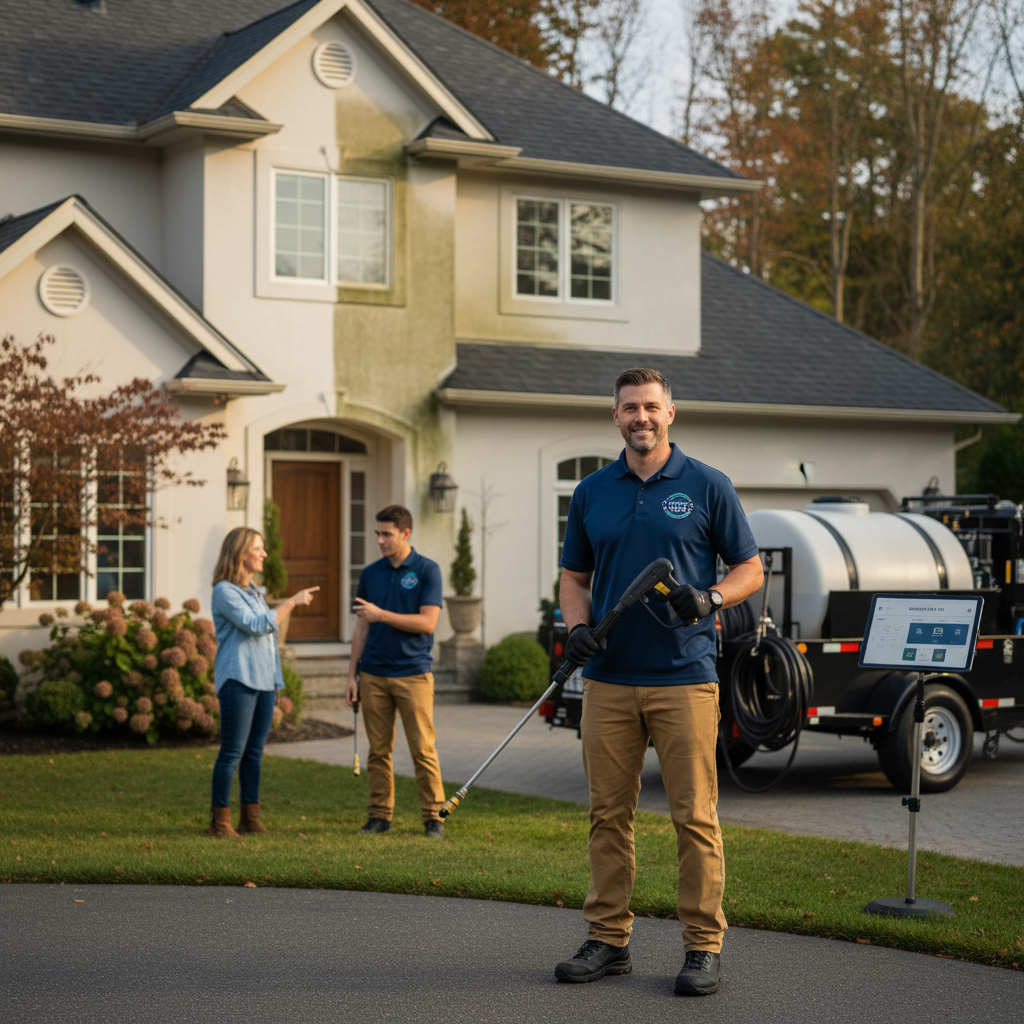
When the driveway is streaked with oil, the patio looks like a sandpaper canvas, and the curb‑side weeds have turned into a mud‑splash mural, the last thing you want is a week‑long game of phone tag, a vague “$200” estimate, and the dread that the contractor might strip paint off your siding. Pressure washing promises a quick, sparkling makeover—but only if you can navigate the chaotic hiring process that still dominates the market.
In 2024 there are over 27,000 pressure‑washing businesses across the United States 【Housecall Pro】, many of them competing on price alone. That competition drives low‑ball quotes, fragmented communication, and hidden fees. Homeowners end up stuck between damage risk and payment uncertainty, while providers wrestle with pay‑per‑lead traps that erode margins.
This guide walks you through everything you need to know—pricing realities, safety considerations, vetting tips, and, most importantly, how an AI‑native workflow like PLMBR eliminates the broken steps that have plagued the industry for years.
What Homeowners Need To Know About Pressure Washing
Pressure washing isn’t just “spraying water.” It’s a calibrated service that combines water pressure, specialized cleaning agents, and technique to remove grime without harming the underlying surface. The right approach varies dramatically by material:
| Surface | Typical PSI Range | Recommended Chemicals | Common Damage Risks |
|---|---|---|---|
| Concrete driveway | 2,500‑3,000 | Alkaline degreasers | Etching if pressure > 3,500 psi |
| Vinyl siding | 1,200‑1,500 | Mild surfactants | Water intrusion behind seams |
| Wood deck | 1,200‑1,500 | Biodegradable wood‑safe cleaners | Splintering or stripping finish |
| Brick patio | 1,500‑2,000 | Acid‑free detergents | Mortar erosion if over‑pressurized |
Scroll to see all columns →
Pro tip: Ask the contractor which PSI they’ll use for your specific surface. A reputable pro will tailor the pressure to avoid “over‑washing” and will explain any chemicals they plan to apply.
Why the Surface Matters for Your Budget
Cleaning a simple concrete slab is usually cheaper than a multi‑material job that involves wood, brick, and delicate siding. Mis‑matching the service leads to scope drift—the contractor adds extra steps mid‑project and tacks on hidden fees. Understanding the technical basics helps you spot those “surprise” charges before they appear.
Cost / Risk / Hiring Reality
Pricing is the biggest driver of homeowner anxiety. Below is a snapshot of average residential pressure‑washing costs in 2024, broken down by region and job size. These numbers are drawn from industry surveys and reflect the true market variance—not the “ball‑park” figures you’ll see on generic lead‑gen sites.
| Region | Sq ft Range | Base Price (per sq ft) | Typical Total (2,000 sq ft) | Common Add‑Ons |
|---|---|---|---|---|
| Rural Midwest & South | 1,500‑2,500 | $0.10‑$0.12 | $200‑$300 | Stain removal (+$50) |
| Northeast (Boston, NYC) | 1,500‑2,500 | $0.18‑$0.20 | $360‑$500 | Chemical sealant (+$80) |
| West Coast (CA, WA) | 1,500‑2,500 | $0.24‑$0.28 | $480‑$700 | Water‑recovery permit (+$120) |
| Commercial (storefront) | 5,000‑10,000 | $0.15‑$0.17 | $750‑$1,700 | EPA runoff compliance (+$150) |
Scroll to see all columns →
Key takeaways
- Geography drives price – Boston‑area jobs can cost up to 70 % more than a comparable job in rural Kansas (see the table).
- Hidden costs – Insurance, fuel, and compliance can add 40‑60 % to a contractor’s operating expenses, which many low‑ball quotes simply ignore 【FieldCamp AI】.
- Risk of damage – Improper pressure or chemicals can cost $500‑$2,000 in repairs, especially on delicate siding or older brickwork.
How To Vet Providers Without Getting Burned
The pressure‑washing market is saturated, and 90 % of new pressure‑washing businesses fail within two years—often because they rely on cheap leads and under‑price their services 【King of Pressure Wash】. Vetting is therefore a two‑step process: verify credibility and validate fit.
1. Verify Credentials
- License & insurance – In many states, a contractor’s license isn’t mandatory for pressure washing, but liability insurance protects you if damage occurs. Ask for a copy and confirm expiration dates.
- EPA and local water‑runoff permits – If the job exceeds 1,500 psi, many municipalities require a runoff permit. Check the local city website or ask the provider to supply the permit number.
- Professional affiliations – Membership in the National Association of the Remodeling Industry (NARI) or American Cleaning Institute (ACI) signals adherence to industry standards.
2. Validate Fit Through Structured Quotes
Instead of accepting a single, handwritten estimate, request a booking packet that includes:
| Item | Details to Look For |
|---|---|
| Scope of work | Surface type, PSI range, chemicals used |
| Line‑item pricing | Labor, chemicals, equipment, travel |
| Timeline & milestones | Start date, estimated hours, finish |
| Payment terms | Escrow amount, progressive billing schedule |
| Warranty & dispute process | Coverage period, claim steps |
Scroll to see all columns →
When providers present a side‑by‑side packet comparison, you can instantly see who offers the best value without hidden add‑ons.
3. Check Reviews & Real‑World Results
- Look for verified reviews on Google, BBB, and the provider’s own site.
- Ask for before‑and‑after photos from recent jobs similar to yours.
- If possible, request a reference call—a short conversation with a recent client can reveal how the contractor handles unexpected issues.
Where The Old Workflow Breaks
The traditional lead‑gen pipeline looks like this:
- Homeowner posts a request on a marketplace (Angi, Thumbtack, HomeAdvisor).
- Multiple providers receive the lead, often paying $10‑$30 per click.
- Homeowner chases providers by phone or email, juggling vague “ball‑park” estimates.
- One provider wins (sometimes the cheapest), but the quote lacks detail, and payment is requested upfront or on completion—leaving both parties exposed.
Pain points that cost time and money
| Breakpoint | Homeowner Impact | Provider Impact |
|---|---|---|
| Phone tag | Weeks lost, job delays | Lost productivity, missed jobs |
| Vague estimates | Surprise add‑ons, budget overruns | Undercut margins, price wars |
| No escrow | Up‑front payment risk or non‑payment after work | Cash‑flow uncertainty |
| Pay‑per‑lead fees | Providers pass fees onto you via low quotes | Business viability threat |
| Fragmented tools | Multiple apps, spreadsheets, emails | Administrative overhead (40‑60 % hidden costs) |
Scroll to see all columns →
These inefficiencies are why 90 % of new pressure‑washing businesses fail within two years—they can’t sustain the lead‑gen fees and price wars 【King of Pressure Wash】.
How PLMBR Changes This Workflow
PLMBR replaces the broken lead‑gen chain with an AI‑native, end‑to‑end workflow that gives homeowners the clarity they demand and providers the profitability they deserve.
1. Conversational AI Intake
- Describe the issue in plain English (add photos).
- The AI instantly identifies the trade, surface type, urgency, and any local regulatory permits required.
2. Semantic Search & Smart Matching
- Using vector embeddings, PLMBR finds the best‑fit providers based on distance, availability, ratings, and insurance compliance—not just keyword matches.
3. Booking Packets & Side‑by‑Side Comparison
- Each matched provider receives an AI‑generated booking packet that includes line‑item pricing, chemicals, PSI, and a timeline.
- Homeowners can compare packets side‑by‑side within the same thread, eliminating guesswork.
4. In‑Context Messaging & Agent Coordination (Premium)
- An optional Seeker AI Agent contacts multiple providers simultaneously, tracks each reply, and surfaces follow‑up questions so you never chase a single contractor again.
5. Escrow‑Backed Payments & Progressive Billing
- Funds are held in a Stripe‑powered escrow until milestones are confirmed. For larger jobs, you can release payments progressively (e.g., 30 % after prep, 40 % after cleaning, 30 % on final approval).
6. AI‑Mediated Dispute Resolution
- If a surface is accidentally damaged, the system gathers evidence, offers a recommended settlement, and can automatically release funds once both parties agree.
Pro tip: Use the “Compare Quotes” feature on PLMBR to instantly see which provider includes water‑recovery compliance and a damage warranty—details many lead‑gen sites omit.
By centralizing intake, matching, quoting, messaging, and payment in a single threaded conversation, PLMBR removes phone tag, eliminates vague estimates, and protects both parties with escrow and clear terms.
Questions To Ask Before Hiring
Even with a robust platform, the homeowner still needs to ask the right questions. Here’s a checklist you can copy‑paste into your PLMBR chat:
- What PSI will you use for my surface, and why?
- Which cleaning agents are you planning, and are they environmentally friendly?
- Do you hold a current liability insurance policy and a water‑runoff permit (if required by my city)?
- Can you provide a detailed line‑item quote, including labor, chemicals, travel, and any permit fees?
- What is your warranty on surface damage, and how is a dispute resolved?
- Do you offer progressive billing, and how is escrow released?
- Can you share before‑and‑after photos from a recent project similar to mine?
Answering these questions confidently signals a professional, AI‑enabled provider that aligns with PLMBR’s standards.
Conclusion
Hiring a pressure‑washing professional should be as simple as uploading a photo of your driveway and receiving clear, comparable quotes—not a week‑long scavenger hunt through phone tag and vague numbers. The legacy lead‑gen model forces providers into low‑margin price wars and leaves homeowners vulnerable to damage and surprise bills.
PLMBR’s AI‑first workflow transforms the entire experience:
- Instant, AI‑driven intake eliminates guesswork.
- Semantic matching connects you with qualified, insured pros.
- Structured booking packets give you side‑by‑side transparency.
- Escrow and progressive billing protect your money.
- In‑thread dispute resolution keeps everyone accountable.
Ready to ditch the broken system and get a sparkling clean home with confidence? Visit the PLMBR homepage, find pressure‑washing pros on PLMBR, and compare quotes on PLMBR today. For more home‑service guides, check out the PLMBR blog.
References & Further Reading
- Housecall Pro – Pressure Washing Industry Statistics (2024) – https://www.housecallpro.com/resources/pressure-washing-industry-statistics/
- FieldCamp AI – How Much to Charge for Pressure Washing in 2024 – price variation data.
- King of Pressure Wash – Why 90% of Pressure‑Washing Businesses Fail – https://www.kingofpressurewash.com/blog/why-90-of-pressure-washing-businesses-fail-and-how-to-be-the-10
- EPA – Water Runoff and Stormwater Management – https://www.epa.gov/stormwater
- Better Business Bureau – Choosing a Home Service Contractor – https://www.bbb.org/article/tips/14062-bbb-tip-how-to-choose-a-home-service-contractor
- This Old House – Pressure Washing Safety Tips – https://www.thisoldhouse.com/maintenance/21018327/how-to-pressure-wash-safely