
The Homeowner’s Ultimate Guide to Hiring a Pressure‑Washing Pro (and Why Traditional Lead‑Gen Sites Are Costing You More)
If you’ve ever stared at a grimy driveway, a moss‑covered deck, or a faded house‑side siding, you know the relief that a good pressure‑wash can bring. But the…
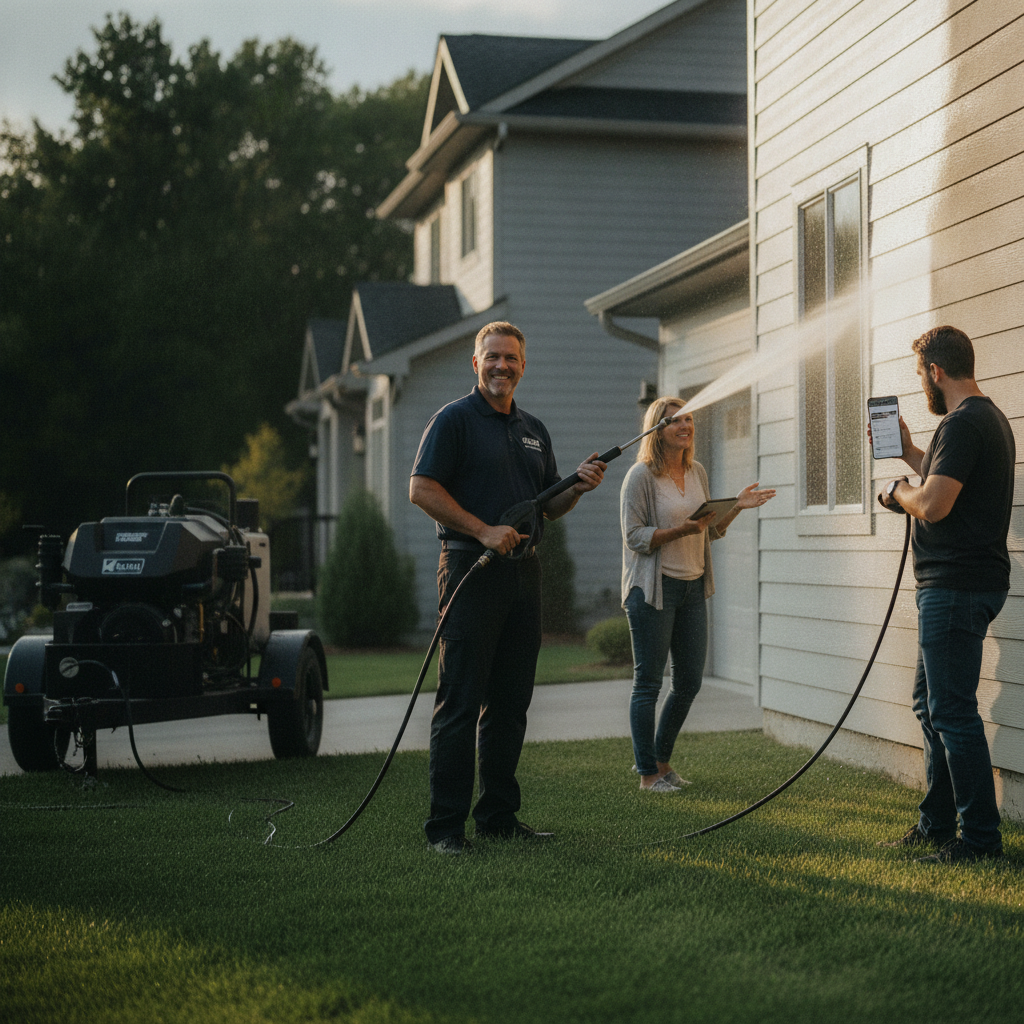
“The U.S. pressure‑washing sector now pulls in $1.2 billion a year, yet the average homeowner still spends hours on the phone chasing vague quotes and worries about hidden fees.” – PLMBR research, 2026
If you’ve ever stared at a grimy driveway, a moss‑covered deck, or a faded house‑side siding, you know the relief that a good pressure‑wash can bring. But the path from “I need it clean” to “Job’s done and I’m paid safely” is still riddled with phone tag, low‑quality leads, and cash‑only transactions. This guide shows you how to avoid those pitfalls, understand realistic pricing, and leverage PLMBR’s AI‑native home‑services workflow and payments platform to get a transparent, escrow‑backed quote in minutes.
What Homeowners Need To Know About Pressure Washing
Pressure washing isn’t a one‑size‑fits‑all service. The right technique depends on the material, the level of grime, and local environmental rules.
-
Power‑Wash vs. Soft‑Wash
- Power‑wash (1,200–3,000 psi) is ideal for hard surfaces like concrete, brick, and stone. It removes oil stains, tire marks, and deep‑set grime.
- Soft‑wash (under 1,200 psi) uses low pressure with biodegradable detergents—perfect for wood decks, vinyl siding, and roof shingles where high pressure could strip paint or cause splintering.
-
Typical Frequency
- Driveways & sidewalks: every 12‑18 months, or after heavy construction.
- Decks & patios: annually, especially in humid climates where mold thrives.
- Home exteriors: every 2‑3 years, unless you live in a high‑salt coastal area that accelerates fading.
-
Environmental & HOA Rules
Many municipalities and homeowner associations limit runoff and require reclaimed‑water systems. The EPA’s WaterSense program recommends low‑flow nozzles and biodegradable cleaners to protect local waterways.
Understanding these basics lets you ask the right questions and compare providers on a level playing field.
Cost / Risk / Hiring Reality
Below is a snapshot of what most homeowners in the Northeast (Boston, NYC, Philadelphia) encounter when they start shopping for a pressure‑washing pro.
| Service & Surface | Avg. Price Range (2026) | Common Risks | Typical Timeline |
|---|---|---|---|
| Driveway (30 × 60 ft) – Power‑wash | $180 – $350 | Concrete etching if pressure too high; water‑damage to nearby landscaping | 1‑2 hours |
| Deck (200 sq ft) – Soft‑wash | $250 – $450 | Wood splintering, mildew regrowth if not sealed | 2‑3 hours |
| House Exterior (2,000 sq ft) – Mixed | $400 – $800 | Paint stripping, water infiltration, HOA violation | 3‑5 hours |
| Commercial Parking Lot (10,000 sq ft) | $800 – $1,500 | Oil spill spread, drainage issues | 4‑6 hours |
| Add‑on: Eco‑friendly detergent | +$30 – +$80 | Non‑biodegradable chemicals can breach local ordinances | – |
Scroll to see all columns →
Pro tip: Ask for a line‑item breakdown (labor, detergent, waste‑water disposal). A structured quote lets you see exactly what you’re paying for and prevents “scope creep” later.
Why Prices Vary So Much
- Geography: Labor rates in New York City hover around $28 / hr for experienced technicians, while smaller markets like Portland, ME average $22 / hr (Southeast Softwash 2026).
- Equipment: Electric, low‑emission pressure washers command a premium but reduce environmental impact—37 % of U.S. pressure‑washer sales are now electric (Fortune Business Insights).
- Seasonality: Summer demand spikes can add 10‑15 % to estimates.
Understanding these levers helps you evaluate whether a quote is truly competitive.
How To Vet Providers Without Getting Burned
The pressure‑washing market is plagued by pay‑per‑lead platforms that push low‑quality leads onto contractors, resulting in rushed, cheap quotes and often unlicensed work. Here’s a step‑by‑step vetting checklist that cuts through the noise.
-
Verify Licensing & Insurance
- Look for a state contractor’s license (e.g., NY State Home Improvement Contractor License) and general liability insurance of at least $1 million.
- The California Contractors State License Board (CSLB) model is a good benchmark; many states provide an online lookup.
-
Check Work History & Reviews
- Scrutinize verified reviews on independent sites (Better Business Bureau, Google, Yelp).
- Be wary of platforms with average Trustpilot scores below 3.0—Thumbtack (2.2/5) and Angi (2.5/5) consistently receive complaints about dead leads and hidden fees.
-
Ask for a Portfolio
- A reputable pro will share before/after photos from recent jobs, preferably with timestamps.
- Ask for at least two recent references and follow up on their experience.
-
Confirm Safety & Compliance
- Ask about OSHA training, especially if the job involves height or chemicals.
- Verify that the contractor follows local storm‑water runoff regulations (EPA guidelines).
-
Demand a Structured Quote
- The quote should be a booking packet with line items, payment milestones, and terms. Vague “$X flat rate” quotes are a red flag.
By following this checklist, you dramatically reduce the chance of hiring an uninsured, under‑qualified, or dishonest provider.
Where The Old Workflow Breaks
Even when you find a provider that checks the boxes, the traditional hiring workflow can still sabotage your project.
| Broken Step | Symptoms | Real Cost to Homeowner |
|---|---|---|
| Phone‑Tag Intake | Multiple calls, missed messages, unclear scope | 4‑6 hours wasted, frustration, delayed project |
| Vague Estimates | “$200‑$300, we’ll see” with no line‑items | Unexpected $100‑$200 add‑ons, scope creep |
| Lead‑Fee Model | Provider pays $30‑$80 per lead, passes cost to you | Inflated prices, low‑quality leads, rushed work |
| Cash‑Only Payment | Provider asks for cash up‑front | Risk of non‑completion, no recourse |
| Manual Dispute Resolution | Phone calls, emails, possible litigation | Days‑to‑weeks of back‑and‑forth, added stress |
Scroll to see all columns →
These pain points are not anecdotal; Trustpilot data shows lead‑gen sites averaging 2.2‑2.5 / 5 primarily because homeowners complain about “dead leads” and “hidden fees.” The result is a market where 35‑42 % of new pressure‑washing businesses fail within their first year—often due to the inefficiencies of this broken workflow (SBA data).
How PLMBR Changes This Workflow
PLMBR is an AI‑native home‑services workflow and payments platform that flips the old model on its head. Here’s how each broken step is replaced with a transparent, escrow‑backed process.
1. Conversational AI Intake
You describe the problem in plain English, snap a photo, and the AI instantly identifies the trade, urgency, and any safety considerations.
- No more endless forms or phone calls.
- The AI asks only the follow‑up questions that improve match quality (e.g., “Is your deck wooden or composite?”).
2. Semantic Matching & Provider Agent
Using vector embeddings, PLMBR finds the best‑fit pros within your city—ranked by distance, rating, and verified insurance.
- Premium seekers get a personal AI agent that reaches out to multiple providers simultaneously, tracks each response, and surfaces the most promising packets for you to review.
3. Structured Booking Packets
Every quote arrives as a line‑item packet (labor, detergent, disposal, mileage) with clear milestone billing options.
- You can compare packets side‑by‑side in the “Compare Quotes” view—no more mental math.
4. In‑Context Messaging & Escrow Payments
All communication lives in a single chat thread. When a provider sends a packet, you can accept, request changes, or schedule directly.
- Payments are authorized via Stripe and held in escrow until you confirm the work is completed to satisfaction.
- For larger jobs (e.g., commercial lot cleaning), progressive billing releases funds after each milestone.
5. AI‑Mediated Dispute Resolution
If a disagreement arises, the AI pulls relevant evidence (photos, chat logs, packet terms) and suggests a resolution, dramatically cutting dispute time from days to minutes.
6. Zero Lead Fees for Providers
Because PLMBR connects you only with qualified, paying homeowners, pros never pay per‑lead. This eliminates the hidden cost that inflates traditional quotes.
In short, PLMBR transforms a 3‑week, phone‑tag nightmare into a single‑session, transparent booking that protects both sides.
Questions To Ask Before Hiring
Even with PLMBR’s safeguards, a few direct questions ensure you and the contractor are fully aligned:
- What pressure rating will you use for my surface? (Specify psi and nozzle type.)
- Do you use biodegradable detergents? (Required for many HOA and city ordinances.)
- Can you provide a copy of your liability insurance and workers‑comp certificates?
- How do you handle waste‑water runoff? (Ask about containment or reclamation.)
- What is your payment schedule? (Look for escrow or milestone billing.)
- Do you offer a warranty on the cleaning results? (Typical is 30‑60 days.)
If a provider hesitates or gives vague answers, PLMBR’s booking packet will already have captured most of these details, making follow‑up quick and precise.
Conclusion
Pressure washing is a high‑impact service that can instantly boost curb appeal and protect your home’s exterior. Yet the traditional lead‑gen ecosystem—characterized by phone‑tag, vague estimates, and cash‑only payments—still dominates the market, costing homeowners time, money, and peace of mind.
PLMBR eliminates those pain points with an AI‑driven intake, semantic matching, structured booking packets, escrow‑backed payments, and zero lead fees. By leveraging this platform, you get:
- Fast, transparent quotes you can compare side‑by‑side.
- Escrow protection that releases funds only after you approve the work.
- AI‑assisted communication that removes the endless back‑and‑forth.
Ready to experience a cleaner home without the hassle? Visit the PLMBR homepage, find pressure‑washing pros on PLMBR, and compare quotes on PLMBR today. For more expert guides, check out our home service blog.
External Resources
- EPA – WaterSense Guidelines for Pressure Washing
- OSHA – Safety and Health Topics: Pressure Washing
- Better Business Bureau – Finding Trusted Home Service Contractors
- This Old House – How to Pressure Wash Your Home Safely
Take control of your home’s appearance, protect your wallet, and let AI do the heavy lifting.