
The Homeowner’s Ultimate Guide to Hiring a Pressure‑Washing Pro (Without the Headaches)
Pressure washing can make a tired façade look brand‑new, boost curb‑appeal, and protect your home from mold and mildew. Yet the process of hiring the right…
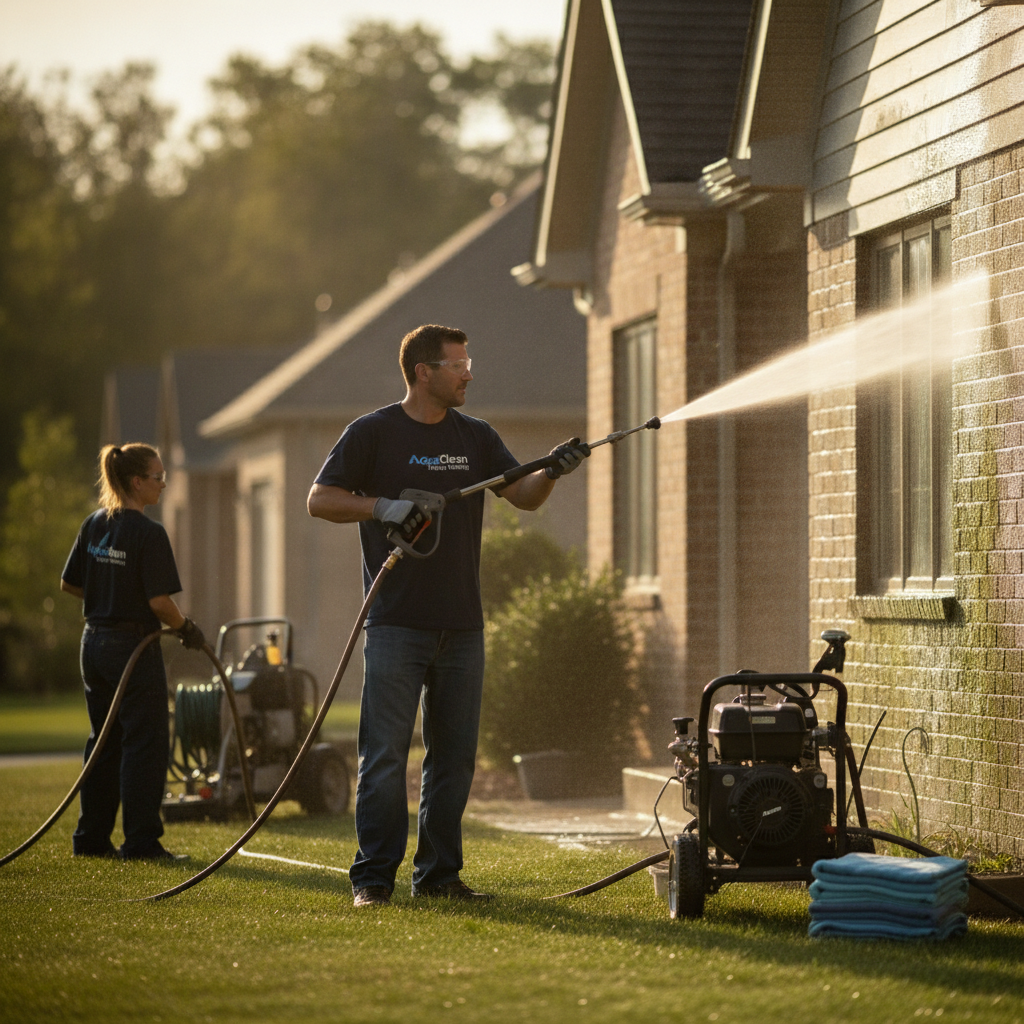
Pressure washing can make a tired façade look brand‑new, boost curb‑appeal, and protect your home from mold and mildew. Yet the process of hiring the right pro is still stuck in the 1990s: endless phone tag, vague “flat‑rate” quotes, surprise bills, and lead‑fee traps that push costs onto you.
A recent Home Service Customer Service Report (2024) found that 70 % of homeowners cite surprise billing as a deal‑breaker when hiring any home‑service contractor. At the same time, pressure‑washing pros on platforms like Thumbtack spend $150‑$300 per month on lead fees that never guarantee a job.
If you’re ready to get a clean house and a clear, trustworthy hiring experience, read on. This guide walks you through what pressure washing really entails, how to price it, how to vet providers, where the old workflow breaks, and how an AI‑native platform—PLMBR—solves every pain point.
What Homeowners Need To Know About Pressure Washing
Pressure washing (also called power washing) uses a high‑velocity water stream—often with biodegradable detergent—to strip dirt, algae, oil, and paint residue from exterior surfaces. Here’s the quick anatomy of a typical residential job:
| Surface | Typical PSI (pounds‑per‑square‑inch) | Typical Time (sq ft) | Common Add‑Ons |
|---|---|---|---|
| Vinyl siding | 1,500‑2,000 | 1,200‑2,400 sq ft | Mildew sealant |
| Brick / stone | 2,500‑3,000 | 1,000‑1,800 sq ft | Stain‑blocking primer |
| Driveway (concrete) | 2,800‑3,500 | 500‑1,000 sq ft | Oil‑removal detergent |
| Deck (wood) | 1,200‑1,500 | 300‑600 sq ft | Wood‑preservative coating |
Scroll to see all columns →
Why the Details Matter
- Pressure: Too much PSI on wood can splinter boards; too little on brick leaves grime behind.
- Detergents: EPA‑approved, biodegradable cleaners are now required in many states (see EPA Pressure‑Washing Guidance).
- Water‑reclamation: New York and Massachusetts require permits for runoff that can add $100‑$300 per job if the contractor isn’t pre‑approved (NY State DEC).
Understanding these variables helps you spot a generic “$199 flat rate” that likely excludes critical steps like waste‑water disposal, permitting, or surface‑specific PSI settings.
Cost / Risk / Hiring Reality
Below is a realistic snapshot of what you might pay for a standard two‑story home (≈ 1,200 sq ft of siding) in the Northeast. Numbers are median values from HomeAdvisor (2024), adjusted for typical add‑ons and local permit fees.
| Job Component | Low End | Mid‑Range | High End |
|---|---|---|---|
| Base pressure‑wash (siding) | $200 | $350 | $500 |
| Detergent & sealant | $30 | $60 | $120 |
| Water‑reclamation permit (NY/MA) | $0* | $150* | $300* |
| Progressive billing (2‑milestone) | — | $0 extra | — |
| Total Estimated Cost | $230 | $560 | $920 |
Scroll to see all columns →
*Permit cost only applies if the contractor handles disposal; some pros pass this to you later, which fuels the “surprise‑billing” problem.
Hidden Risks
- Scope Drift – A vague estimate may turn into “extra work” once the crew sees mildew behind the siding.
- Insurance Gaps – Without proof of liability coverage, a water‑damage incident could leave you on the hook.
- Regulatory Fines – Non‑compliant runoff can result in city fines of $500‑$1,000 for the homeowner.
How To Vet Providers Without Getting Burned
A solid vetting checklist protects you from low‑quality work and hidden costs.
-
Verify Licensing & Insurance
Ask for a copy of liability insurance and any state‑required pressure‑washing license.Pro‑Tip: In New York, the Department of Environmental Conservation maintains a public list of licensed high‑pressure cleaners.
-
Check EPA‑Approved Detergents
Ask which cleaning agents will be used and whether they’re EPA‑approved. -
Ask for a Structured Booking Packet
A modern booking packet breaks down every line item (labor, detergent, permit, disposal) and includes a billing schedule. -
Read Reviews that Mention “Clear Quote”
Generic five‑star reviews can hide pricing issues. Look for comments like “exactly what they said in the quote” or “no surprise fees.” -
Confirm Calendar Integration
Contractors who sync availability with Google Calendar or Outlook tend to be more organized and less likely to double‑book you. -
Ask About Progressive Billing
For larger jobs (e.g., multi‑story houses), a milestone‑based payment plan protects both parties.
By following this checklist, you dramatically reduce the chance of ending up with a “dead lead”—a common complaint among pros who spend $10‑$100 per lead on platforms that never convert (see Thumbtack Lead‑Fee Deep Dive).
Where The Old Workflow Breaks
| Step | Traditional Pain Point | Real‑World Example |
|---|---|---|
| 1️⃣ Intake | Homeowner fills a generic form → receives a phone call weeks later. | You describe a “dirty driveway” and wait 5 days for a callback. |
| 2️⃣ Quote | Provider gives a verbal estimate or a vague PDF with no line items. | “$300 flat rate” that later balloons to $450 after a “detergent surcharge.” |
| 3️⃣ Scheduling | Endless back‑and‑forth to lock a time slot. | You play “telephone tag” for 3–4 days before confirming a date. |
| 4️⃣ Payment | Up‑front cash or a credit‑card swipe; no escrow. | Contractor asks for full payment before starting, leaving you vulnerable if the job is incomplete. |
| 5️⃣ Dispute | No built‑in dispute resolution; you must chase the pro or file a small‑claims case. | After the job, the contractor claims extra “water‑runoff fees” that were never disclosed. |
Scroll to see all columns →
These friction points are why 70 % of homeowners (Home Service Customer Service Report, 2024) report being “burned” by home‑service hires. The root cause? Lead‑gen marketplaces that treat providers as a revenue stream, not as partners in a workflow. Providers pay per lead, often for dead leads (40 % never convert, BBB data), which pushes them to add hidden fees to stay afloat.
How PLMBR Changes This Workflow
PLMBR is not a marketplace; it is an AI‑native home‑services workflow and payments platform that rewrites every step:
| Traditional Step | PLMBR’s AI‑Powered Replacement |
|---|---|
| Manual intake (phone, email) | Conversational AI Intake – Describe your pressure‑washing issue in plain English, attach photos, and the AI instantly identifies trade, urgency, and location. |
| Keyword search | Semantic Vector Search – AI matches you with the best‑fit pros based on distance, ratings, and verified credentials. |
| Unstructured quote | Booking Packet Builder – The AI generates a line‑item packet (labor, detergent, permits, disposal) in seconds, pulling pricing data from historical jobs and market rates. |
| One‑off outreach | Seeker AI Agent (Premium) – An autonomous AI contacts multiple vetted pros simultaneously, tracks each response, and surfaces only the “ready‑to‑compare” packets. |
| Cash‑up‑front payment | Escrow‑Backed Stripe Flow – Funds are held safely until you confirm the job is complete. Progressive billing lets you pay milestone‑by‑milestone. |
| Ad‑hoc dispute | AI‑Mediated Dispute System – Upload photos, evidence, and the AI suggests resolutions or escalates to a human arbitrator. |
Scroll to see all columns →
Visual Proof (for reference)

The AI agent reaches out to three vetted pressure‑washing pros and shows real‑time status.

Side‑by‑side packet view makes price, scope, and terms instantly comparable.
Because providers never pay per lead on PLMBR, they can focus on delivering transparent, high‑quality service rather than chasing cheap inquiries. This eliminates the hidden “lead‑fee surcharge” that inflates your final bill on traditional platforms.
Questions To Ask Before Hiring
Even with PLMBR’s safeguards, a short checklist ensures you’re fully covered:
- What specific PSI and nozzle will you use for my siding? (Shows expertise on surface‑specific pressure.)
- Can you provide a line‑item booking packet that includes permits and disposal fees?
- Do you carry liability insurance and workers’ comp? Please share certificates.
- What EPA‑approved detergent will you use, and is it safe for pets/children?
- How does your progressive billing work? When will the first payment be captured?
- Do you sync your calendar with Google/Outlook, and how will I receive status updates?
If a provider hesitates or cannot answer clearly, it’s a red flag—move on to the next vetted pro in your PLMBR packet comparison.
Conclusion: A Clear Path to a Spotless Home
Pressure washing is a high‑impact, relatively low‑cost upgrade for any New York, Boston, or Philadelphia home. But the hiring process has been mired in outdated lead‑gen models that generate phone tag, surprise bills, and hidden fees.
By leveraging AI‑driven intake, semantic matching, structured booking packets, escrow‑backed payments, and zero lead‑fee provider access, PLMBR gives you:
- Speed – Get qualified quotes within minutes.
- Transparency – Compare line‑item packets side‑by‑side.
- Control – Pay only when the work meets your expectations.
- Safety – Verify insurance, permits, and EPA‑compliant detergents automatically.
Ready to ditch the old workflow? Visit the PLMBR homepage, explore pressure‑washing pros in your city, and start comparing structured quotes today.
For more home‑service guides, check out our blog library and never let another home‑improvement project become a guessing game again.
Helpful External Resources
- EPA – Pressure Washing Guidance – Environmental standards for detergents and runoff.
- NY State Department of Environmental Conservation – Water‑reclamation permits and fees.
- Better Business Bureau – Lead‑fee complaints and provider best practices.
- This Old House – Pressure‑Washing Basics – Practical DIY insights and safety tips.
(All external links are current as of 12 Jun 2026.)