
The True Cost of Pressure Washing: How to Hire the Right Pro Without Phone Tag, Vague Quotes, or Hidden Fees
Your driveway, deck, and siding deserve a clean look—not a headache.
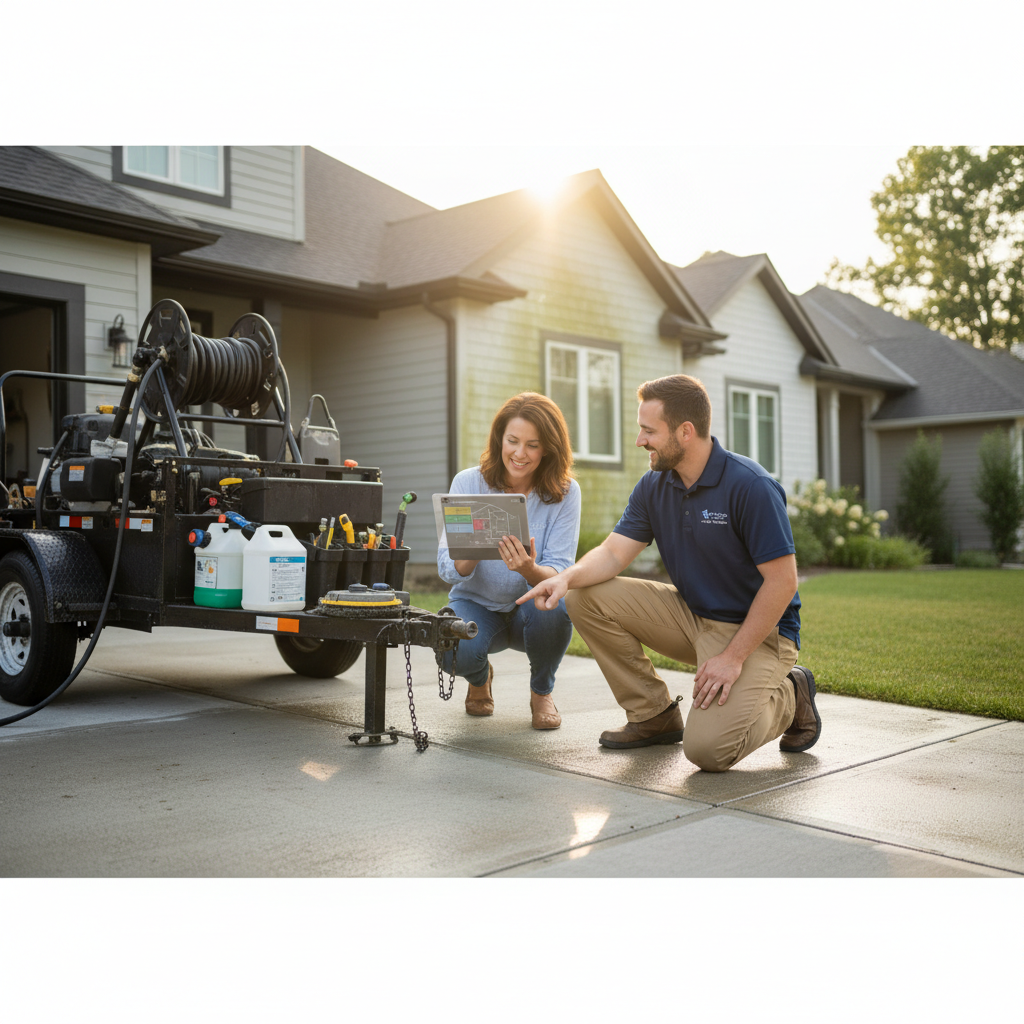
Your driveway, deck, and siding deserve a clean look—not a headache.
Introduction
You’ve probably spent hours on the phone with three different pressure‑washing companies, only to end up with a vague “$300 flat rate” that hides extra fees, water‑damage risks, and a mountain of unanswered questions. You’re not alone—68 % of homeowners say communication is the biggest pain point when hiring home‑service pros (Home Service Customer Service Report).
Add to that the $10‑$100+ per‑lead fees that platforms like Thumbtack and Angi charge contractors, which drive up your price and often result in low‑quality leads that never materialize. The result? Unclear pricing, ghosting contractors, and the constant fear of surprise bills.
Enter PLMBR, an AI‑native home services workflow and payments platform that replaces the broken phone‑tag model with a single, transparent, escrow‑backed hiring experience. In this guide we’ll walk through everything you need to know about pressure washing, decode the real cost and risk, show you how to vet providers, expose where the old workflow fails, and explain exactly how PLMBR fixes each problem.
What Homeowners Need To Know About Pressure Washing
Pressure washing uses a high‑velocity water jet—often combined with eco‑friendly cleaning agents—to remove dirt, mildew, oil stains, and weather‑related grime from exterior surfaces. The most common jobs include:
| Surface | Typical Uses | Why It Matters |
|---|---|---|
| Driveways & sidewalks | Remove oil, tire marks, algae | Restores curb appeal and prevents slip hazards |
| Decks & patios | Strip old paint, mildew, rot | Extends lifespan of wood and composite materials |
| Siding (vinyl, stucco, brick) | Eliminate mold, pollen, grime | Improves energy efficiency and resale value |
| Fences & garage doors | Clean accumulated grime | Prevents wood rot and metal corrosion |
Scroll to see all columns →
Safety first. A pressure washer that’s too powerful can erode paint, damage wood fibers, or force water into electrical outlets. Professional pros should:
- Adjust PSI (pounds per square inch) based on material.
- Use low‑flow nozzles (≤ 2 gpm) to meet NY and MA water‑usage regulations (EPA Guidelines).
- Apply biodegradable detergents when needed.
Understanding these basics helps you evaluate whether a provider’s recommendations are realistic—or a cheap upsell.
Cost / Risk / Hiring Reality
Below is a snapshot of typical pricing, associated risks, and the hidden costs that often surface after the job is booked.
| Job Type | Average Size | Typical Price Range (per sq ft) | Total Estimate (example) | Common Risk | Typical Lead‑Fee (if using traditional platforms) |
|---|---|---|---|---|---|
| Driveway cleaning | 1,000 sq ft | $0.15 – $0.75 | $150 – $750 | Water intrusion into cracks | $10 – $100 per lead (Thumbtack) |
| Deck restoration | 500 sq ft | $0.30 – $1.00 | $150 – $500 | Paint stripping damage | $30 – $70 per lead (Angi) |
| Siding wash | 2,000 sq ft | $0.20 – $0.60 | $400 – $1,200 | Mildew spread if not sealed | $18 – $200 per lead (average) |
| Fence cleaning | 800 sq ft | $0.25 – $0.80 | $200 – $640 | Wood rot from high pressure | — |
Scroll to see all columns →
Key takeaways
- The average pressure‑washing cost nationwide is $0.45 per square foot (HomeAdvisor’s Pressure Washing Cost Guide).
- Lead‑fee models can add $200‑$500+ to a homeowner’s total cost when contractors pass the fee downstream.
- Improper pressure can cause water‑damage lawsuits—a risk mitigated when the contractor carries liability insurance (required on PLMBR).
How To Vet Providers Without Getting Burned
-
Verify Licensing & Insurance
- Ask for a copy of liability insurance and workers’ comp.
- Check that the contractor’s license is current in your state (e.g., NY State Department of Labor).
-
Demand a Structured Quote
- Look for a booking packet that breaks down labor, materials, equipment, and any additional fees.
- Avoid “flat‑rate” quotes that omit surface‑type adjustments.
-
Read Real Reviews, Not Paid Testimonials
- Use independent sources like the Better Business Bureau or the FTC’s consumer tips.
-
Check Compliance with Environmental Rules
- Confirm low‑flow nozzles and biodegradable detergents, especially if you live in MA or NY where water‑usage limits can trigger fines up to $5,000.
-
Ask About Payment Structure
- Prefer progressive billing (milestone payments) or escrow‑protected payment—both reduce the chance of non‑completion.
Pro‑Tip: A reputable pro will gladly share a line‑item quote before stepping onto your property. If they hesitate, walk away.
Where The Old Workflow Breaks
| Stage | Traditional Pain Point | Real‑World Example |
|---|---|---|
| Discovery | Phone tag & endless back‑and‑forth | You call three companies, each asks for the same photos and location, but you never get a reply. |
| Quoting | Vague “flat‑rate” estimates, hidden fees | Contractor says “$400” but later adds “$150 for chemical treatment”. |
| Booking | No payment protection; cash‑only or upfront | You pay $300 upfront, the contractor never shows up. |
| Execution | Scope creep, water damage, no documentation | Provider increases pressure mid‑job, damages siding, and you have no proof. |
| Dispute | Long, manual negotiations, no clear evidence | You spend weeks arguing over a $200 “damage fee”. |
Scroll to see all columns →
These failures stem from a lead‑gen, phone‑tag model that treats homeowners as a sales funnel rather than a customer. Platforms that charge per lead—Thumbtack (average $18‑$200 per lead) and Angi (average $30‑$70 per lead) —create a perverse incentive to chase quantity over quality, resulting in dead leads and ghosting contractors.
How PLMBR Changes This Workflow
1. Conversational AI Intake
- Describe the problem in plain English (upload photos). The AI instantly identifies the right trade, your location, and urgency, then asks only the follow‑up questions that truly improve match quality.
2. Semantic Search & Matching
- Instead of keyword matches, PLMBR uses vector embeddings to surface the best‑fit, fully‑licensed providers within your city (e.g., Boston, New York City, Philadelphia).
3. Booking Packet Builder
- Providers receive the AI‑generated context and auto‑populate a structured quote: line‑item labor, equipment, chemicals, and milestone‑based pricing.
- You can compare packets side‑by‑side (see the “Compare quotes on PLMBR” link) and instantly see where one pro adds a “chemical surcharge” versus another who includes it.
4. Agent‑Coordination (Premium Seeker Feature)
- An AI assistant contacts multiple providers simultaneously, tracks each response, and surfaces any clarifying questions you need to answer. No more chasing voicemail.
5. Escrow‑Backed Payments & Progressive Billing
- Funds are authorized via Stripe and held in escrow until the job is marked complete. For larger jobs, you can release payments at agreed milestones, eliminating the “pay‑up‑front‑and‑never‑see‑work” risk.
6. Zero Dead Leads & No Lead Fees
- Providers only see qualified jobs—there’s no per‑lead charge, so you don’t pay inflated prices that stem from contractors recouping lead costs.
7. Compliance Hub & Dispute Resolution
- Providers upload insurance, workers’ comp, and licensing documents; PLMBR automatically flags expirations.
- If a dispute arises, the platform’s AI‑mediated system pulls the booking packet, photo evidence, and chat logs to recommend a fair outcome—often within hours.
In short, PLMBR replaces phone tag with AI‑driven coordination, vague quotes with line‑item packets, and risky cash payments with escrow‑protected billing. The result: faster hires, transparent pricing, and peace of mind for both homeowner and pro.
Questions To Ask Before Hiring
- Are you licensed and insured in [your state]?
- Can you provide a line‑item booking packet that includes labor, equipment, chemicals, and any additional fees?
- What PSI and flow rate will you use for my surface, and does it comply with local water‑usage regulations?
- Do you use biodegradable detergents? (Especially important in MA/NY.)
- How do you handle payment? Look for Stripe‑backed escrow or progressive billing.
- What is your warranty or guarantee on the work?
- Can you share recent references or a portfolio of similar jobs?
Having these answers before the first in‑person visit saves you time and protects your budget.
Conclusion
Pressure washing can dramatically boost your home’s curb appeal, but the old lead‑gen, phone‑tag hiring model turns a simple upgrade into a costly gamble. The industry’s average cost of $0.45 per square foot masks hidden fees, while per‑lead charges on platforms like Thumbtack and Angi inflate your price and often deliver low‑quality prospects.
PLMBR eliminates every friction point—from AI‑driven intake and semantic matching to structured booking packets, escrow‑backed payments, and zero lead fees. By giving you transparent, side‑by‑side quotes and a secure workflow, PLMBR puts control back in your hands and ensures that the only thing you’ll worry about is the sparkle of your freshly cleaned driveway.
Ready to ditch phone tag and vague estimates? Visit the PLMBR homepage, find pressure‑washing pros on PLMBR, and compare quotes on PLMBR today.
For more home‑service guides, explore our blog library.
References
- HomeAdvisor – Pressure Washing Cost Guide (average $0.15‑$0.75 per sq ft) – https://www.homeadvisor.com/cost/cleaning-pressure-washing
- EPA – Pressure Washing Environmental Guidelines – https://www.epa.gov
- Grand View Research – Pressure Washing Market Outlook 2027 – https://www.grandviewresearch.com/industry-analysis/pressure-washing-market
- 7ten.marketing – How Much Does Thumbtack Charge For Leads? – https://7ten.marketing/how-much-does-thumbtack-charge-for-leads
- PostcardMania – Is Angi Leads Worth it for Home Services Business Owners? – https://www.postcardmania.com/blog/angi-leads-worth-it-home-services
Feel free to share this guide with friends who are planning a spring clean—clean homes start with clean hiring.