
The Ultimate 2025 Guide to Exterior Painting: Costs, Hiring, and How AI‑Powered PLMBR Fixes the Broken Workflow
Exterior painting is one of the most visible home‑improvement projects you’ll tackle. Yet most homeowners still wrestle with vague PDFs, endless phone tag,…
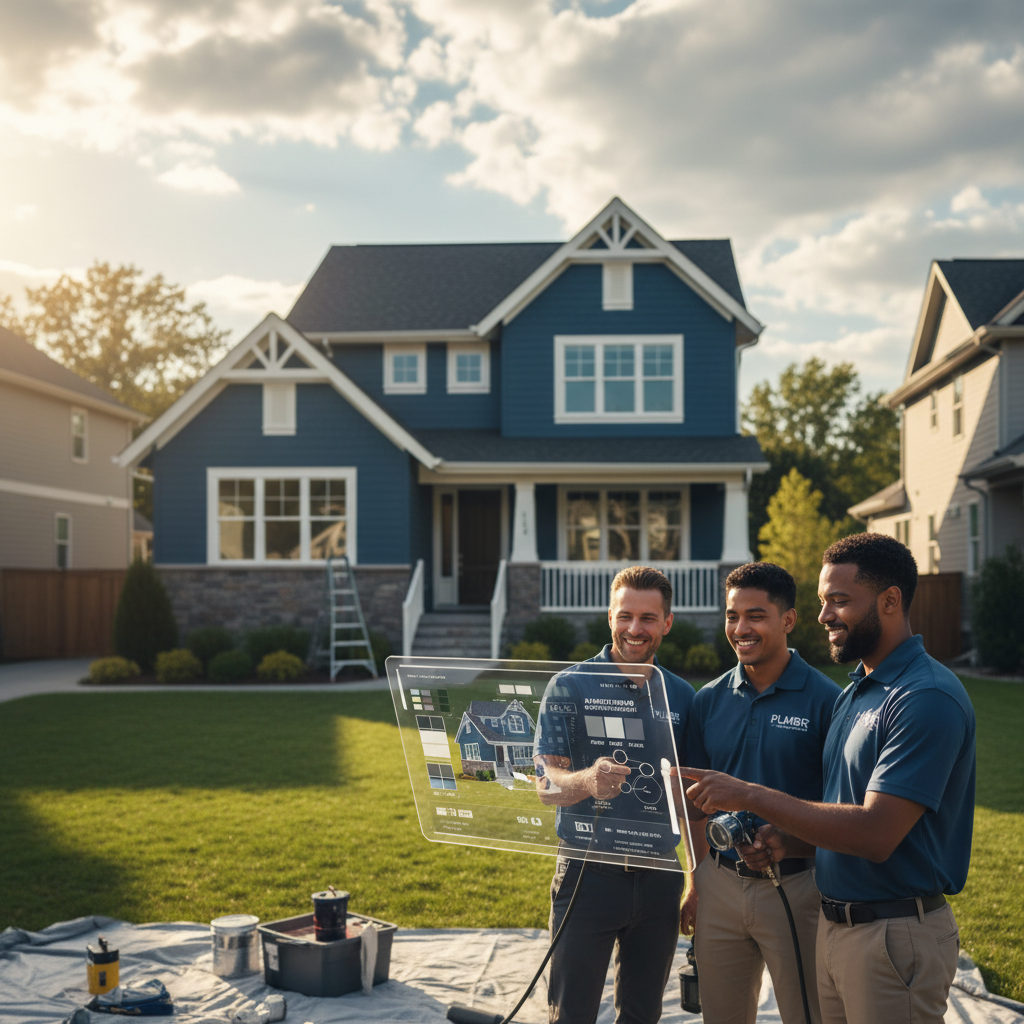
Exterior painting is one of the most visible home‑improvement projects you’ll tackle. Yet most homeowners still wrestle with vague PDFs, endless phone tag, and surprise bills. This guide walks you through everything you need to know—real costs, red‑flags when vetting painters, and why the new AI‑native platform PLMBR is reshaping the whole process.
Introduction
Imagine you’re standing on the porch of a New York‑city brownstone, looking at peeling paint that’s been cracking for years. You call three local painters, get three different PDFs, and spend the next two weeks chasing voicemail after voicemail. When the quotes finally arrive, you can’t compare them because one lists “materials,” another breaks down “labor per hour,” and a third just says “total price.”
You’re not alone. A 2025 Angi survey shows the national average cost to paint a house exterior is $4,839, but 68 % of homeowners say a line‑item, side‑by‑side quote would make them far more likely to hire a contractor (HIRI Survey, 2023). Meanwhile, raw‑material prices for pigments and resins have surged 15‑30 % YoY (Future Market Insights, 2024), and new EPA VOC limits force painters to use pricier low‑VOC paints.
The old lead‑gen model—unstructured PDFs, pay‑per‑lead fees, and no escrow protection—can’t keep up with these market pressures. That’s why an AI‑native workflow like PLMBR is emerging as the smarter, safer way to get a flawless exterior paint job.
What Homeowners Need To Know About Exterior Painting
1. The Scope of the Job
- Surface preparation – power washing, scraping, sanding, and priming are the most labor‑intensive steps. Skipping prep can shave weeks off the timeline but will shorten the paint life to 3‑5 years instead of the typical 7‑10 years (CertaPro, 2025).
- Paint type – standard acrylic exterior paint runs $30‑$60 per gallon, while premium low‑VOC options cost $70‑$100 per gallon. Low‑VOC paints meet the EPA’s ≤ 350 g/L VOC limit for New York, Massachusetts, and Pennsylvania (EPA, 2023).
- Weather windows – ideal temperatures are 50‑85 °F with low humidity. Most projects in the Northeast start between April and October; painting outside this window can lead to delays costing $1,200‑$2,500 per job (WS Industries, 2025).
2. Typical Project Timeline
| Phase | Typical Duration | Key Activities |
|---|---|---|
| Inspection & Quote | 1‑3 days | AI intake (photo upload) → Scope definition |
| Surface Prep | 1‑2 days | Power wash, scrape, sand, prime |
| Painting | 2‑5 days | Apply two coats, quality check |
| Cleanup & Final Walk‑through | 0‑1 day | Remove debris, sign off |
Scroll to see all columns →
A well‑planned exterior paint job usually finishes in 3‑7 days from start to finish (WS Industries, 2025).
3. Regulatory Nuggets
- Lead‑paint disclosure – If your home was built before 1978, contractors must conduct a lead‑risk assessment and follow EPA lead‑safe work practices.
- Permits – Most Northeastern cities (NYC, Boston, Philadelphia) do not require a building permit for painting, but historic districts may have color‑approval rules.
Cost / Risk / Hiring Reality
Below is a realistic breakdown for a 2,500 sq ft two‑story home in the Boston metro area (mid‑range quality, low‑VOC paint).
| Cost Component | Low‑End | Mid‑Range | High‑End |
|---|---|---|---|
| Paint material (gallons) | $1,200 (30 gal @ $40) | $2,500 (30 gal @ $83 low‑VOC) | $3,600 (30 gal @ $120 premium) |
| Labor (40 hrs @ $65/hr) | $2,600 | $2,600 | $2,600 |
| Prep & priming | $500 | $800 | $1,200 |
| Travel & overhead | $200 | $300 | $400 |
| Total | $4,500 | $6,200 | $7,800 |
Scroll to see all columns →
Pro‑Tip: Ask for a line‑item quote that separates “prep,” “paint,” and “labor.” This lets you see where you can save—often the paint brand accounts for 30‑40 % of total cost.
Hidden Risks
- Scope creep: Vague quotes often lead to “extra” charges for “additional prep” once the work starts.
- Payment timing: Up‑front deposits without escrow expose you to the risk of incomplete work.
- Dead leads: Contractors who pay per lead may ghost you if the job looks less profitable.
How To Vet Providers Without Getting Burned
-
Check Licensing & Insurance
- Verify a contractor’s state license (NY, MA, PA) through the respective licensing board.
- Confirm liability insurance and workers‑comp coverage; PLMBR’s compliance dashboard auto‑alerts you when documents expire.
-
Look for EPA‑Compliant Paint Use
- Ask which paint brand they use and whether it meets ≤ 350 g/L VOC limits. Low‑VOC paints may cost more but protect your family’s indoor air quality.
-
Ask for a Structured Booking Packet
- A good provider will deliver a booking packet that lists every line item, timeline, and payment milestone.
-
Read Real Reviews, Not Just Star Ratings
- Look for feedback on prep quality and post‑job cleanup. The most reliable indicators are comments about “no surprise fees” and “finished on schedule.”
-
Validate Their Availability
- Seasonal demand spikes; a contractor who can start within 2‑3 weeks during peak months is likely well‑organized and may already have a calendar integration (Google/Outlook).
Where The Old Workflow Breaks
| Broken Step | Homeowner Pain | Provider Pain |
|---|---|---|
| Phone tag & repeated intake | “I have to explain my problem 5 times.” | “Time lost capturing the same details.” |
| Unstructured PDF/Word quotes | “I can’t compare prices.” | “Every change means a new PDF.” |
| Pay‑per‑lead fees | “Contractor disappears after I pay them.” | “$30‑$50 per lead that never converts.” |
| No escrow protection | “I’m scared to pay before work starts.” | “Chasing payment after job.” |
| Manual dispute handling | “I have no proof when paint peels early.” | “Hours spent on email back‑and‑forth.” |
Scroll to see all columns →
These friction points are why the traditional lead‑gen platforms (Angi, Thumbtack, HomeAdvisor) are losing homeowner trust. A 2024 HomeAdvisor labor survey shows 45 % of contractors cite “dead leads” as a top pain point (Reddit r/smallbusiness, 2024).
How PLMBR Changes This Workflow
1. Conversational AI Intake
- One‑click photo upload and plain‑English description generate a semantic match to the right trade, location, and urgency. No more filling out endless forms.
2. Structured Booking Packets
- The AI Builder creates a line‑item packet (prep, paint, labor, milestones) in seconds.
- Homeowners can compare packets side‑by‑side on the PLMBR platform, instantly seeing which provider offers the best value.
3. AI Agent Outreach (Premium)
- A personal AI agent contacts multiple vetted painters simultaneously, tracks each response, and surfaces only the actionable follow‑ups.
4. Escrow‑Backed Payments
- Funds are authorized via Stripe and held in escrow until the homeowner confirms each milestone. This eliminates the “pay‑up‑front” anxiety and guarantees painters get paid on time.
5. Progressive Billing
- For larger jobs, PLMBR supports milestone‑based billing (e.g., 30 % after prep, 40 % after first coat, 30 % on final inspection).
6. AI‑Mediated Dispute Resolution
- If paint peels early, the homeowner can file a dispute with an evidence pack (photos, packet copy). The AI suggests resolutions and can auto‑escalate to a human arbitrator if needed.
7. Zero‑Dead‑Lead Guarantee
- Because painters only see qualified jobs that have already completed the AI intake, there are no pay‑per‑lead fees and no ghosting.
Result: Homeowners gain transparent pricing, risk‑free payment, and speed (average booking to start = 48 hours). Contractors gain high‑quality leads, automated quoting, and protected cash flow.
Questions To Ask Before Hiring
- What paint brand and VOC rating will you use?
- Can you provide a line‑item booking packet with milestones?
- Do you have current liability insurance and workers‑comp certificates uploaded? (PLMBR shows this automatically.)
- How do you handle payment—do you use escrow or an upfront deposit?
- What is your projected start date and total timeline?
- Do you have a written warranty for the paint system?
If the provider can answer these confidently, you’re likely dealing with a PLMBR‑verified professional.
Conclusion
Exterior painting is a high‑impact home upgrade, but the old lead‑gen model leaves homeowners juggling vague PDFs, phone tag, and payment risk. The market data tells us that average costs are rising (raw‑material volatility +15‑30 % YoY) and homeowners demand transparent, line‑item quotes (68 % preference).
PLMBR eliminates the guesswork: AI intake creates a single, structured scope; the platform’s booking packets let you compare providers side‑by‑side; escrow‑backed Stripe payments protect both parties; and progressive billing aligns cash flow with actual work completed.
Ready to ditch the chaos and get a professional, risk‑free exterior paint job?
- Visit the PLMBR homepage to learn more.
- Find Exterior Painting pros on PLMBR for instant AI‑matched quotes.
- Compare quotes on PLMBR and see the side‑by‑side packet view in real time.
- For more home‑service guides, explore our blog.
Your home deserves a finish that lasts, and you deserve a workflow that’s clear, fast, and protected. With PLMBR, the future of exterior painting is already here.
References
- Future Market Insights – Exterior Paint Retail Market Report (2024) – raw‑material volatility & market size.
- AlphaFXBG – Exterior House Painting Cost Factors – detailed cost breakdown.
- Angi – Cost to Paint a House Exterior (2025) – national average cost.
- HomeAdvisor – 2024 Paint & Coatings Labor Rate Survey – regional labor rates.
- EPA – VOC Limits for Exterior Coatings (2023 update) – regulatory thresholds.
- This Old House – Exterior Painting Prep Guide – best practices for surface preparation.
Empower your home improvement journey with AI‑native clarity. Paint smarter, not harder.