
The Ultimate Guide to Hiring an Appliance‑Repair Pro in 2024 — Speed, Transparency, and Zero‑Risk Payments
Your fridge stopped cooling, the dishwasher’s leaking, and you can’t afford another round of phone‑tag. Here’s how to get a qualified tech, a clear, line‑item…
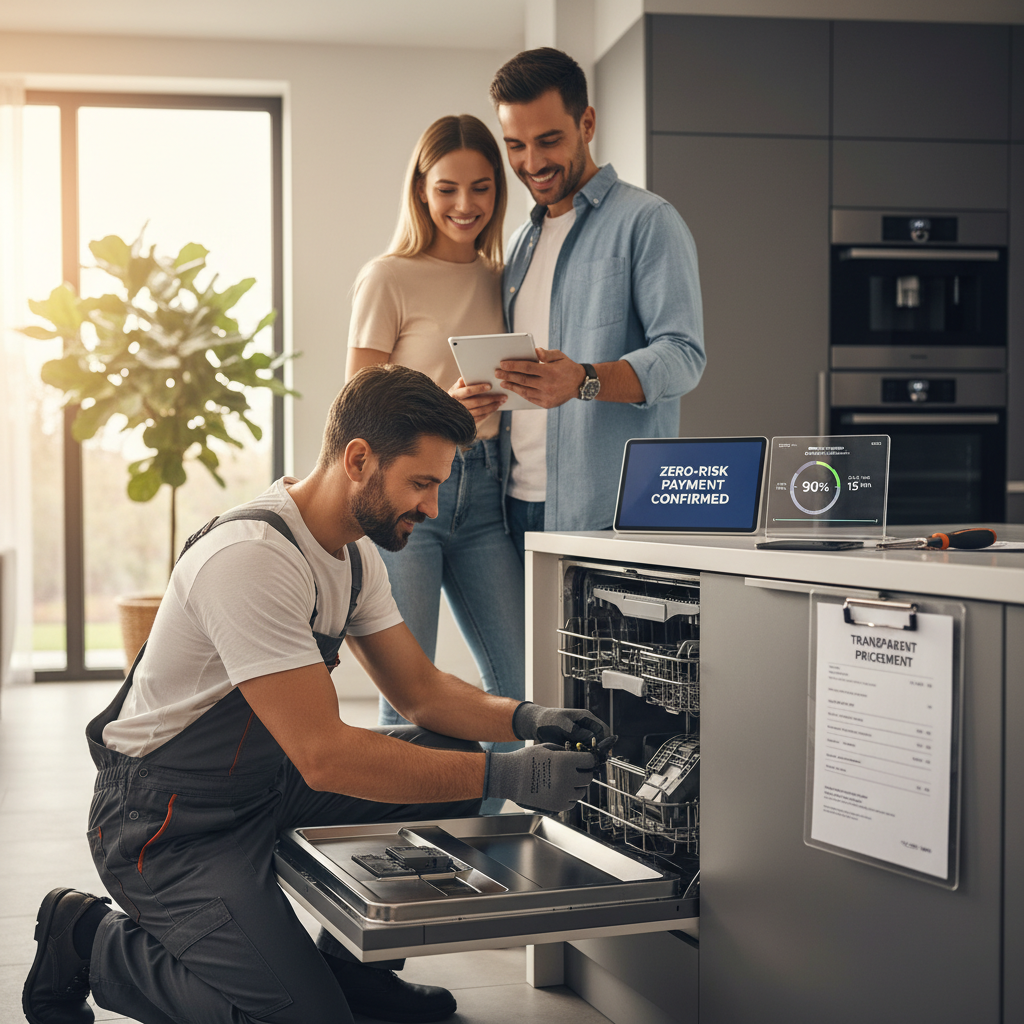
Your fridge stopped cooling, the dishwasher’s leaking, and you can’t afford another round of phone‑tag. Here’s how to get a qualified tech, a clear, line‑item quote, and escrow‑protected payment—all without paying per‑lead fees.
Introduction
Imagine it’s 7 p.m. in a Boston apartment. The refrigerator hums for a few seconds, then goes silent. You grab your phone, search “fridge repair near me,” and are immediately flooded with a dozen listings, each promising “fast service” but demanding a 30‑minute phone interview. After three days of back‑and‑forth, you finally receive a vague estimate—“$300 – $500”—and you still aren’t sure what’s included.
You’re not alone. 62 % of homeowners say they can’t get a clear quote quickly (PLMBR homeowner survey, 2024). The U.S. appliance‑repair market is a $9.2 B industry (IBISWorld, 2023), yet the hiring process remains stuck in a 20‑year‑old lead‑generation model that forces you into endless phone tag, vague pricing, and payment risk.
In this guide we’ll break down exactly what you need to know, the hidden costs of the old workflow, and how an AI‑native platform like PLMBR flips the script—delivering structured, escrow‑backed booking packets, progressive billing, and zero dead leads for providers.
What Homeowners Need To Know About Appliance Repair
Appliance repair is a specialized trade. A technician must diagnose, source parts, and often perform on‑site testing—all within a limited window. Here are the three pillars you should demand from any hiring process:
- Accurate Trade Matching – Your fridge, dishwasher, or dryer each requires a different certification and toolset. A smart intake that asks only the necessary follow‑up questions (e.g., “Is the appliance still under warranty?”) eliminates mismatches.
- Transparent, Itemized Pricing – Line‑item quotes break down labor, parts, and any ancillary fees. This prevents the “$300 – $500” range that masks a $250 part cost versus a $250 labor cost.
- Secure Payment Flow – An escrow or authorize‑and‑capture model holds funds until the job is confirmed complete, protecting you from scams and surprise charges.
When a platform can deliver these three elements in one conversation, you avoid the classic “phone‑tag → vague estimate → surprise bill” loop.
Cost, Risk, and Hiring Reality
Below is a snapshot of typical repair costs, the associated risks of the traditional hiring workflow, and how a modern AI‑native platform mitigates each risk.
| Appliance | Typical Labor Cost* | Typical Parts Cost* | Common Risk in Legacy Workflow | How AI‑Native Workflow Solves It |
|---|---|---|---|---|
| Refrigerator | $150 – $350 | $80 – 200 | Vague “$300 – $500” estimate, no parts breakdown | Itemized booking packet shows labor vs. parts, no hidden markup |
| Dishwasher | $120 – 300 | $50 – 180 | Phone‑tag delays > 3 days before any quote | Instant AI intake generates a quote within minutes |
| Washing‑machine | $130 – 350 | $70 – 210 | Payment required up‑front, risking scams | Escrow‑backed Stripe flow holds funds until completion |
| Dryer | $100 – 250 | $40 – 150 | “Lead fee” passed onto you via inflated price | Zero lead‑fee model means providers price fairly |
Scroll to see all columns →
*Numbers reflect the median range reported by HomeAdvisor’s 2023 Appliance Repair Cost Guide.
Key take‑away: The traditional model hides part of the cost, forces you to pay before you see any work, and can add 3‑5 days of back‑and‑forth. An AI‑driven workflow eliminates these hidden fees and accelerates the timeline.
How To Vet Providers Without Getting Burned
Even with transparent pricing, you still need to confirm that a technician is qualified, insured, and trustworthy. Follow this checklist:
- Verify Licensing & Insurance – Look for a current state contractor license and liability insurance. In New York, the Department of State’s License Center can be used to confirm.
- Check Ratings & Reviews – Platforms that aggregate verified post‑job reviews (not just self‑submitted) give you a realistic picture.
- Confirm Specialty Certifications – For refrigeration, a U‑Seal certification indicates training on refrigerants. For dishwashers, look for NSF or UL certification on the tech.
- Ask for an Itemized Quote – A professional packet will list labor hours, part numbers, and warranty terms.
- Validate Payment Protection – Ensure the platform holds funds in escrow until you confirm the job is done.
Pro‑Tip: When a provider offers a “flat‑rate” quote without breaking down parts, ask for a line‑item version. If they balk, it’s a red flag.
Where The Old Workflow Breaks
The legacy lead‑generation ecosystem (think Angi, Thumbtack, HomeAdvisor) still follows a brittle chain:
- Phone Tag – Homeowners must call multiple listings, each with its own scheduling calendar. The average delay from first call to final quote is 3‑5 days (PLMBR homeowner survey, 2024).
- Vague Estimates – Providers often give a price range rather than a concrete figure, leading to “scope drift” once the job starts.
- Surprise Bills – Hidden fees, inflated parts costs, or last‑minute “travel fees” appear after work is completed.
- Dead Leads – Providers chase contacts that never convert, forcing them to inflate prices to cover the cost of wasted time—ultimately you pay more.
- Payment Risk – Up‑front cash or checks expose homeowners to fraud; many platforms lack escrow protection.
These pain points are why 48 % of homeowners want escrow protection before work begins (PLMBR survey, 2024). The old workflow simply can’t deliver the speed and security modern consumers expect.
How PLMBR Changes This Workflow
PLMBR is not a marketplace; it is an AI‑native home services workflow and payments platform that consolidates every step into a single, escrow‑backed conversation. Here’s the breakdown:
1. Conversational AI Intake
- You describe the issue in plain English, attach a photo, and the AI instantly identifies the correct trade, location, and urgency.
- Smart follow‑up questions (e.g., “Is the appliance still under warranty?”) appear only when they improve match quality, cutting the intake time to under 2 minutes.
2. Semantic Search & Matching
- Using vector embeddings, PLMBR ranks providers by trade fit, distance, availability, and verified trust signals—far beyond keyword matching.
3. Booking Packet Builder
- The AI generates a structured quote that includes:
- Scope of work (diagnostic steps, required parts)
- Line‑item pricing (labor × hours, each part with SKU)
- Terms & conditions (warranty, cancellation policy)
- Milestone billing options for larger jobs (e.g., 30 % deposit, 70 % upon completion).
4. In‑Context Messaging & Compare Packets
- All communication lives in a single thread. You can open a compare view that lines up multiple booking packets side‑by‑side, making the decision as simple as a spreadsheet.
5. Escrow‑Backed Payments (Stripe Connect)
- Funds are authorized at the moment you accept a packet and captured only after you confirm the work is complete. This eliminates upfront cash risk.
6. Zero Dead Leads & No Lead Fees
- Providers only see homeowners with a qualified job, removing the “pay‑per‑lead” trap that inflates quotes across the industry.
7. Progressive Billing & Dispute Resolution
- For multi‑day repairs (e.g., refrigerator compressor replacement), you can split payments across milestones. If a dispute arises, an AI‑mediated system compiles evidence and suggests resolutions, reducing friction.
Result: A homeowner can go from “my fridge stopped” to “job scheduled, payment secured” in under 30 minutes, while the provider receives a fair, pre‑qualified lead and a guaranteed payment pipeline.
Explore the workflow yourself:
- Find Appliance Repair pros on PLMBR → https://plmbr.app/services/appliance-repair
- Compare quotes side‑by‑side → https://plmbr.app
Questions To Ask Before Hiring
Even with a modern platform, a quick sanity check never hurts. Keep this list handy before you click “Accept” on any booking packet:
- Is the provider’s license current and specific to my appliance type?
- Do they have liability insurance and workers’ compensation coverage? (PLMBR auto‑verifies these documents.)
- What is the exact part number and warranty for each component?
- What are the milestones for payment, and can I hold funds in escrow?
- What is the estimated time to complete the repair? (Ask for a realistic window, not “same day”).
- Do they offer a post‑repair guarantee? (Most reputable technicians provide a 30‑day service guarantee.)
If the answer to any of these is “I’m not sure” or “We’ll discuss later,” request an updated packet before moving forward.
Conclusion
The appliance‑repair market may be worth $9.2 B, but the hiring experience has been plagued by phone‑tag, vague estimates, and payment risk for far too long. 48 % of homeowners want escrow protection, and 62 % can’t get a clear quote quickly—clear signals that the legacy lead‑gen model is broken.
By leveraging AI‑driven intake, semantic matching, structured booking packets, and escrow‑backed Stripe payments, PLMBR delivers a single, transparent workflow that protects both homeowner and provider. No more dead leads, no hidden fees, and no surprise bills—just a fast, trustworthy repair that gets your appliance humming again.
Ready to upgrade your repair experience?
- Visit the PLMBR homepage to learn more.
- Find Appliance Repair pros on PLMBR and get instant, itemized quotes.
- Browse other guides in our blog library for deeper insights on home‑service hiring.
Your home deserves smarter, safer service. Let the AI‑native workflow do the heavy lifting.
References & Further Reading
- IBISWorld, “Appliance Repair Services” (2023) – market size data.
- PLMBR Homeowner Survey, 2024 – quote‑delay and escrow demand statistics.
- U.S. Consumer Financial Protection Bureau – Home Service Scams – consumer‑protection guidelines.
- Better Business Bureau – Choosing a Contractor – licensing and insurance checklist.
- This Old House – How to Diagnose Common Appliance Problems – DIY diagnostics before calling a pro.