
The Ultimate Homeowner’s Guide to Decks & Porches: Costs, Hiring, and How AI Is Changing the Game
From planning the perfect outdoor oasis to hiring a trustworthy contractor, this guide walks you through every step—backed by market data, real‑world numbers,…
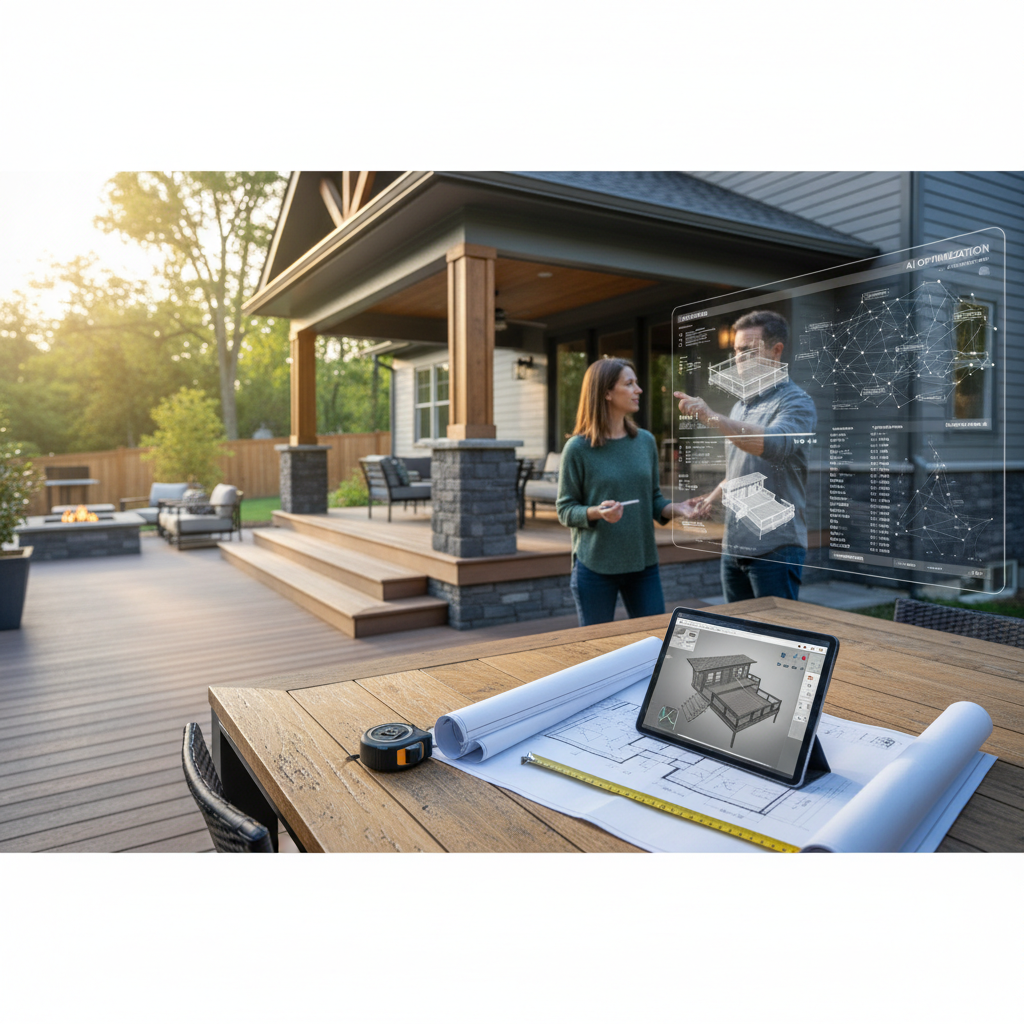
From planning the perfect outdoor oasis to hiring a trustworthy contractor, this guide walks you through every step—backed by market data, real‑world numbers, and the new AI‑first workflow that eliminates the old‑school headaches.
Introduction
Imagine you’re standing on a sun‑drenched patio in Boston, sipping coffee while your kids play on a brand‑new deck. You’ve just spent $8 billion + this year on decks and porches across the U.S., yet 70 % of homeowners still wrestle with vague estimates, endless phone‑tag, and the fear of paying a contractor who never shows up.
The traditional lead‑gen model that powers sites like Angi or Thumbtack is breaking: providers pay per lead that often goes cold, while homeowners receive non‑binding, spreadsheet‑style quotes that hide hidden fees. At the same time, material costs are volatile—composite decking now accounts for > 60 % of new builds, and labor shortages are driving 5‑10 % price hikes on projects.
If you’re ready to avoid these pitfalls, get transparent pricing, and lock in a qualified pro with zero‑lead‑fees, keep reading. We’ll break down the essentials of deck and porch projects, then show how an AI‑native platform like PLMBR re‑engineers the entire hiring and payment process.
What Homeowners Need To Know About Decks & Porches
1. Why Outdoor Living Is Booming
| Metric | Figure | Source |
|---|---|---|
| U.S. decks market size (2024) | $8.3 B | GMI Insights – “Wooden Decking Market Size & Share 2025‑2034” |
| Projected market (2034) | $10.9 B (CAGR ≈ 2.8 %) | Same |
| Decks in new homes | < 18 % of new single‑family builds | U.S. Census Bureau (via LBM Journal) |
| Composite & PVC share | > 60 % of new decks | IDC Decking – “5 Deck Industry Trends” |
Scroll to see all columns →
Takeaway: More families are investing in outdoor spaces, but the majority are retrofits, meaning you’ll likely be adding a deck to an existing home—a scenario that adds design complexity and permitting requirements.
2. Material Choices Matter
| Material | Maintenance | Avg. Cost / sq ft | Longevity | Best For |
|---|---|---|---|---|
| Pressure‑treated wood | Annual seal & stain | $12‑$18 | 10‑15 yr | Tight budgets |
| Composite (mix of wood fibers & plastic) | No painting, occasional cleaning | $25‑$35 | 25‑30 yr | Low‑maintenance, humid climates |
| PVC (pure plastic) | Wash with hose | $30‑$45 | 30‑35 yr | Wet, freeze‑thaw zones (e.g., Boston) |
| Tropical hardwood (i.e., ipe) | Oil every 1‑2 yr | $45‑$60 | 40+ yr | High‑end aesthetics |
Scroll to see all columns →
Composite and PVC dominate in the Northeast because they resist rot, moisture, and the freeze‑thaw cycles that plague traditional wood.
3. Permits & Regulations
Most municipalities—New York City, Boston, Philadelphia, and many New England towns—require a building permit for decks larger than 200 sq ft and for any structure attached to the house. You’ll need a licensed contractor (often a carpenter or general contractor) who holds the appropriate state license and carries liability insurance.
- NYC: Check the NYC Department of Buildings for permit requirements.
- Massachusetts: Use the MassLicensing Board to verify a contractor’s license.
Failure to obtain proper permits can lead to fines, forced removal, or resale complications.
Cost / Risk / Hiring Reality
1. Typical Price Ranges
A 36 m² (≈ 400 sq ft) deck—a common size for a family patio—costs anywhere from $11 k to $18 k, depending on material, design complexity, and labor rates.
| Project Component | Low End | Mid Range | High End |
|---|---|---|---|
| Material (composite) | $10,000 | $13,500 | $17,000 |
| Labor (install) | $4,000 | $5,500 | $7,000 |
| Permit & Inspection | $500 | $750 | $1,000 |
| Design & Engineering | $600 | $1,200 | $2,000 |
| Total | $15,100 | $20,950 | $27,000 |
Scroll to see all columns →
Pro tip: Ask for a line‑item breakdown that separates material, labor, permits, and design. This makes it easier to spot hidden mark‑ups.
2. Risks to Watch
| Risk | What Happens | How to Mitigate |
|---|---|---|
| Scope creep | The contractor adds extra steps (e.g., extra railing) after the contract is signed, inflating the bill. | Insist on a fixed‑scope booking packet that lists every deliverable. |
| Cash‑flow mismatch | You pay the full amount upfront, then the contractor stalls. | Use escrow‑backed payments that release funds only after milestones are verified. |
| Unlicensed work | Illegal work can void insurance and lead to fines. | Verify licenses via the state board and check that the contractor has uploaded liability insurance on the platform. |
| Material price spikes | Composite prices can swing 10‑15 % due to supply chain issues. | Choose a contractor who conducts AI‑powered pricing research and locks in material costs in the quote. |
| Dead leads | You chase a contractor who never responds, causing delays. | Work with a platform that guarantees zero‑lead‑fee and only connects you with qualified, responsive pros. |
Scroll to see all columns →
How To Vet Providers Without Getting Burned
-
Check Licensing & Insurance
- Visit your state’s licensing board website (e.g., Massachusetts Board of Registration of Contractors).
- Ensure the contractor’s liability insurance and workers’ comp are current.
-
Read Verified Reviews & Ratings
- Look for platforms that aggregate verified homeowner reviews tied to completed jobs, not just “self‑selected” testimonials.
-
Ask for a Structured Quote
- A proper booking packet includes: scope of work, line‑item pricing, timeline, warranty terms, and payment schedule.
-
Confirm Availability & Calendar Integration
- Contractors who sync their calendars (Google Calendar, Outlook, or Jobber) are less likely to double‑book you.
-
Validate Past Work
- Request at least three recent project photos and, if possible, a short video walkthrough of a completed deck.
-
Use an AI‑Assisted Comparison Tool
- Platforms like PLMBR let you compare multiple booking packets side‑by‑side, so you can instantly spot outliers.
Expert Insight: “When a contractor can’t give you a clear line‑item quote, it’s usually a red flag for hidden fees.” – NARI Certified Remodeler
Where The Old Workflow Breaks
| Step | Traditional Pain Point | Real‑World Example |
|---|---|---|
| Intake | Homeowner repeats the same description to 4‑5 contractors over phone/email. | “I have a leak in the deck railing” – you have to re‑explain each time. |
| Matching | Platforms rely on keyword searches; many irrelevant contractors appear. | You get 12 “handyman” bids, none of which hold a deck‑building license. |
| Quote Generation | Estimates are often a single PDF with vague language (“materials TBD”). | You later discover extra $3k for “additional lumber.” |
| Communication | Multiple email threads and voicemail, leading to missed messages. | You miss a contractor’s follow‑up about a needed permit. |
| Payment | Upfront cash or checks; no protection if work is incomplete. | You pay $5k, contractor disappears after framing. |
| Dispute Resolution | Homeowner must chase the contractor, use small claims court, or third‑party mediators. | Months of back‑and‑forth, legal fees, and stress. |
Scroll to see all columns →
These broken pieces create a high‑friction, low‑trust environment that drives homeowners to abandon projects or settle for sub‑par work.
How PLMBR Changes This Workflow
1. Conversational AI Intake
- One‑click photo upload and plain‑English description instantly generate a trade match (deck builder) and assess urgency.
- The AI asks only smart follow‑up questions (e.g., “What’s the approximate square footage?”) to improve match quality.
2. Semantic Search & Matching
- Instead of keyword matching, PLMBR uses vector embeddings to surface the most relevant, licensed contractors within your city (e.g., New York City, Boston, Philadelphia).
3. AI Agent Outreach (Premium)
- A personal AI agent contacts multiple vetted pros simultaneously, tracks each response, and surfaces status updates in a single thread—no more phone‑tag.
4. Booking Packet Builder
- The AI pulls material pricing data (including volatile composite costs) and your project details to auto‑generate a structured quote with line‑item pricing, warranty terms, and a timeline.
5. Compare Packets Side‑by‑Side
- Using the compare_packets.png UI, you can view up to three booking packets next to each other, instantly spotting price outliers or missing scope items.
6. In‑Context Messaging & Escrow Payments
- All communication—including billing requests, milestone approvals, and dispute filings—lives inside the same chat thread.
- Payments are held in a Stripe‑powered escrow; funds release only after you confirm each milestone is complete.
7. AI‑Mediated Dispute Resolution
- If a contractor overcharges or deviates from the scope, the AI compiles an evidence pack (photos, packet terms) and recommends a resolution, dramatically reducing resolution time.
8. Zero‑Lead‑Fee for Providers
- Contractors never pay per lead; they only receive qualified, escrow‑backed jobs, meaning you get real, committed pros rather than a sea of dead leads.
Bottom line: PLMBR turns a fragmented, multi‑email, multi‑phone process into a single, transparent workflow where you control the budget, schedule, and payment security—all while the AI handles the administrative grunt work.
Questions To Ask Before Hiring
- Are you licensed for deck construction in this state/city? (Provide the license number.)
- Do you have up‑to‑date liability insurance and workers’ comp? (Ask to see the documents.)
- Can you provide a detailed booking packet with line‑item pricing, milestones, and warranty terms?
- How do you handle permits and inspections? (Will you file the paperwork, or do I need to?)
- What is your payment schedule? Do you accept escrow‑backed payments?
- Can you share three recent deck projects, including photos and homeowner references?
- How do you protect against material price spikes? (Do you lock in pricing at the quote stage?)
Having clear answers to these questions will dramatically reduce the chance of scope creep, hidden fees, and payment disputes.
Conclusion
Decks and porches are among the most rewarding home improvements—you get extra living space, higher resale value, and a spot for family gatherings. Yet the traditional hiring workflow still traps homeowners in a maze of vague estimates, endless phone tag, and cash‑flow risk.
The data is clear: the market is growing, material costs are volatile, and labor shortages are inflating prices. To thrive, you need transparent, structured quotes, qualified, licensed pros, and secure, milestone‑based payments.
That’s exactly what an AI‑native platform like PLMBR delivers: a one‑stop shop where you describe your project in plain English, receive side‑by‑side booking packets, pay through escrow, and resolve disputes—all without paying per lead.
Ready to build the deck or porch you’ve been dreaming of—without the stress?
- Explore the PLMBR homepage.
- Find Decks & Porches pros on PLMBR in your city.
- Compare quotes on PLMBR and see the difference for yourself.
For more home‑service guides, visit our blog. Your outdoor oasis is just a few clicks away.
References
- Outdoor Deck & Patio Market – Size, Trends & Forecast, Congruence Market Insights. https://www.congruencemarketinsights.com/report/outdoor-deck-and-patio-market
- U.S. Decks Market Size & Forecast 2024‑2034, GMI Insights. https://www.gminsights.com/industry-analysis/wooden-decking-market
- Deck & Patio Construction Industry Report 2026, IBISWorld. https://www.ibisworld.com/united-states/industry/deck-patio-construction/4717
- 5 Deck Industry Trends, IDC Decking. https://www.idcdecking.com/5-deck-industry-trends
- Massachusetts Board of Registration of Contractors – License verification. https://www.mass.gov/orgs/massachusetts-board-of-registration-of-contractors
- New York City Department of Buildings – Permit requirements. https://www1.nyc.gov/site/buildings/index.page
- Better Business Bureau (BBB) – Home Improvement Contractors. https://www.bbb.org
Empower your home improvement journey with data, transparency, and AI.