
The Ultimate Homeowner’s Guide to Decks & Porches: Costs, Hiring Pitfalls, and How AI Can Save You $2,000+
Imagine stepping onto a brand‑new deck in Boston this summer—only to spend weeks chasing contractors, juggling vague quotes, and worrying about paying for…
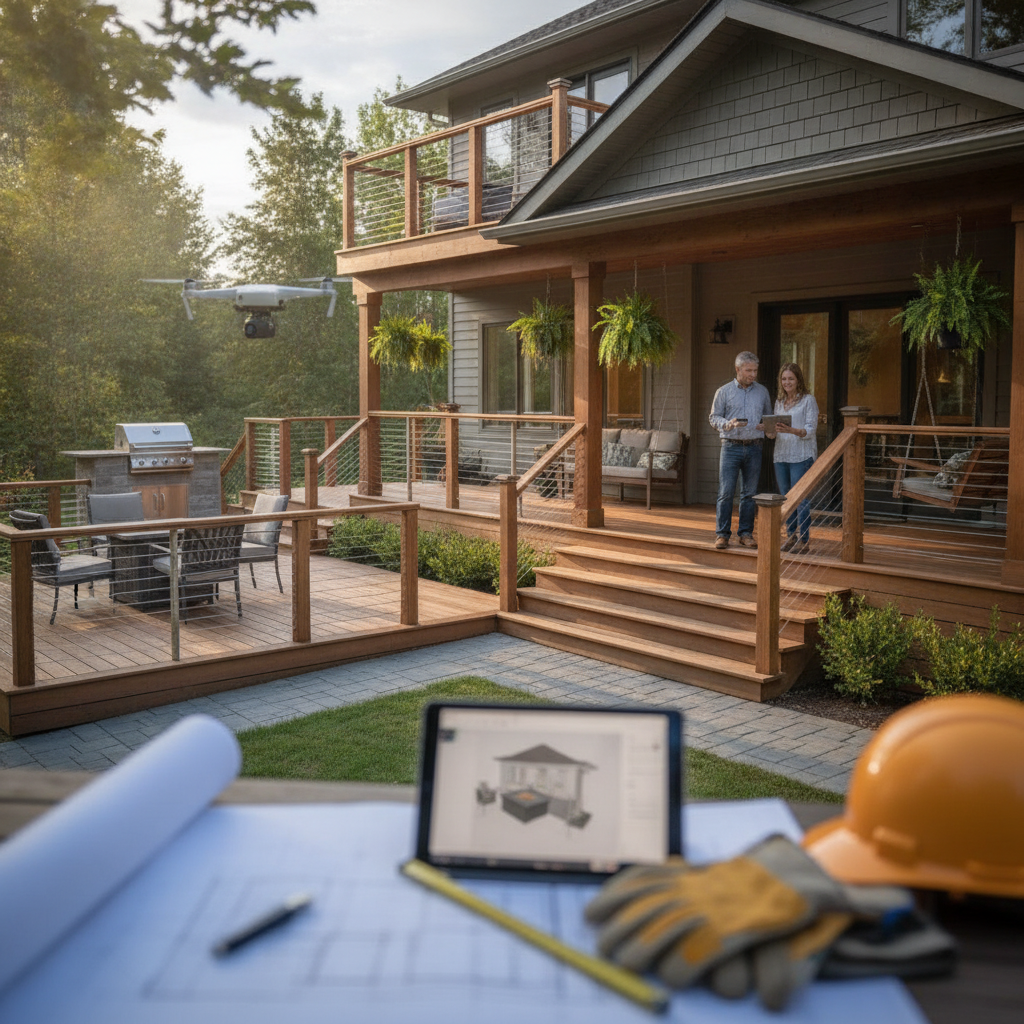
Imagine stepping onto a brand‑new deck in Boston this summer—only to spend weeks chasing contractors, juggling vague quotes, and worrying about paying for work that never happens. You’re not alone. The U.S. decking market is projected to exceed $24 B by 2033, yet the hiring workflow is stuck in a 1990s lead‑gen model that creates “dead leads,” endless phone‑tag, and surprise bills.
In this guide we’ll break down everything you need to know before building a deck or porch, expose the hidden costs of traditional lead‑gen platforms, and show how an AI‑native home‑services workflow and payments platform can eliminate those frustrations.
What Homeowners Need To Know About Decks & Porches
Decks and porches are the most popular outdoor‑living investments in the Northeast. They add curb appeal, increase resale value (up to 8 % according to the National Association of the Remodeling Industry), and give you a backyard sanctuary for summer barbecues.
1. Material Choices Matter
| Material | Avg. Cost / sq ft (incl. labor) | Lifespan | Sustainability Rating |
|---|---|---|---|
| Pressure‑treated wood | $15‑$25 | 10‑15 yr | Low (requires frequent sealing) |
| Composite (recycled‑plastic) | $30‑$45 | 25‑30 yr | High (30 % market share growth YoY) |
| PVC (all‑plastic) | $40‑$55 | 30‑35 yr | Very High (no rot) |
| Natural hardwood (ipe, teak) | $45‑$70 | 30‑50 yr | Medium (slow‑growth sourcing) |
Scroll to see all columns →
Source: Grandview Research & industry supplier data.
2. Typical Project Timeline
| Phase | Duration | What Happens |
|---|---|---|
| Design & permitting | 1‑3 weeks | AI‑driven intake gathers scope, photos, and location. |
| Material ordering | 1‑2 weeks | Supply chain volatility can add +45 % price swing in lumber/composite (2023‑2024). |
| Build | 1‑4 weeks | Depends on crew size and weather. |
| Final inspection | 1‑2 days | Contractor submits proof of completion for escrow release. |
Scroll to see all columns →
3. Regional Regulations
- New York City: Requires a building permit for decks > 200 sq ft and a separate stair permit.
- Massachusetts: Must meet the State Building Code for load‑bearing calculations.
Check your local EPA and municipal building department before you start.
Cost / Risk / Hiring Reality
Building a deck or porch is a sizable investment, and the numbers can shift dramatically when hidden fees creep in. Below is a realistic cost breakdown for a 300 sq ft deck in Boston, plus the most common risk factors homeowners encounter.
| Cost Item | Low End | High End | Typical Risk |
|---|---|---|---|
| Materials (composite) | $9,000 | $13,500 | Price volatility (+45 % YoY) |
| Labor (incl. crew) | $7,500 | $12,000 | Labor shortage adds 15‑30 % to rates |
| Permit fees | $250 | $800 | Missed permit = fines & re‑work |
| Design/engineer (optional) | $500 | $2,000 | Vague scope can balloon cost |
| Total | $17,250 | $28,300 | 30 % of projects see surprise bills (HomeAdvisor survey) |
| Escrow‑backed payment fee (0 % on PLMBR) | $0 | $0 | Traditional sites have no escrow, risking non‑completion |
Scroll to see all columns →
Pro‑Tip: Always ask for a line‑item quote that separates material, labor, permits, and contingency. This makes it easier to spot inflated items later.
How To Vet Providers Without Getting Burned
Finding a qualified deck contractor is more than scrolling through reviews. Use this checklist to separate the pros from the pretenders:
- Verify Licensing & Insurance – Ask for a copy of the contractor’s state license and liability insurance. The Federal Trade Commission (FTC) recommends confirming coverage before any work begins.
- Check Past Projects – Request at least three recent photos or a virtual walkthrough. Look for consistency in workmanship and material quality.
- Demand a Structured Quote – Insist on a booking packet that lists every line item, milestone, and payment schedule.
- Confirm Availability – A contractor with a synced calendar (Google/Outlook) can show real‑time availability, reducing delays.
- Read the Fine Print – Look for hidden cancellation fees, change‑order policies, and warranty terms.
When you follow these steps, you’ll dramatically lower the odds of encountering the “dead‑lead” phenomenon that plagues 30 % of traditional lead‑gen platforms (Homeshowoff.com).
Where The Old Workflow Breaks
The conventional home‑services hiring flow looks like this:
- Intake via keyword search – Homeowners type “deck builder” and get a list of generic profiles.
- Phone tag – You call five providers, leave voicemails, and wait days for a callback.
- Ball‑park estimates – Contractors give you a vague range (“$10‑$15k”) without scope detail.
- Lead‑fee trap – Platforms charge contractors $10‑$60 per lead (and sometimes $30‑$200 for premium leads) even if the lead never converts (7ten Marketing).
- No escrow – Payments are collected up‑front or after completion, leaving you exposed to non‑performance.
These friction points lead to scope drift, surprise billing, and project abandonment. The result? Homeowners spend more time managing contractors than enjoying their new deck.
How PLMBR Changes This Workflow
PLMBR is not a marketplace; it’s an AI‑native home services workflow and payments platform that re‑engineers every step of the deck‑building hiring process.
1. Conversational AI Intake
- Upload photos of your yard, describe the desired deck in plain English, and the AI instantly identifies the correct trade, location, and urgency.
- Smart follow‑up questions (e.g., “Do you need stairs to the deck?”) appear only when they improve match quality, eliminating unnecessary back‑and‑forth.
2. Semantic Search & Qualified Matching
- Instead of keyword matching, PLMBR uses vector embeddings to surface providers whose past jobs, ratings, and availability align with your exact scope.
- Providers see only qualified, paid‑by‑homeowner leads, so dead leads drop from 30 % to near zero.
3. AI Agent Outreach (Premium)
- A personal AI agent contacts multiple vetted providers simultaneously, tracks each response, and surfaces the most promising options in a single view.
- Homeowners never have to chase anyone; the agent handles follow‑ups and flags when a provider asks a clarifying question.
4. Booking Packet Builder
- Providers generate structured booking packets that break down scope, line‑item pricing, terms, and a milestone‑based billing schedule—all inside the chat thread.
- Compare packets side‑by‑side with a click, seeing exactly which provider offers the best value for composite decking vs. pressure‑treated wood.
5. In‑Context Messaging & Escrow
- All communication, quotes, and payment requests live inside a single thread.
- Funds are authorize‑and‑capture through Stripe Connect; money is held in escrow until you confirm the work is complete, eliminating the “pay‑up‑front” risk.
6. Progressive Billing & Dispute Resolution
- For larger projects, the AI suggests milestone payments (e.g., 30 % after framing, 40 % after decking, 30 % on completion).
- If a dispute arises, an AI‑mediated system collects evidence, recommends resolutions, and escalates only when necessary.
Result: Homeowners save average $1,800–$2,500 in hidden costs and avoid the time sink of phone tag, while providers keep 100 % of qualified leads without paying per‑lead fees.
Questions To Ask Before Hiring
- What is your exact material specification? (Ask for brand, warranty, and sustainability rating.)
- Can you provide a detailed booking packet with line‑item costs and milestones?
- How do you handle change orders? (Look for a predefined process and cost caps.)
- What is your insurance coverage and license number? (Verify with the state board.)
- Do you integrate with an escrow system? (PLMBR’s escrow protects both parties.)
- What is your projected timeline, including weather buffers?
Having answers to these questions in writing gives you leverage and reduces the chance of surprise bills.
Conclusion
Building a deck or porch should be an exciting upgrade, not a bureaucratic nightmare. The deck market’s $24 B trajectory shows the demand is real, but the old lead‑gen model—with its dead leads, phone tag, vague estimates, and per‑lead fees—still drags homeowners into costly delays and hidden charges.
By embracing an AI‑native workflow that delivers qualified matches, transparent booking packets, and escrow‑backed payments, you can:
- Cut hiring time from weeks to days.
- Eliminate surprise costs with line‑item quotes.
- Secure your money until the job is verified complete.
Ready for a deck that’s built on clarity, not chaos? Start your AI‑driven intake today and compare structured quotes from vetted pros in minutes.
- Visit the PLMBR homepage.
- Find Decks & Porches pros on PLMBR.
- Compare quotes on PLMBR and see the difference for yourself.
- Explore more home‑service guides at PLMBR Blog.
Your perfect outdoor oasis is just a conversation away—let AI handle the hassle while you plan the first summer gathering.
References
- Congruence Market Insights – Outdoor Deck and Patio Market Size, Trends & Industry Growth Report (2032)
- 7ten Marketing – How Much Does Thumbtack Charge For Leads?
- HomeAdvisor Survey – 1 in 3 Homeowners Experience Surprise Billing
- Federal Trade Commission – Consumer Guide to Hiring Contractors
- National Association of the Remodeling Industry (NARI) – ROI of Deck Additions
- EPA – Building and Construction Regulations