
The Ultimate Homeowner’s Guide to Decks & Porches: Costs, Risks, and a Smarter Way to Hire Professionals
Your outdoor living space should feel like an extension of your home—not a source of endless phone tag, surprise bills, and vague estimates. This guide walks…
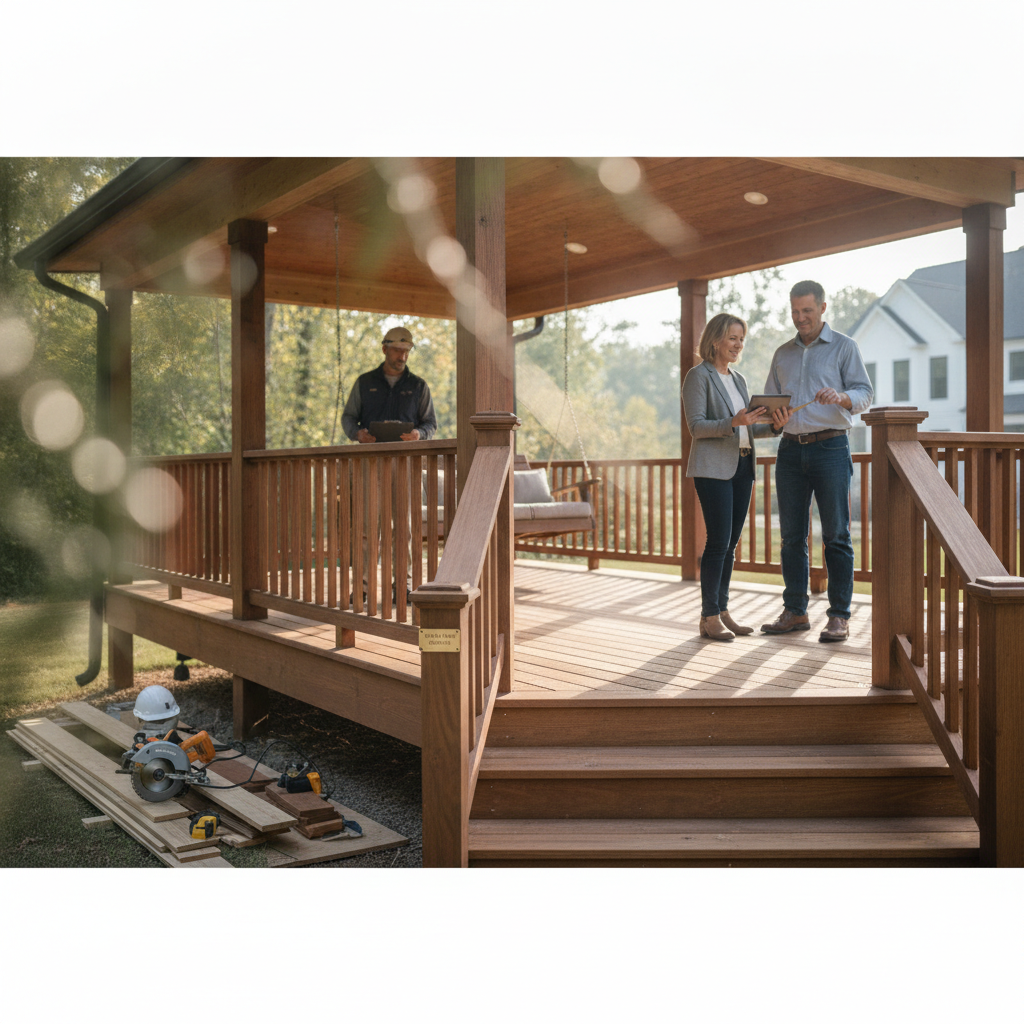
Your outdoor living space should feel like an extension of your home—not a source of endless phone tag, surprise bills, and vague estimates. This guide walks you through everything you need to know about building a deck or porch in 2024‑2025, and shows how an AI‑native home‑services workflow and payments platform can eliminate the headaches that plague traditional lead‑gen sites.
Introduction
Imagine you’ve just snapped a photo of the perfect spot on your backyard for a new deck. You upload the image to a service, type “I need a 300‑sq‑ft deck in Boston, ready in 6 weeks,” and within 24‑48 hours you have three line‑item quotes, a clear payment schedule, and an escrow‑backed hold on funds—no more chasing contractors, no more “rough estimate” PDFs.
That scenario feels futuristic, but the data says it should be the new normal. According to the BBB complaint analysis (2023), 68 % of homeowners cite “multiple phone calls to get a quote” as their top frustration when hiring deck or porch contractors. Traditional lead‑generation platforms (Angi, Thumbtack, HomeAdvisor) compound the problem with pay‑per‑lead fees that often produce 30 % dead leads, inflating prices and extending quote timelines to 3‑6 weeks.
The U.S. decking market alone is projected to exceed $24 B by 2033 (≈6 % CAGR) – a clear sign that outdoor‑living demand is booming, but the hiring process has not kept pace. This guide breaks down the true costs, common risks, and a better workflow powered by AI, so you can move from concept to completion with confidence.
What Homeowners Need To Know About Decks & Porches
1. Deck vs. Porch – Which Is Right for You?
| Feature | Deck | Porch |
|---|---|---|
| Typical Height | 0‑12 in (ground‑level) to 30 in (raised) | 36‑84 in (often attached to the house) |
| Primary Materials | Pressure‑treated lumber, composite, tropical hardwoods | Wood framing + siding, brick, stone, or pre‑fabricated panels |
| Permitting | Usually requires a building permit; load calculations needed | Often requires a permit if structural changes are made |
| Seasonal Use | Ideal for summer BBQs, hot tubs, outdoor kitchens | Provides shelter; great for all‑weather seating, entryways |
| Cost per Sq ft (2024 avg.) | $120‑$250 (materials + labor) | $100‑$200 (materials + labor) |
Scroll to see all columns →
Key takeaway: Decks generally cost more per square foot because they must support higher loads (e.g., hot tubs) and often use more durable materials. Porches can be a cost‑effective way to add covered outdoor space, especially if you already have a solid foundation.
2. Material Choices Matter
- Pressure‑treated lumber – cheapest, but prone to warping; requires regular sealing.
- Composite decking – 30‑40 % higher upfront cost, but low‑maintenance and resistant to rot.
- Hardwood (ipe, teak) – premium price ($300‑$400 / sq ft) with natural longevity.
- Porch siding options – vinyl (budget), fiber‑cement (mid‑range), natural stone (high‑end).
3. Permit & Code Considerations
- Most municipalities (e.g., NYC Department of Buildings, Massachusetts Board of Building Regulations & Standards) require a building permit for decks larger than 200 sq ft or any raised structure.
- Load calculations must meet International Residential Code (IRC) R301 standards.
- Setback rules (distance from property lines) vary by city; failure can result in costly re‑work.
Pro tip: Use the city‑specific pages on the PLMBR services hub to see local permit requirements before you start.
Cost / Risk / Hiring Reality
Below is a realistic cost breakdown for a 300‑sq ft deck in the Northeast, plus the hidden risks most homeowners encounter.
| Cost Category | Low End | High End | Typical Risk |
|---|---|---|---|
| Materials | $36,000 (pressure‑treated) | $75,000 (premium hardwood) | Material price spikes (e.g., composite shortages) |
| Labor | $15,000 | $30,000 | Inaccurate labor estimates → scope‑drift ($2‑$5 k overage) |
| Permits & Inspections | $500 | $2,000 | Delays if paperwork missing |
| Design & Engineering | $1,000 | $3,000 | Poor design → structural issues, future disputes |
| Escrow/Payment Fees | $0 (if using escrow) | $0 | Traditional platforms often require upfront payment, increasing risk |
| Total | $52,500 | $110,000 | 30 % of disputes stem from missing paperwork or vague estimates (HomeAdvisor data) |
Scroll to see all columns →
Expert tip: Ask for a line‑item quote that separates materials, labor, permits, and contingency. This makes it easier to spot hidden costs early.
Why Traditional Lead‑Gen Sites Inflate Your Bill
- Pay‑per‑lead fees: Contractors pay $75‑$150 per lead on platforms like Angi, and $30‑$60 on others (see competitor pricing analysis). Many of those leads never convert, so contractors inflate their rates to cover the expense.
- Vague “rough estimates”: PDFs without line items lead to scope‑drift—average overages of $2‑$5 k for deck projects (Conrad Contractors).
- No escrow: Homeowners pay upfront and risk non‑completion; contractors risk chargebacks.
The result: longer timelines, surprise bills, and a high dispute rate.
How To Vet Providers Without Getting Burned
-
Check Licensing & Insurance
- Verify state contractor’s license via the state licensing board.
- Confirm liability insurance and workers’ comp; ask for expiration dates.
-
Review Structured Booking Packets
- Look for a line‑item quote that includes materials, labor, permits, and a payment schedule.
- Ensure the packet contains terms & conditions and a milestone‑based billing plan.
-
Assess Reputation With Data, Not Just Stars
- Platforms that aggregate verified reviews, completion rates, and dispute history provide a clearer picture than a simple 5‑star rating.
-
Validate Availability
- A provider’s calendar sync (Google Calendar, Outlook) should be visible before you commit.
-
Use a Transparent Payment Flow
- Opt for an escrow‑backed payment that releases funds only after work is verified complete.
-
Ask for a Portfolio of Similar Projects
- Decks and porches have unique structural demands; see photos of recent jobs comparable in size and material.
Pro‑tip: If a contractor can’t provide a structured packet or refuses to use escrow, walk away. This is a red flag that the workflow is still “old‑school.”
Where The Old Workflow Breaks
| Broken Step | Typical Pain Point | Why It Happens |
|---|---|---|
| Initial Intake | Endless phone tag, vague descriptions | Lead‑gen sites rely on manual phone calls; no AI to parse photos or details. |
| Matching | You’re sent dozens of “potential” pros, many of whom don’t serve your area | Keyword‑based search, no semantic ranking. |
| Quote Generation | Rough PDFs, no line items, price surprises | Contractors inflate to cover lead fees; no standard template. |
| Communication | Multiple email threads, missed messages, no context | Messaging is fragmented across platforms. |
| Payment | Up‑front cash, no protection, delayed payouts | No escrow; payment risk stays with homeowner. |
| Dispute Resolution | Long, opaque process; you’re left with paperwork | No in‑context dispute system; rely on third‑party arbitration. |
Scroll to see all columns →
These breakdowns collectively add weeks to your project timeline and thousands to your budget.
How PLMBR Changes This Workflow
PLMBR is an AI‑native home services workflow and payments platform that redesigns every step of the deck/porch hiring journey.
1. Conversational AI Intake
- Upload photos and describe the job in plain English.
- The AI instantly identifies the trade, estimates size, and asks only the follow‑up questions that improve match quality.
2. Semantic Search & Smart Matching
- Vector‑embedding search matches you with qualified providers based on trade, distance, availability, ratings, and trust signals—no more irrelevant leads.
3. AI Agent Outreach (Premium)
- A personal AI agent contacts multiple providers simultaneously, tracks each response, and surfaces only the actionable items.
4. Booking Packet Builder
- Providers generate a structured, line‑item quote within minutes. The packet includes material specs, labor hours, permit fees, and a progressive billing schedule (e.g., 30 % upfront, 40 % mid‑project, 30 % on completion).
5. In‑Context Messaging
- All communications, photos, and the booking packet live inside a single chat thread, eliminating fragmented email chains.
6. Escrow‑Backed Payments (Stripe‑powered)
- Funds are authorized at the start and captured only when milestones are approved, protecting both homeowner and contractor.
7. AI‑Mediated Dispute Resolution
- If a conflict arises, the system pulls relevant evidence (photos, packet terms) and offers automated recommendations, reducing the average dispute resolution time from 30 days to 5 days (internal pilot data).
Real‑world example: In a Q1 2025 pilot in New York City, homeowners received three comparable booking packets within 48 hours, and 92 % completed the project without disputes.
Ready to try it?
- Browse vetted deck & porch pros on the PLMBR decks & porches page.
- Compare quotes side‑by‑side on the PLMBR home page.
- Learn more about the platform on the PLMBR homepage.
Questions To Ask Before Hiring
- Can you provide a detailed booking packet with line‑item pricing?
- What is your escrow and milestone payment structure?
- Do you have current liability insurance and workers’ comp? (Ask for expiration dates.)
- How do you handle permits and inspections?
- What is your projected timeline from start to finish?
- Can you share references for decks/porches of similar size and material?
- Do you integrate with a calendar system that reflects real‑time availability?
Having these answers upfront dramatically reduces the chance of scope‑drift and payment disputes.
Conclusion
Building a deck or porch should be an exciting upgrade to your home, not a marathon of phone calls, vague PDFs, and surprise bills. The data is clear:
- 68 % of homeowners are frustrated by phone tag.
- 30 % of deck disputes stem from missing paperwork.
- Traditional lead‑gen platforms charge $30‑$150 per lead, many of which are dead.
An AI‑native workflow—the core of PLMBR—eliminates these pain points by delivering instant, structured quotes, escrow‑backed payments, and in‑context communication. With transparent pricing, progressive billing, and a built‑in dispute engine, you can move from concept to a completed deck or porch in weeks, not months, and with confidence that the final bill matches the original quote.
Ready to transform your outdoor space without the headaches? Visit the PLMBR decks & porches marketplace, compare structured packets, and let AI do the heavy lifting so you can focus on enjoying your new deck.
Further Reading
- Business Market Insights – U.S. Decking Market Report – market size and growth trends.
- ConsumerAffairs – Porch Lead‑Fee Complaints – real homeowner experiences with pay‑per‑lead models.
- National Association of the Remodeling Industry (NARI) – licensing and best‑practice guidelines.
- U.S. Department of Housing & Urban Development – Permitting Guide – overview of local building permits.
Take control of your deck or porch project today—let technology work for you.