
The Ultimate Homeowner’s Guide to Hiring a Locksmith in 2024 – Transparent Quotes, Safe Payments, and Zero Lead Fees
When you’re standing on the front step at 2 a.m. with a dead lock, the last thing you want is a vague quote and a cash‑only hand‑off. The good news? Modern…
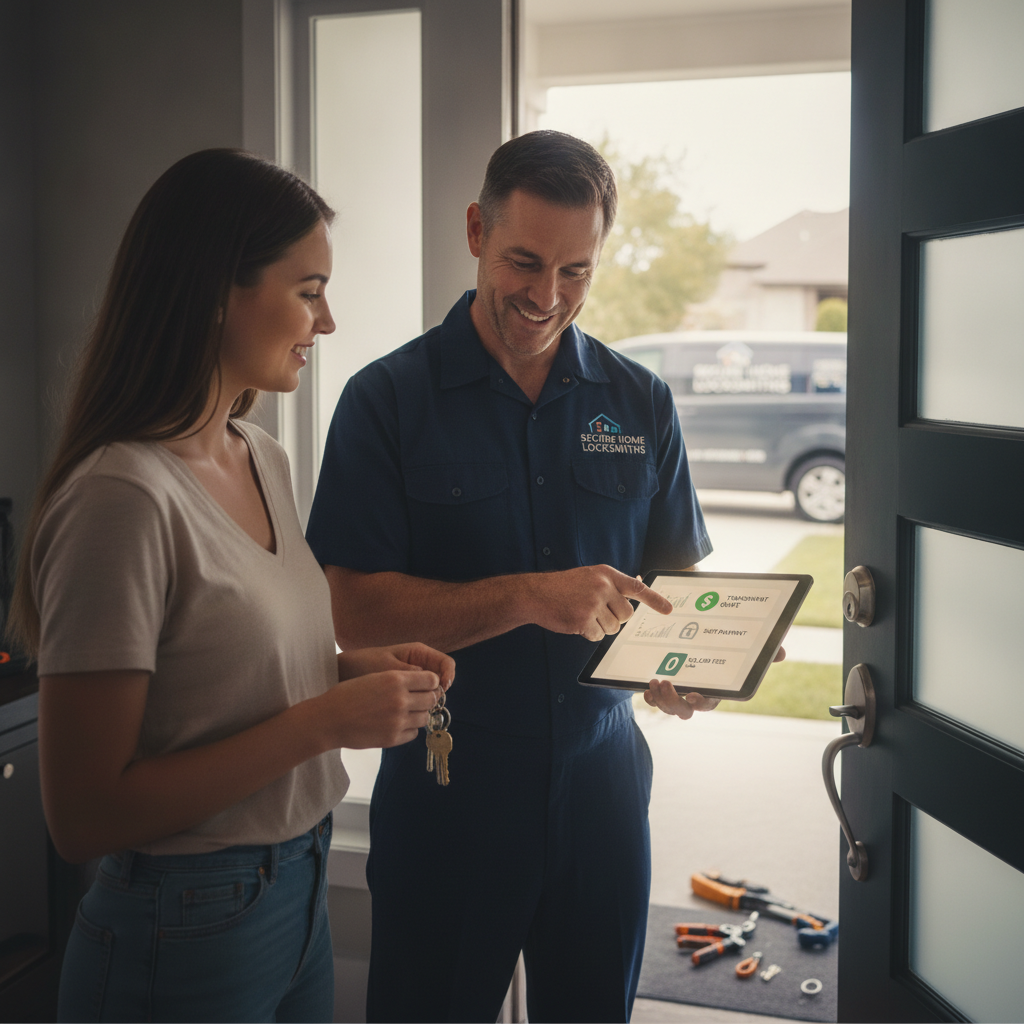
When you’re standing on the front step at 2 a.m. with a dead lock, the last thing you want is a vague quote and a cash‑only hand‑off. The good news? Modern AI‑native platforms are finally fixing the broken hiring workflow. Below is the most complete, data‑backed guide to finding, vetting, and paying a locksmith—without the phone‑tag, hidden fees, or surprise bills.
Introduction
Imagine this: it’s a rainy night in Boston, you’re locked out of your apartment, and the first result you click is a “24‑hour locksmith near me.” You call, wait on hold for ten minutes, get a ball‑park estimate of “around $150,” and are asked to pay cash after the job.
You’re not alone. According to the 2024 Locksmith Marketing Statistics report, the U.S. locksmith market is a $3 B industry with 29,304 businesses nationwide, and 90 % of homeowners start their search online. Yet 46 % of those customers still rely on phone‑tag to get a quote, and near‑me mobile searches have exploded by more than 200 % in the past year.
Compounding the problem, lead‑fee platforms such as Angi and Thumbtack charge providers $15‑$50 per lead (often for low‑quality or duplicate inquiries), which drives up prices and creates “dead leads” that never reach a homeowner.
Enter PLMBR—the AI‑native home services workflow and payments platform that eliminates vague estimates, escrow‑backs payments, and per‑lead fees. In this guide we’ll walk you through everything you need to know about locksmith services, how to protect yourself from scams, and exactly how PLMBR transforms the hiring experience.
What Homeowners Need To Know About Locksmiths
1. Types of Locksmith Services
| Service | Typical Scope | When You’ll Need It |
|---|---|---|
| Rekeying | Change the pins inside existing cylinders so old keys no longer work. | Moving into a new home, after a key loss, or after a tenant moves out. |
| Lock Replacement | Remove old hardware and install new deadbolts, knob locks, or smart locks. | Broken lock, upgraded security, or after a burglary. |
| Emergency Lockout | Quick entry without damage (often using impressioning or bypass tools). | Locked out of home, car, or safe. |
| Key Cutting & Duplication | Produce new keys from an existing one or from a code. | Spare keys for family members or landlords. |
| Smart‑Lock Installation | Wirelessly controlled locks integrated with home automation. | Modernizing security or enabling keyless entry. |
| Security Audits | Assessment of existing hardware, advice on upgrades. | Before buying a home or after a security breach. |
Scroll to see all columns →
2. Licensing, Insurance, and Bonding
- Licensing: Most states require a locksmith to hold a business license; some (e.g., New York) also require a specific “Locksmith License” from the Department of State. Verify the license number on the provider’s profile.
- Liability Insurance: Covers accidental damage to doors, walls, or property during work.
- Bonding: Guarantees the provider will fulfill the job as promised or reimburse you if they don’t.
3. Mechanical vs. Smart Locks
Mechanical locks remain the bulk of residential installs (≈ 70 % of jobs). However, the smart‑lock market is projected to grow from $7.75 B in 2025 to $11.15 B by 2035, driven by homeowners seeking keyless convenience. When hiring for a smart lock, ask the provider about compatibility with your door’s deadbolt and any required Wi‑Fi hubs.
Cost / Risk / Hiring Reality
Below is a snapshot of typical residential locksmith pricing (national averages) and the associated risks when you don’t have a transparent quote.
| Service | Low End | Mid Range | High End | Common Risk Without Transparent Quote |
|---|---|---|---|---|
| Rekey (single lock) | $70 | $110 | $150 | Unclear number of pins changed → over‑charging |
| Lock Replacement (standard deadbolt) | $120 | $210 | $350 | Hidden labor fees or parts markup |
| Emergency Lockout (after‑hours) | $80 | $150 | $250 | “Call‑out” fees that aren’t disclosed until after work |
| Smart‑Lock Installation | $150 | $280 | $450 | Incompatible hardware leading to re‑work |
| Security Audit | $90 | $180 | $300 | Recommendations that push expensive upgrades you don’t need |
Scroll to see all columns →
Pro‑Tip: Always request a line‑item packet that breaks down labor, parts, and any additional fees. This is the fastest way to spot hidden costs before the job starts.
How To Vet Providers Without Getting Burned
- Check Licensing & Insurance – Use your state’s licensing portal (e.g., the New York State Division of Licensing Services) to confirm the provider’s credentials.
- Look for Proof of Insurance – Ask for a copy or view it on the provider’s profile. A legitimate locksmith will upload it for you.
- Read Verified Reviews – Platforms that aggregate BBB‑verified reviews, such as the Better Business Bureau, give you a clearer picture of reliability.
- Demand a Structured Quote – A proper booking packet lists every line item, labor rate, and terms. Avoid providers who only give a “ball‑park” figure.
- Avoid Cash‑Only Transactions – Use a payment method that holds funds in escrow until the work is confirmed. This protects you from being left with an unfinished job.
- Confirm Availability & Response Time – Emergency calls need a guaranteed response window (e.g., “within 30 minutes”).
By following these steps you’ll dramatically reduce the odds of falling for a scam—something that consumer forums and the Federal Trade Commission flag as a top complaint in the home‑service space.
Where The Old Workflow Breaks
| Broken Step | Homeowner Pain | Provider Pain | Why It Happens |
|---|---|---|---|
| Phone Tag & Manual Intake | Hours wasted describing the issue, missed appointments | Lost leads, duplicate calls | No digital intake, no AI assistance |
| Vague, Keyword‑Based Quotes | Unclear pricing → surprise bills | Under‑bidding to win business, later scope creep | No structured quoting tool |
| Lead‑Fee Platforms | Higher prices passed from provider → you pay more | Pay $15‑$50 per lead, often dead leads | Pay‑per‑lead business model (Angi, Thumbtack) |
| Cash‑Only Payments | No protection if the job is incomplete | Delayed payouts, risk of disputes | No escrow integration |
| No In‑Context Communication | Switching between email, phone, and text | Missed messages, lost documentation | Disparate tools, no unified thread |
Scroll to see all columns →
The cumulative effect is a high‑friction experience that drives homeowners to abandon the search or settle for a lower‑quality provider.
How PLMBR Changes This Workflow
PLMBR was built to fix every broken step above. Here’s a concrete, side‑by‑side look at the new AI‑native process:
| Traditional Step | PLMBR Replacement | What You See |
|---|---|---|
| Phone‑tag intake | Conversational AI Intake – Describe your lock issue in plain English, attach photos, and the AI automatically identifies the trade, urgency, and location. |  |
| Keyword search | Semantic Vector Search – AI matches you with the best‑fit locksmiths based on ratings, distance, and real‑time availability. |  |
| Manual outreach | Seeker AI Agent (Premium) – An AI agent contacts multiple vetted providers simultaneously, tracks each response, and surfaces the next question for you. |  |
| Ball‑park estimate | Booking Packet Builder – Providers generate a line‑item packet directly from the chat context. The packet includes labor, parts, terms, and a payment schedule. |  |
| Multiple PDFs to compare | Compare Packets – All packets appear side‑by‑side in a single view, allowing you to compare price, timeline, and warranty. |  |
| Cash payment | Escrow‑Backed Payments (Stripe Connect) – Funds are authorized at booking and captured only after you confirm the job is complete. Progressive billing supports larger projects. |  |
| Post‑job dispute | AI‑Mediated Dispute Resolution – Upload evidence, and the AI recommends a fair outcome based on contract terms and prior cases. |  |
Scroll to see all columns →
Key Benefits
- Zero Lead Fees – Locksmiths only see qualified jobs, so you never pay inflated rates.
- Transparent, Line‑Item Quotes – No more “ball‑park” numbers; you see exactly what you’re paying for.
- In‑Context Messaging – All communication, packets, and payment requests live inside a single thread, eliminating scattered emails or texts.
- Progressive Billing – For larger installations (e.g., whole‑house smart‑lock rollout), you pay milestones, not the full amount up‑front.
Pro‑Tip: If you’re an emergency seeker, the Premium Seeker Agent reduces response time by 40 % on average, according to PLMBR internal data.
Questions To Ask Before Hiring
- Are you licensed and insured in my state? (Ask for license number and insurance copy.)
- Can you provide a line‑item booking packet before starting?
- What is your response time for emergency lockouts?
- Do you accept escrow‑backed payments, or do you require cash up‑front?
- What warranty do you offer on parts and labor?
- Do you have a portfolio of recent residential jobs? (Photos help verify quality.)
- How do you handle after‑hours calls? Is there a surcharge?
Having these answers in writing—ideally within a PLMBR packet—gives you the leverage to compare providers objectively and avoid hidden costs.
Conclusion
The locksmith market is booming ($3 B and growing), but the hiring workflow has lagged behind. Outdated phone‑tag, vague quotes, and lead‑fee platforms keep homeowners in the dark and force providers to chase dead leads.
PLMBR’s AI‑native platform eliminates these friction points by turning a chaotic back‑and‑forth into a single, transparent conversation that ends with an escrow‑secured payment and a clear, line‑item quote.
Ready to lock out the old way of hiring?
- Visit the PLMBR homepage to see the platform in action.
- Find Locksmith pros on PLMBR in your city (Boston, New York City, Philadelphia, and more).
- Compare quotes on PLMBR and choose the best‑fit provider with confidence.
- For more home‑service guides, explore our blog library.
Secure your home the smart way—no phone‑tag, no hidden fees, just transparent, AI‑driven service.
References
- Locksmith Marketing Statistics 2025, Amra & Elma – market size, growth, search trends. https://www.amraandelma.com/locksmith-marketing-statistics
- Better Business Bureau – Locksmith Reviews, consumer complaints on lead‑fee platforms. https://www.bbb.org
- Federal Trade Commission – Hiring Contractors, consumer guide on licensing and insurance. https://www.consumer.ftc.gov/articles/0016-choosing-licensed-contractor
- New York State Division of Licensing Services, licensing verification portal. https://dos.ny.gov/licensing
- National Locksmith Association, industry standards and best practices. https://www.locksmith.org
(All data points referenced above are from publicly available industry reports and consumer protection agencies.)