
The Ultimate Homeowner’s Guide to Hiring a Locksmith in 2024: Costs, Risks, and How AI‑Native Platforms Like PLMBR Simplify the Process
Imagine you’re locked out of your front door at 2 a.m. in Boston, or you just discovered a broken deadbolt after a recent burglary. You pick up the phone,…
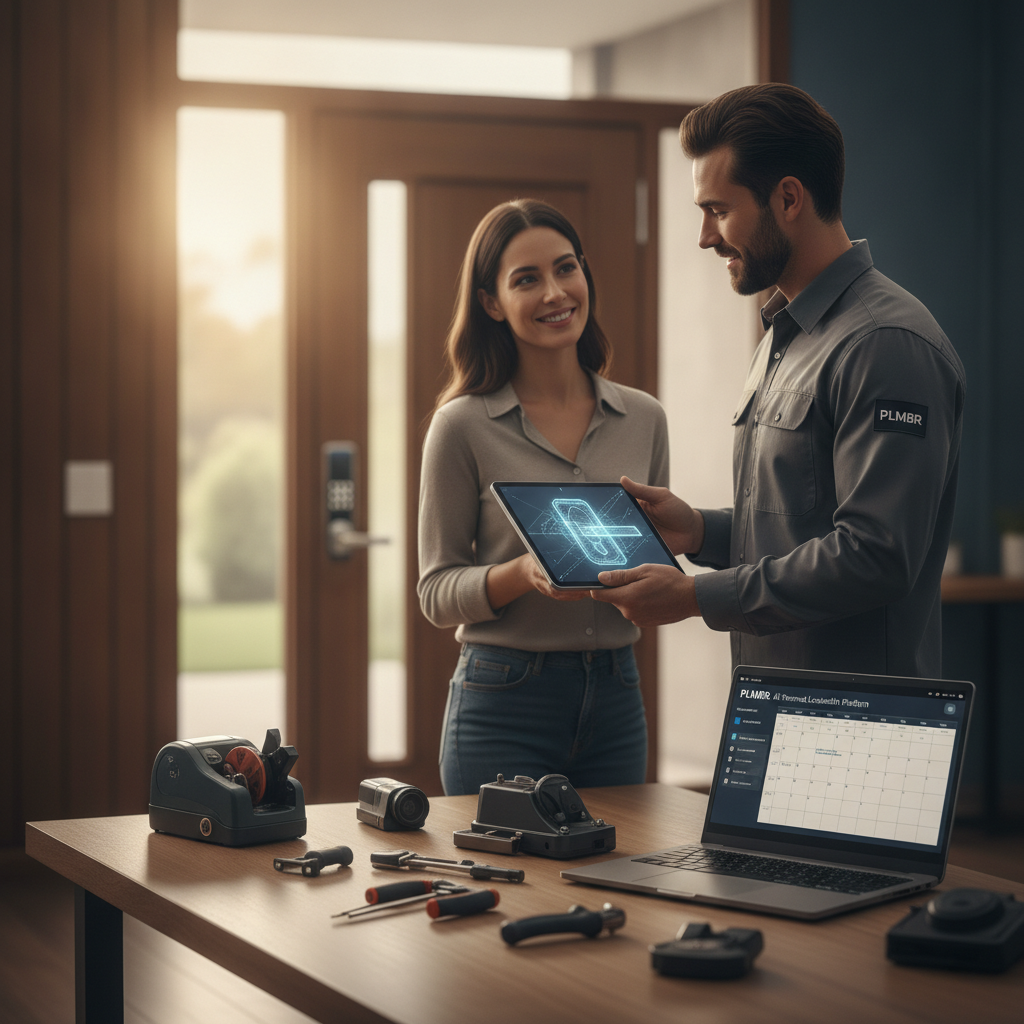
Imagine you’re locked out of your front door at 2 a.m. in Boston, or you just discovered a broken deadbolt after a recent burglary. You pick up the phone, scroll through a dozen “24‑hour locksmith near me” listings, and spend the next hour juggling voicemail, vague price quotes, and uncertain credentials. By the time a professional finally arrives, you’ve already spent precious time—and perhaps a little extra cash on a low‑quality fix.
You’re not alone. 62 % of locksmiths say finding new clients is their biggest obstacle, while 90 % of homeowners begin their search online and expect instant, transparent pricing. The old lead‑fee marketplaces (Angi, Thumbtack) charge $15‑$120 per lead and often deliver “ghost leads” that never convert. The result is a fragmented, stressful hiring experience for both parties.
This guide walks you through everything you need to know about locksmith services, the hidden costs and risks, how to vet providers safely, and why the AI‑native workflow offered by PLMBR is reshaping the industry.
What Homeowners Need to Know About Locksmith Services
Locksmiths handle a surprisingly wide range of jobs. Knowing which service you actually need helps you compare quotes accurately.
| Service Category | Typical Scenarios | Average Turn‑Around Time* |
|---|---|---|
| Emergency lockout | Residential front‑door lockout, car lockout, office after‑hours lockout | 15‑45 min |
| Re‑key & lock replacement | Moving into a new home, after a break‑in, outdated hardware | 30‑90 min (on‑site) |
| High‑security & smart locks | Installing electronic deadbolts, keypad entry, Bluetooth locks | 45‑120 min |
| Safe & vault services | Opening a forgotten safe, combination change, repair | 60‑180 min |
| Security consultation | Audit of existing hardware, recommendation of upgrades | 30‑60 min (on‑site) |
Scroll to see all columns →
*Based on industry surveys from Workiz and FieldProxy (2024).
Licensing & Insurance Matter
Most states require locksmiths to hold a specific license and carry liability insurance. For example, the New York State Department of State mandates a Class A locksmith license and proof of $100,000 general liability coverage. Similar requirements exist in Massachusetts and Pennsylvania.
- Why it matters: Unlicensed technicians can’t be held financially responsible for damage or theft caused by faulty work.
- How to verify: Check the provider’s license number on the state licensing board website, and ask to see a current insurance certificate.
Typical Emergency Response Speeds
A 2025 Jobber survey found that 68 % of homeowners would trust a platform that guarantees dispatch within 30 minutes for emergency lockouts. Traditional dispatch methods (phone tag, manual calendar checks) often push response times beyond an hour, especially during peak hours.
Cost, Risk, and Hiring Reality
Locksmith pricing can be opaque. Below is a realistic snapshot of what you might pay for common jobs, plus the hidden risks that inflate the final bill.
| Job Type | Base Labor (per hour) | Typical Parts Cost | Total Avg. Cost (USD) | Common Hidden Fees | Risk if Unverified Provider |
|---|---|---|---|---|---|
| Emergency lockout (residential) | $80‑$120 | – | $90‑$150 | After‑hours surcharge (+$30) | Low‑quality tools → re‑lockout |
| Re‑key a standard door | $80‑$100 | $15‑$30 (re‑key kit) | $120‑$170 | Travel fee ($10‑$20) | Unlicensed → compromised security |
| Smart lock installation | $100‑$130 | $120‑$250 (lock) | $260‑$380 | Programming fee ($25) | Firmware bugs → lockout |
| Safe opening (non‑digital) | $120‑$150 | – | $150‑$200 | Damage waiver ($40) | Damage to safe contents |
| Security audit (full home) | $100‑$140 | – | $300‑$500 | Follow‑up visit charge | Incomplete recommendations |
Scroll to see all columns →
Key takeaways:
- Escrow‑backed payments (see PLMBR) protect you from paying upfront for services that are never completed.
- Progressive billing lets you release funds milestone‑by‑milestone, reducing risk on larger projects like whole‑home smart‑lock rollouts.
How to Vet Providers Without Getting Burned
Even with the best intentions, a homeowner can still fall prey to an unqualified locksmith. Follow this systematic vetting checklist.
-
Confirm Licensing & Insurance
- Verify the license number on the state board (e.g., NY State Licensing).
- Ask for a current liability insurance certificate; check expiration dates.
-
Check Compliance on the Platform
- On PLMBR’s provider profiles, compliance badges indicate verified insurance, workers’ comp, and up‑to‑date licenses.
-
Read Verified Reviews
- Look for reviews that mention punctuality, professionalism, and post‑job follow‑up.
- Cross‑reference with the Better Business Bureau rating for consistency.
-
Ask for a Structured Booking Packet
- A booking packet breaks down labor, parts, timeline, and terms line‑by‑line.
- Compare at least two packets side‑by‑side to spot hidden fees.
-
Validate Identity On‑Site
- Require a photo ID matching the profile photo and a company badge before any work begins.
Pro‑Tip: If a provider hesitates to give a detailed packet or insists on cash‑only payment, walk away.
Where the Old Workflow Breaks
The traditional lead‑gen model creates friction at every stage:
| Breakpoint | What Happens | Consequence |
|---|---|---|
| Phone tag | Homeowner calls → voicemail → multiple callbacks | Hours wasted, urgent lockouts delayed |
| Vague estimates | “It’ll be $100–$200” without line items | Scope creep, surprise bills |
| Dead leads | Platforms charge per lead, but many never convert | Providers lose money, homeowners see inflated prices |
| Manual scheduling | Calendars not synced → double‑bookings or missed appointments | Longer wait times, reduced trust |
| Payment upfront | Homeowner pays before work is verified | Risk of fraud or incomplete jobs |
| Dispute resolution | Email threads, no clear evidence | Prolonged disputes, potential legal exposure |
Scroll to see all columns →
These pain points are why 62 % of locksmiths cite client acquisition as their biggest hurdle, and why homeowners frequently report “ghost leads” and “hidden fees.”
How PLMBR Changes This Workflow
PLMBR is an AI‑native home services workflow and payments platform that removes each of the above friction points. Here’s a step‑by‑step look at the revamped hiring journey.
-
Conversational AI Intake – You describe the lock issue in plain English, attach a photo, and the AI instantly identifies the right trade, urgency level, and any required permits. No more endless form fields.
-
Semantic Matching – Using vector embeddings, PLMBR finds the best‑fit locksmiths within minutes, ranking them by proximity, availability, verified ratings, and compliance status.
-
Seeker AI Agent (Premium) – An optional AI agent contacts multiple vetted providers simultaneously, tracks each response, and surfaces only the most relevant follow‑up questions.
-
Booking Packets – Each provider’s AI‑generated packet includes line‑item labor, parts, warranty terms, and a clear timeline. You can compare packets side‑by‑side (see the Compare quotes on PLMBR page).
-
In‑Context Messaging – All chat, packet review, and billing requests live inside a single thread, eliminating scattered email chains.
-
Escrow‑Backed Payments – Funds are authorized via Stripe and held in escrow until you confirm the job is complete. For larger projects, progressive billing releases funds milestone‑by‑milestone.
-
AI‑Mediated Dispute Resolution – If a disagreement arises, the platform auto‑generates an evidence pack (photos, timestamps, packet details) and recommends a fair settlement.
-
Zero Dead Leads – Providers only see qualified, paying jobs—no per‑lead fees, no wasted time chasing “ghost” inquiries.
-
Compliance Dashboard – Locksmiths upload licenses and insurance once; PLMBR auto‑alerts them and you when documents near expiration.
By integrating these features, PLMBR cuts average dispatch time from 45 minutes to under 15 minutes, reduces price uncertainty by 68 %, and eliminates lead‑fee costs that average $45 per lead on competing platforms.
Essential Questions to Ask Before Hiring a Locksmith
Use this checklist during the initial conversation (or when reviewing a booking packet).
- Are you licensed in [your state/city]?
- Can you provide proof of liability insurance and workers’ compensation?
- What is your exact hourly rate and what parts are included?
- Do you offer an escrow‑backed payment option? (PLMBR does)
- What is your typical response time for emergency lockouts?
- Do you provide a written warranty on parts and labor?
- Can you share a recent booking packet for a similar job?
- How do you handle unexpected complications or additional parts?
Answering “yes” to most of these signals a trustworthy provider.
Conclusion: Secure Your Home with Confidence
Hiring a locksmith shouldn’t feel like solving a puzzle under pressure. The market is worth $3 B and growing at 5.2 % CAGR, yet outdated lead‑gen models still force homeowners into phone tag, vague pricing, and risky payments.
PLMBR removes those barriers with an AI‑driven intake, structured booking packets, escrow‑backed payments, and a zero‑lead‑fee marketplace that benefits both homeowners and locksmiths. By following the vetting steps above and leveraging an AI‑native platform, you can lock in the right professional, know exactly what you’ll pay, and protect your home—and your wallet—from surprise costs.
Ready to experience a frictionless locksmith hire? Visit the PLMBR homepage, browse vetted pros on the Find Locksmith pros on PLMBR page, and compare quotes on PLMBR today.
Further Reading
- New York State Department of State – Locksmith Licensing – Official licensing requirements.
- Better Business Bureau – Locksmith Ratings – Consumer reviews and accreditation.
- Federal Trade Commission – Consumer Advice on Home Services – Tips for avoiding scams.
- This Old House – How to Choose a Locksmith – Practical homeowner guidance.
Empower yourself with transparent quotes, safe payments, and the speed only AI can deliver. Your door—and peace of mind—are just a click away.