
The Ultimate Homeowner’s Guide to Hiring a Pressure‑Washing Pro (2024)
Pressure washing makes a tired deck look brand‑new, clears stubborn oil stains from driveways, and protects your home’s exterior from mold and mildew. Yet the…
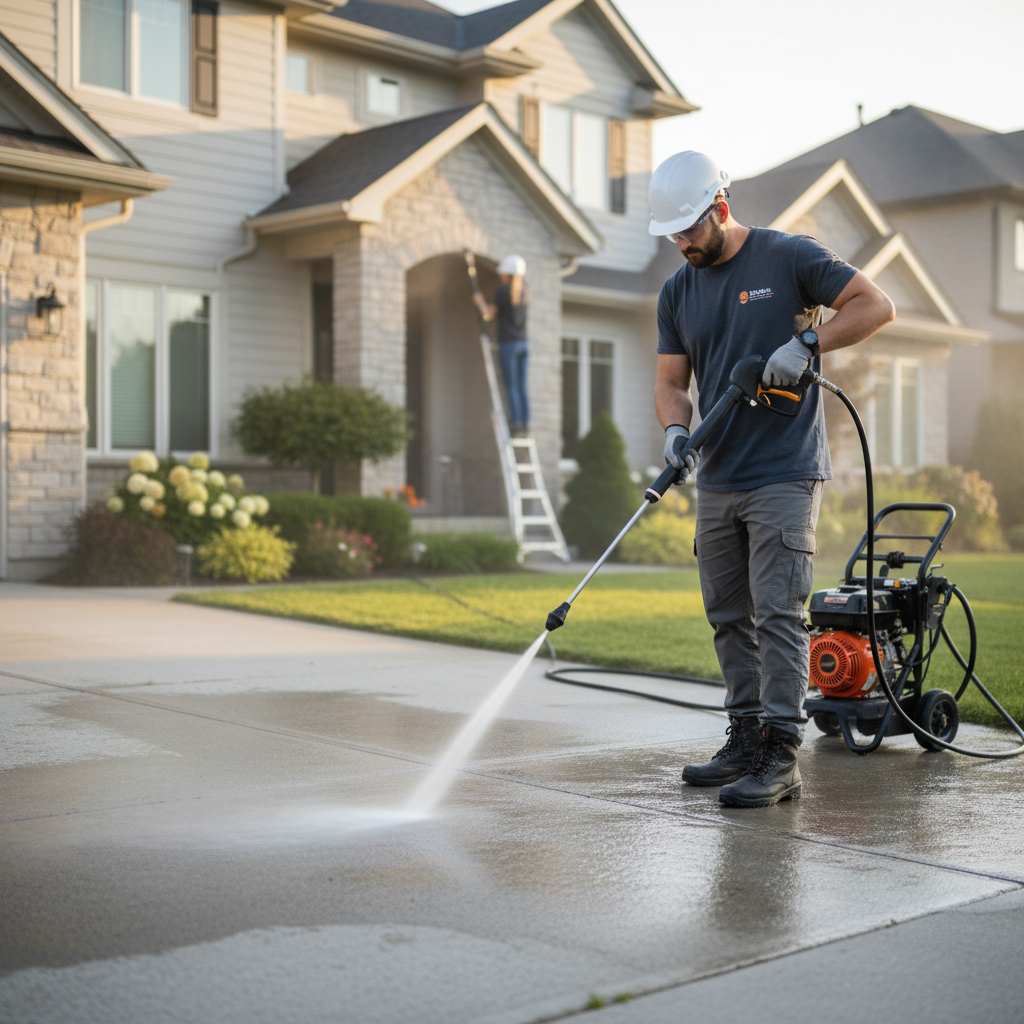
“The average homeowner spends 3‑4 hours chasing quotes for a driveway wash. That’s time you could be spending in your backyard.” – ROAR! Digital Marketing, 2024
Pressure washing makes a tired deck look brand‑new, clears stubborn oil stains from driveways, and protects your home’s exterior from mold and mildew. Yet the hiring process is still stuck in a phone‑tag, vague‑estimate loop that costs you money, peace of mind, and sometimes even property.
In this guide we’ll walk you through everything you need to know before you press “book” – from realistic pricing and safety checks to the exact questions you should ask a contractor. We’ll also expose why traditional lead‑gen sites (think Angi or Thumbtack) are failing you and how PLMBR, the AI‑native home‑services workflow and payments platform, eliminates the broken steps that plague the industry today.
What Homeowners Need To Know About Pressure Washing
Pressure washing (also called power washing or soft‑washing) uses high‑velocity water—often mixed with a biodegradable cleaning solution—to strip away grime, algae, oil, and old paint. The most common jobs include:
| Job Type | Typical Surfaces | Why It Matters |
|---|---|---|
| Driveway & Sidewalk | Concrete, paver, brick | Removes oil, tire marks, and weeds that can become slipping hazards. |
| Deck & Patio | Wood, composite, stone | Prevents rot, mold, and UV‑fade, extending the life of your outdoor living space. |
| House Siding | Vinyl, stucco, fiber‑cement | Eliminates mold spores and pollutants that can affect indoor air quality. |
| Fence & Gate | Wood, metal, vinyl | Restores curb appeal and protects against weather‑related wear. |
| Commercial Facades | Concrete, metal, glass | Boosts brand image and meets health‑code requirements for storefronts. |
Scroll to see all columns →
A few quick technical facts:
- Pressure range: Residential jobs typically use 1,500–3,000 psi; commercial work may exceed 4,000 psi.
- Water temperature: Hot‑water systems (140‑210 °F) clean faster but use more energy.
- Environmental considerations: The EPA recommends biodegradable detergents to protect local waterways.
Understanding these basics lets you ask the right questions (“Do you use hot water?” “What detergent do you use?”) and avoids hiring a “one‑size‑fits‑all” contractor who could damage delicate surfaces.
Cost / Risk / Hiring Reality
Pricing is the most frequent question, but it’s also the biggest source of confusion. Below is a snapshot of typical cost ranges across the Northeast (NY, MA, PA) – the regions PLMBR currently serves.
| Service | Size / Scope | Average Cost (USD) | Typical Milestones | Risk Factors |
|---|---|---|---|---|
| Driveway wash | 1,200 sq ft (standard 2‑car) | $150‑$250 | 1️⃣ Deposit, 2️⃣ Mid‑job check, 3️⃣ Final release | Surface cracking if pressure > 2,800 psi |
| Deck cleaning | 400 sq ft (wood) | $200‑$350 | 1️⃣ Pre‑inspection, 2️⃣ Cleaning, 3️⃣ Sealing (optional) | Wood splintering, water intrusion |
| House exterior | 2,000 sq ft (siding) | $300‑$550 | 1️⃣ Safety prep, 2️⃣ Wash, 3️⃣ Rinse, 4️⃣ Final walk‑through | Paint removal, water‑damage to windows |
| Commercial facade | 5,000 sq ft (brick) | $800‑$1,300 | 1️⃣ Site safety plan, 2️⃣ Wash, 3️⃣ Spot‑check, 4️⃣ Sign‑off | Liability for adjacent businesses |
| Soft‑wash (eco‑friendly) | Any surface, low‑pressure | +$75‑$150 add‑on | Same as above | Lower cleaning power; may need repeat visits |
Scroll to see all columns →
Research anchor #1: The U.S. pressure‑washer market is projected to reach $750.5 M by 2030 (CAGR ≈ 4.4%) – a clear sign that demand is outpacing the ability of traditional lead‑gen models to deliver reliable service. (Grand View Research)
Why the Numbers Vary
- Surface material & condition – A moss‑covered brick wall costs more than a lightly soiled vinyl siding.
- Access constraints – Tight alleys or multi‑story buildings require additional equipment and labor.
- Local regulations – Some municipalities (e.g., New York City) restrict water runoff or require permits for high‑pressure work.
Because of these variables, a structured, line‑item quote is essential. Anything less is a recipe for surprise bills and disputes.
How To Vet Providers Without Getting Burned
When you finally have a list of potential pros, follow this six‑step vetting checklist:
- Verify Licensing & Insurance
Ask for a copy of liability insurance and any required state contractor license. In New York, for example, a home improvement contractor must be registered with the Department of Consumer Affairs. - Check Compliance with HOA / Local Ordinances
Many homeowner associations prohibit high‑pressure cleaning on certain materials. A reputable contractor will ask about these constraints up front. - Read Verified Reviews & References
Look for recent, detailed reviews that mention scope, punctuality, and professionalism. The Better Business Bureau (BBB) is a reliable source for complaint history. - Ask for a Structured Booking Packet
A modern, AI‑generated packet breaks down each line item (prep, labor, materials, disposal) and includes a clear payment schedule. - Confirm Safety Protocols
Ask whether the crew follows OSHA standards for PPE, especially when working on heights or near electrical outlets. - Test Communication Speed
If the contractor takes more than 24 hours to answer a simple email, expect delays later. Fast, transparent messaging is a leading trust signal.
Research anchor #2: 67 % of mobile‑searchers are more likely to contact a business with a mobile‑friendly site, and 78 % of high‑performing field‑service firms already use dedicated FSM software to streamline communication. (GetJobber, 2025)
If a provider can’t meet at least four of these criteria, keep looking.
Where The Old Workflow Breaks
Traditional lead‑gen platforms still rely on phone‑tag, manual quoting, and post‑job cash payments. Here’s how those steps crumble:
| Broken Step | Homeowner Pain | Provider Pain |
|---|---|---|
| Initial intake via web form | Vague descriptions; you have to re‑type details later. | Leads are often low‑quality; many are “dead” after the first call. |
| Phone‑tag back‑and‑forth | You spend 3‑4 hours chasing answers, and many abandon the job. | Technicians lose time on unqualified leads, hurting profit margins. |
| Unstructured email/phone quotes | Estimates are “ball‑park” numbers without line items. | Scope creep and disputes become common, leading to unpaid work. |
| Cash or post‑job payment | Risk of paying for incomplete or damaged work. | Chasing payment consumes admin time; disputes rise. |
| No escrow or milestone billing | No safety net if the contractor quits midway. | Contractors miss out on progressive cash flow for larger jobs. |
Scroll to see all columns →
The result is a trust gap: according to the 2025 Pressure‑Washing & Soft‑Washing Industry Report, trust signals (insurance, clear scope, escrow) now outweigh price in homeowner decision‑making.
How PLMBR Changes This Workflow
PLMBR isn’t a marketplace; it’s an AI‑native workflow and payments platform that rewrites every broken step:
-
Conversational AI Intake – You upload photos and describe the problem in plain English. The AI instantly identifies the correct trade, location, and urgency, then asks only the follow‑up questions that improve match quality. No endless forms.
-
Semantic Search & Smart Matching – Using vector embeddings, PLMBR finds the best‑fit providers based on distance, availability, verified ratings, and trust signals (insurance, licenses).
-
AI Agent Outreach (Premium) – A personal AI agent contacts multiple vetted providers simultaneously, tracks each reply, and surfaces only the relevant answers for you. No more chasing individual phone numbers.
-
Booking Packet Comparison – Every provider receives an AI‑generated booking packet with line‑item pricing, terms, and a milestone‑based billing schedule. You can compare packets side‑by‑side in a single view (see compare_packets.png screenshot).
-
In‑Context Messaging – All communication lives in one thread. The booking packet, photos, and any dispute evidence appear inline, so you never lose context.
-
Escrow‑Backed Payments – Powered by Stripe Connect, funds are authorized at booking and captured only when you confirm the work is complete. Milestone billing lets you pay a portion upfront and the rest after each phase.
-
AI‑Mediated Dispute Resolution – If a disagreement arises, the platform auto‑generates an evidence pack and recommends a fair settlement, reducing friction dramatically.
-
Unified Provider Dashboard – For pros, the same AI helps draft replies, builds structured quotes, syncs with Google Calendar, and pushes jobs to FSM tools like Jobber. No lead fees, no dead leads.
Result: Homeowners get transparent quotes, fast booking, and secure payments; providers get qualified leads, reduced admin, and faster cash flow. The broken phone‑tag loop is replaced by a single, AI‑orchestrated workflow.
Questions To Ask Before Hiring
Even with PLMBR’s safeguards, a quick checklist ensures you’re fully protected:
- What pressure rating will you use for my surface? (Too high can etch concrete.)
- Do you use EPA‑approved biodegradable detergents?
- Can you provide a copy of your liability insurance and contractor license?
- How will you protect nearby landscaping and walkways? (e.g., tarps, low‑pressure zones.)
- What is the payment schedule and does it include escrow?
- Do you offer a warranty or guarantee on the cleaning results?
- Will you supply a structured booking packet for review before work starts?
- How do you handle unexpected damage or scope changes?
Write down the answers. If a contractor hesitates, move on – a professional service will understand the need for documentation.
Conclusion
Pressure washing is a high‑impact, high‑trust home improvement. Yet the industry is still mired in phone‑tag, vague estimates, and cash‑only payments—a recipe for stress and disputes. The numbers tell the story: a $750 M market is expanding, while trust signals now outweigh price in homeowner decisions.
By embracing an AI‑driven workflow, you can:
- Get instant, side‑by‑side quotes with line‑item transparency.
- Eliminate endless phone calls with the PLMBR AI agent that coordinates outreach.
- Secure your payment via escrow until the job is verified.
- Reduce risk with built‑in compliance checks and insurance verification.
Ready to experience pressure‑washing without the headache? Visit the PLMBR homepage, browse Pressure‑Washing pros on PLMBR, and compare quotes in seconds. For more home‑service guides, explore our blog library.
“When you remove the friction of hiring, you let the real work—making your home shine—take center stage.” – PLMBR Product Team
Take control of your next pressure‑washing project today. Your driveway (and your sanity) will thank you.