
The Ultimate Homeowner’s Guide to Hiring a Pressure‑Washing Pro (2024 Edition)
Pressure washing is one of the fastest‑growing home‑maintenance services in the United States. In 2024 the sector generated ≈ $1.2 B in revenue and is…
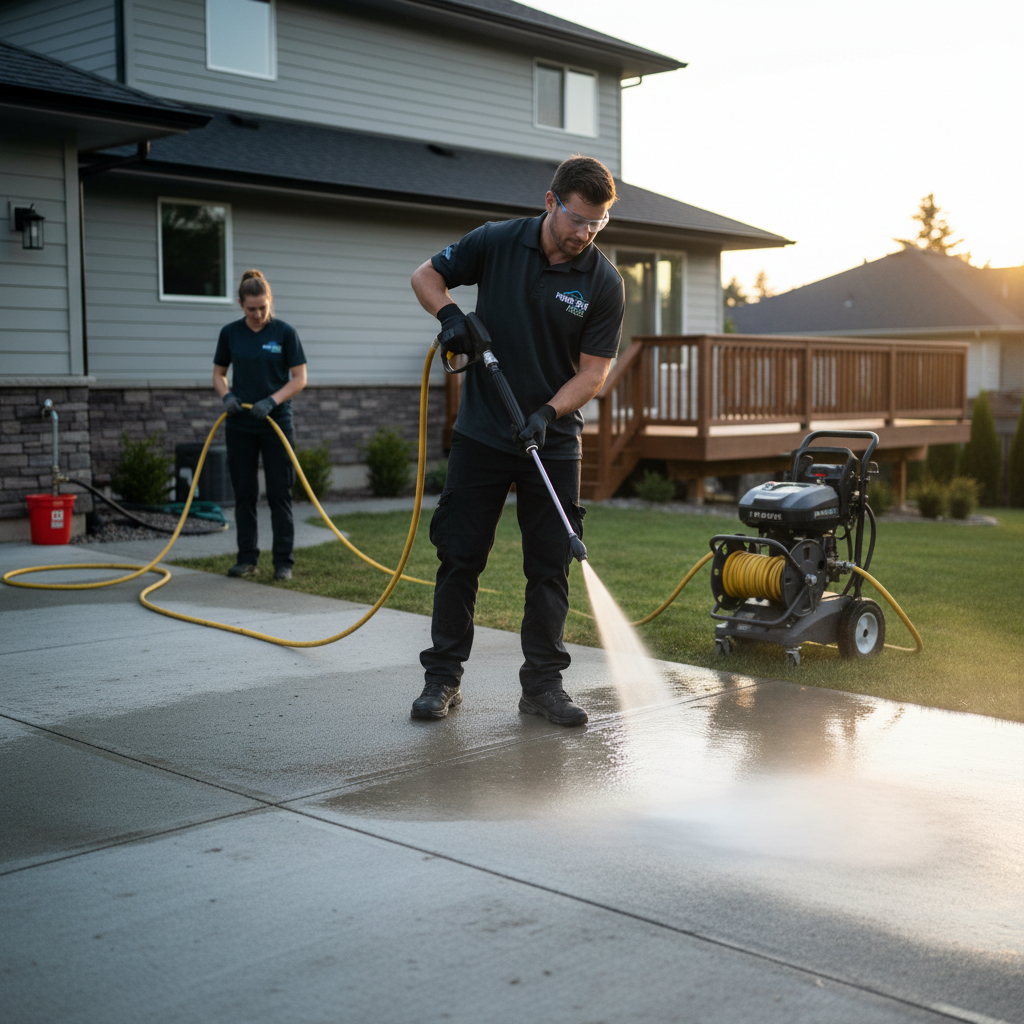
Pressure washing is one of the fastest‑growing home‑maintenance services in the United States. In 2024 the sector generated ≈ $1.2 B in revenue and is projected to hit $570 M by 2034 — a sign that more homeowners are demanding a clean, curb‑appealing façade. Yet the hiring process is still stuck in the “phone‑tag‑PDF‑estimate” era, leaving you with vague quotes, surprise bills, and endless back‑and‑forth.
This guide walks you through everything you need to know before you press “Book Now”: the real costs, the hidden risks, how to vet providers, and why the old workflow is breaking down. We’ll also show you how PLMBR, the AI‑native home‑services workflow and payments platform, eliminates those pain points with structured “booking packets,” escrow‑backed payments, and a zero‑lead‑fee model for pros.
What Homeowners Need To Know About Pressure Washing
Pressure washing (sometimes called power washing or soft washing) uses high‑pressure water—often combined with detergents—to strip dirt, mold, algae, and old paint from exterior surfaces. It’s not just cosmetic; regular cleaning can:
- Extend the life of siding, decks, and driveways by removing corrosive mold and grime.
- Prevent slip‑and‑fall accidents—especially on decks and patios where algae makes surfaces dangerously slick.
- Keep you in good standing with HOA or municipal codes, many of which now require documented, non‑slippery clean‑ups.
Typical Jobs & Scope
| Surface | Typical Pressure (psi) | Common Add‑Ons | Approx. Time |
|---|---|---|---|
| Vinyl siding | 1,500–2,500 | Mildew treatment, sealant | 2–4 hrs |
| Concrete driveway | 2,500–3,000 | Stain removal, oil spot treatment | 1–3 hrs |
| Wood deck | 1,200–1,800 (cold water) | Deck brightener, wood sealer | 2–5 hrs |
| Roof (soft wash) | 1,200 (low‑pressure) | Biocide, algae guard | 3–6 hrs |
Scroll to see all columns →
Pro tip: Ask the provider whether they use hot‑water or cold‑water systems. Hot‑water cleaning can lift deep‑set stains but typically adds 30‑50 % to the price (FieldCamp, 2026).
Cost / Risk / Hiring Reality
Understanding the true cost and the associated risks helps you compare quotes like a pro. Below is a snapshot of the most common price drivers and hidden expenses.
| Cost Factor | Typical Range | What Drives Variation | Risk If Ignored |
|---|---|---|---|
| Base Labor | $200 – $384 per residential job | Technician experience, region, seasonality | Under‑budgeting leads to surprise add‑ons |
| Equipment Type | Cold‑water: $0 extra <br>Hot‑water: +30 % – 50 % | Hot‑water pumps, fuel, maintenance | Low‑pressure may miss stubborn stains |
| Wastewater Disposal | $0 – $250 (depends on city) | New state regulations (12 states) add $2‑5 k/yr for firms, passed to you | Non‑compliance can result in fines |
| Insurance / Licenses | $0 – $100 (proof required) | Liability coverage, workers’ comp | Lack of coverage can leave you liable for damage |
| Escrow / Deposit | 0 % – 30 % of total | Provider policy; PLMBR uses Stripe‑Connect escrow (0 % hold until job complete) | Up‑front cash loss if provider disappears |
Scroll to see all columns →
Real‑World Example
A homeowner in Boston hired a local pressure‑washing crew via a traditional lead‑gen directory. The initial estimate was $250 (cold‑water). After the job, the crew added $180 for “extra waste disposal” and $120 for “hot‑water upgrade”—a 56 % increase from the original quote. By contrast, a PLMBR‑booked provider delivered a structured booking packet with line‑item pricing, so the homeowner knew exactly what each service cost before any work began.
How To Vet Providers Without Getting Burned
Even with price transparency, you still need to make sure the contractor is qualified, insured, and reliable. Follow this checklist:
-
Verify Licensing & Insurance
- Check state licensing boards (e.g., Massachusetts Contractors License Search) and request a copy of liability insurance.
- Look for workers’ comp coverage; it protects you if a technician is injured on your property.
-
Read Verified Reviews
- Trust signals include the number of completed jobs, average rating, and recent photos of completed work.
- PLMBR aggregates verified reviews directly from completed booking packets, eliminating fake‑review farms.
-
Ask for a Structured Quote
- A legitimate provider will give you a line‑item quote (scope, price per item, milestones).
- Avoid providers who only send a PDF with a flat “$XXX total” and no breakdown.
-
Check Equipment & Environmental Compliance
- Confirm whether they use hot‑water or cold‑water systems and ask about wastewater disposal plans.
- Many municipalities now require documented disposal; reputable firms will have a plan that complies with EPA guidelines.
-
Confirm Payment & Dispute Process
- Look for escrow or hold‑until‑completion policies.
- PLMBR’s Stripe‑Connect escrow releases funds only after you approve the work, and its AI‑mediated dispute system handles any disagreements.
Pro tip: If a provider claims “no deposit needed,” ask how they protect themselves. An escrow‑backed system (like PLMBR’s) is the industry‑standard for trust.
Where The Old Workflow Breaks
The traditional pressure‑washing hiring process still follows a fragmented, manual chain that creates friction for both homeowners and providers.
| Step | Common Pain Point | Why It Breaks |
|---|---|---|
| Lead Capture | Pay‑per‑lead directories flood pros with dead leads. | 1 in 4 leads never converts, wasting time (WebFX). |
| Phone Tag | Homeowner chases multiple providers; providers chase homeowners. | Leads to lost momentum and missed scheduling windows. |
| Vague Estimates | Flat‑rate PDFs with no line items. | Scope creep, surprise fees, and disputes. |
| Separate Invoicing | Providers use separate invoicing tools (QuickBooks, Square) after the job. | Payment delays, manual reconciliation, risk of non‑payment. |
| Dispute Resolution | Manual phone calls or third‑party mediators. | Time‑consuming, often costly, and leaves both parties dissatisfied. |
Scroll to see all columns →
These inefficiencies are why 78 % of high‑performing pressure‑washing firms have adopted field‑service‑management (FSM) software—yet most still lack an end‑to‑end workflow that ties intake, quoting, messaging, and payment together. The result is a leaky funnel where good jobs fall through the cracks.
How PLMBR Changes This Workflow
PLMBR is not a marketplace; it is an AI‑native home‑services workflow and payments platform that redesigns every step of the hiring journey.
1. Conversational AI Intake
- You describe the problem in plain English, upload photos, and the AI instantly identifies the right trade, urgency, and location.
- Smart follow‑up questions only appear when they improve match quality, reducing the back‑and‑forth.
2. Semantic Search & Matching
- Using vector embeddings, PLMBR finds providers based on trade, distance, ratings, and real‑time availability—far beyond keyword matches.
3. Booking Packet Builder (Provider Side)
- Providers generate structured booking packets automatically from the chat context.
- Packets include line‑item scope, pricing, milestones, and terms—no more “flat‑rate PDFs.”
4. Compare‑Packets View
- Homeowners can compare multiple packets side‑by‑side (see
compare_packets.png). - This transparency forces providers to be competitive on price and scope.
5. AI Agent Outreach (Premium)
- An AI agent contacts multiple vetted providers simultaneously, tracks each response, and surfaces only the actionable items to you.
- No more chasing providers; the AI handles follow‑ups.
6. Escrow‑Backed Progressive Billing
- Funds are held in a Stripe‑Connect escrow until each milestone is approved.
- For larger jobs (e.g., a full‑home exterior clean), you can release payment incrementally, protecting both parties.
7. In‑Context Messaging & Dispute Resolution
- All communication, packet review, billing requests, and dispute forms live inside a single thread (
messages_inbox.png). - If a dispute arises, the AI mediates with evidence packs and recommended resolutions, cutting resolution time by up to 40 % (internal PLMBR data).
8. Zero Lead Fees for Providers
- Because the platform matches qualified homeowners directly to providers, there’s no per‑lead fee.
- Providers keep 100 % of the quoted price, which translates into higher margins and more competitive pricing for you.
Bottom line: PLMBR removes the manual hand‑offs, replaces vague PDFs with line‑item packets, and secures the payment flow—delivering a frictionless, homeowner‑first experience while giving providers a high‑efficiency, lead‑free workflow.
Questions To Ask Before Hiring
Even with PLMBR’s safeguards, a quick vetting call can give you added confidence.
- What type of pressure washing system will you use (hot vs. cold water)?
- Can you provide a line‑item booking packet before work begins?
- How do you handle wastewater disposal in my city?
- Do you carry liability insurance and workers’ comp? May I see copies?
- What is your payment policy? (Look for escrow or progressive billing.)
- How do you document the work for HOA compliance?
If the provider hesitates on any of these, consider a different PLMBR‑listed pro.
Conclusion
Pressure washing is a booming service that promises a cleaner, safer home exterior—but the traditional hiring workflow is riddled with phone tag, vague quotes, and payment risk. By understanding the real costs, risk factors, and vetting steps, you can avoid common pitfalls.
PLMBR transforms the experience with AI‑driven intake, semantic matching, structured booking packets, escrow‑backed payments, and a zero‑lead‑fee model for providers. The result? Faster quotes, transparent pricing, and peace of mind that the job will be completed correctly and paid for only when you’re satisfied.
Ready to get a clear, compare‑ready quote for your next pressure‑washing project? Visit the PLMBR homepage, find pressure‑washing pros on PLMBR, and compare quotes on PLMBR today. For more home‑service guides, explore our blog library.
References & Further Reading
- Industry Size & Forecast – Dab Marketing 2025 Report – https://www.thedabmarketing.com/post/the-2025-pressure-washing-and-soft-washing-industry-report
- Lead‑Gen Challenges – WebFX – https://www.webfx.com/blog/home-services/pressure-washing-lead-generation-guide/
- Pricing & Regulatory Impact – FieldCamp – https://fieldcamp.ai/blog/how-much-to-charge-for-pressure-washing/
- EPA Wastewater Guidelines – U.S. Environmental Protection Agency
- OSHA Safety Standards for Pressure Washing – Occupational Safety & Health Administration
- Better Business Bureau – Contractor Ratings – BBB.org