
The Ultimate Homeowner’s Guide to Hiring a Pressure‑Washing Pro in 2024
Transparent pricing, safety‑first tips, and a step‑by‑step workflow that eliminates phone‑tag forever.
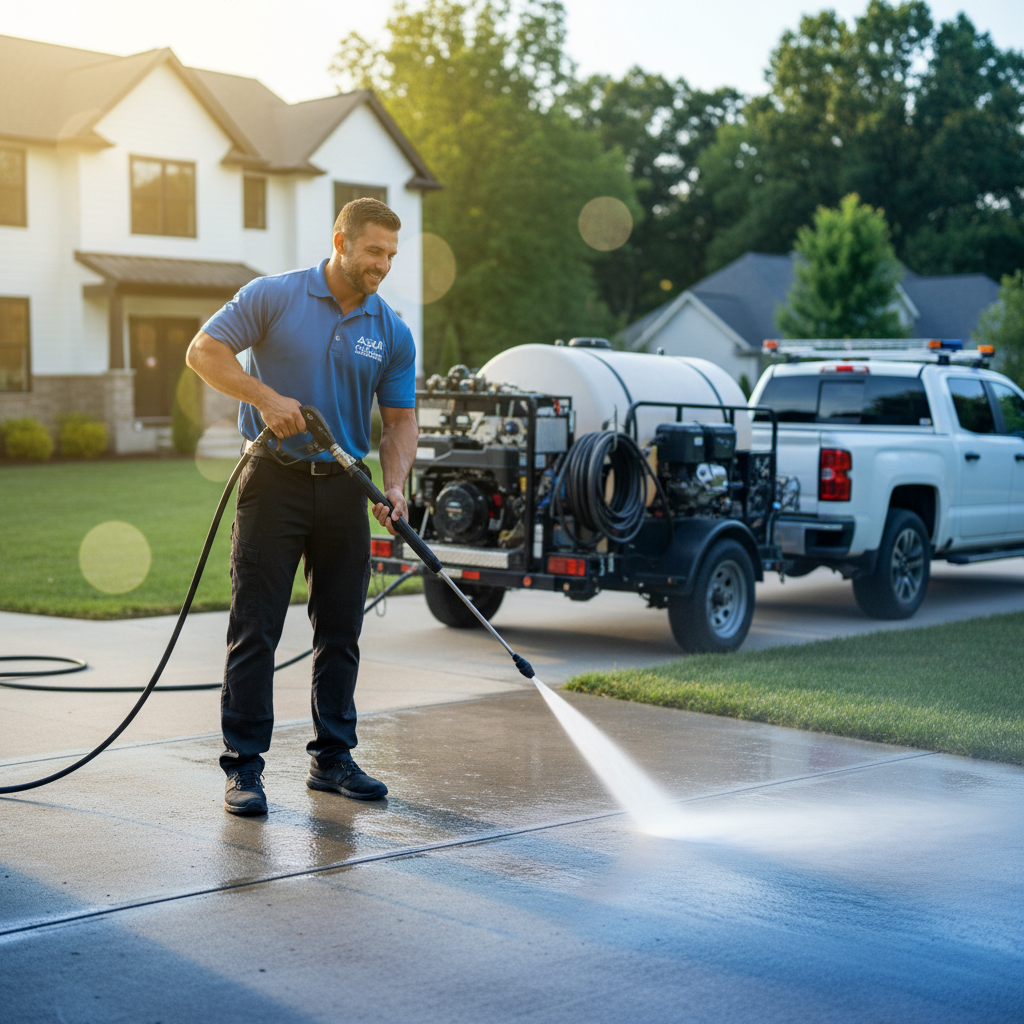
Transparent pricing, safety‑first tips, and a step‑by‑step workflow that eliminates phone‑tag forever.
Introduction
You’ve just spotted the grime on your driveway, the moss on your siding, and the oil stains on your patio. A quick Google search shows the average price of a pressure‑washing job in the U.S. is $384, but it can swing $200‑$400 higher when hidden scope items appear — and that’s only the tip of the iceberg.
Add to that the headache of chasing three different contractors, answering endless “What’s the square footage?” texts, and worrying whether the work will leave your sidewalk slick or violate HOA rules. According to a ROAR Digital Marketing survey, 67 % of homeowners say lack of transparent quotes is the biggest barrier to hiring a pressure‑washing professional.
The industry is also in flux: 12 states have introduced new wastewater‑management regulations in 2024, costing businesses $2‑$5 k per year in compliance (FieldCamp AI). Yet most legacy platforms (Angi, Thumbtack, HomeAdvisor) still charge per‑lead fees and provide no escrow or structured quoting.
If you’ve ever felt stuck in that endless loop, this guide is for you. We’ll walk you through everything you need to know—pricing, safety, vetting, and the exact workflow that finally puts control back in your hands. And we’ll show how PLMBR’s AI‑native home‑services platform solves each of those pain points with instant, side‑by‑side, escrow‑backed booking packets.
What Homeowners Need To Know About Pressure Washing
Pressure washing (also called power washing) uses high‑pressure water—sometimes heated—to strip away dirt, algae, oil, and paint residue from exterior surfaces. It’s ideal for:
- Driveways, sidewalks, and garage floors – removes oil, tire marks, and weed growth.
- House siding (vinyl, brick, stucco) – restores curb appeal without repainting.
- Patios, decks, and pool surrounds – eliminates mold and mildew that can cause slip hazards.
- Roof and gutter cleaning – dislodges debris that can lead to water damage.
Key Benefits
| Benefit | Why It Matters to You |
|---|---|
| Improved safety – eliminates slippery algae and oil films. | |
| Boosted curb appeal – raises resale value by up to 5 % in many markets. | |
| Preventive maintenance – stops wood rot, mold growth, and premature paint failure. | |
| Energy efficiency – clean exterior surfaces reflect heat better, reducing cooling costs. |
Scroll to see all columns →
Pro‑Tip: If your home is in a humid climate (e.g., Boston, New York City, or Portland, ME), schedule pressure washing in late spring or early fall to avoid mold re‑growth during the rainy season.
Cost / Risk / Hiring Reality
Understanding the price structure and associated risks helps you avoid surprise bills and liability issues. Below is a snapshot of typical pricing models and the hidden costs that most homeowners overlook.
| Pricing Model | Typical Range (2024) | What’s Included | Common Hidden Costs |
|---|---|---|---|
| Flat‑rate per job | $200‑$450 for a single‑family driveway (≈ 2,500 sq ft) | Equipment, labor, basic detergent | Extra for “hard‑to‑reach” areas, surface‑cleaner attachment, or hot‑water upgrade (+30‑50 %). |
| Per‑square‑foot | $0.08‑$0.15 / sq ft (≈ $200‑$375 for 2,500 sq ft) | Labor + equipment | Minimum‑job surcharge, travel fee for suburbs >30 mi. |
| Milestone‑based (progressive billing) | 30 % deposit, 40 % mid‑job, 30 % on completion | Escrow‑protected payments, clear milestones | None when escrow is used (see PLMBR). |
| Add‑on services | $50‑$150 for soft‑wash detergent, sealant, or algae‑kill treatment | Specialized chemicals | Improper chemical use can void warranties or damage siding. |
Scroll to see all columns →
Risks to Watch
- Slippery Surfaces: High‑pressure water can leave a thin film that makes concrete slick for up to 24 hours.
- Surface Damage: Using too much pressure on soft materials (stucco, wood) can etch or gouge.
- HOA & Municipal Rules: Many HOAs prohibit certain chemicals or require runoff management.
- Wastewater Regulations: Some states now require captured runoff or low‑phosphate detergents (EPA).
Bottom line: A transparent, itemized quote that lists each line item, the chemicals used, and the disposal plan protects you from surprise liabilities.
How To Vet Providers Without Getting Burned
-
Check Licensing & Insurance
- Verify a valid contractor’s license (state‑specific) and liability insurance.
- Look for an expiration date; PLMBR automatically tracks compliance for you (see the “Compliance Management” feature).
-
Read Verified Reviews & Ratings
- Focus on reviews that mention “no damage,” “on‑time,” and “clear pricing.”
- Beware of generic 5‑star reviews with no details.
-
Ask for a Structured Booking Packet
- A booking packet includes a line‑item scope, pricing, milestones, and terms.
- It’s the difference between “$300‑ish” and a concrete agreement that protects both parties.
-
Confirm Wastewater & Chemical Compliance
- Ask if the contractor uses EPA‑approved low‑phosphate detergents and follows local runoff rules.
-
Test Their Communication Speed
- A pro who replies within a few hours (or lets an AI handle the outreach) shows they respect your time.
Pro‑Tip: If a contractor can’t give you a booking packet within 24 hours, consider a platform that automates that step—like PLMBR’s AI‑generated packets.
Where The Old Workflow Breaks
| Step | Traditional Pain Point | Real‑World Impact |
|---|---|---|
| Intake | Homeowner describes issue via phone or a short form; providers guess trade and scope. | Leads to mismatched quotes and wasted time. |
| Matching | Manual search on lead‑gen sites; providers pay per lead with no guarantee of quality. | Homeowners receive dead leads; providers waste money on low‑conversion clicks. |
| Quote Delivery | Handwritten estimates, email PDFs, or “quick‑quote” calculators that ignore site‑specific variables. | Vague pricing, hidden fees, scope creep. |
| Communication | Endless back‑and‑forth emails or missed calls. | Phone‑tag, delayed projects, lost jobs. |
| Payment | Up‑front cash or post‑job invoicing; no escrow. | Risk of non‑payment or disputes over work quality. |
| Dispute Resolution | Word‑of‑mouth, BBB complaints, or small‑claims court. | Time‑consuming, costly, and often unsatisfying. |
Scroll to see all columns →
These friction points are why homeowners lose an average of 3–5 hours per hiring cycle, and why providers report a 12 % lower conversion rate when using traditional lead‑gen platforms.
How PLMBR Changes This Workflow
PLMBR replaces the broken chain with an AI‑native, end‑to‑end workflow that lives inside a single messaging thread. Here’s how each step is transformed:
1. Conversational AI Intake
- You upload photos and type a plain‑English description (“oil stains on my 2,400 sq ft driveway”).
- The AI instantly identifies the trade, estimates square footage, and asks only the follow‑up questions that improve match quality.
2. Semantic Search & Smart Matching
- Using vector embeddings, PLMBR finds the best‑fit providers based on proximity, availability, ratings, and trust signals—no keyword guesswork.
3. AI Agent Outreach (Premium)
- A personal AI agent contacts multiple vetted providers simultaneously, tracks each response, and surfaces the next action you need to take.

4. Booking Packet Builder
- The platform auto‑generates a structured booking packet with line‑item pricing, chemicals, disposal method, and milestone billing.
5. Compare‑Packets View
- All received packets appear side‑by‑side, allowing you to compare scope, price, and terms in seconds.

6. In‑Context Messaging & Escrow Payments
- Chat with the provider directly; the booking packet lives inline, and Stripe‑Connect holds funds in escrow until you confirm completion.
7. Progressive Billing & Dispute Mediation
- For larger jobs (e.g., whole‑house exterior), you can release payments milestone‑by‑milestone.
- If a dispute arises, AI‑mediated resolution pulls evidence from the chat thread, speeding up settlements.
Result: No more phone‑tag, no vague “$300‑ish” quotes, and no risk of paying for a job that never happens.
Questions To Ask Before Hiring
- What specific chemicals will you use, and are they EPA‑approved?
- Can you provide a structured booking packet that outlines every line item?
- How do you manage wastewater runoff in compliance with local regulations?
- Do you have current liability insurance and workers‑comp coverage? (PLMBR displays expiration dates on provider profiles.)
- What is your milestone payment schedule, and do you use escrow? (PLMBR’s Stripe‑Connect escrow protects both parties.)
- Do you offer a warranty on surface integrity after washing?
- How do you handle post‑wash slip hazards? (e.g., “We’ll rinse the driveway and post a “wet‑surface” notice for 2 hours.”)
Having these answers in writing before the first hose is turned on saves you from costly surprises later.
Conclusion
Pressure washing is a high‑impact, low‑maintenance way to protect your home’s exterior—and the market is growing to nearly $4 B by 2029. Yet the hiring process is still riddled with outdated phone‑tag, vague pricing, and compliance headaches.
By understanding the true cost structure, vetting providers rigorously, and leveraging a modern workflow, you can turn a stressful chore into a smooth, transparent experience.
PLMBR gives you the tools to:
- Get AI‑driven, instant matches.
- Review side‑by‑side, line‑item quotes in minutes.
- Pay safely through escrow with progressive billing.
- Resolve any dispute with AI‑mediated evidence.
Ready to ditch the endless calls and get a crystal‑clear quote for your next pressure‑washing project?
- Visit the [PLMBR homepage] to see the platform in action.
- [Find Pressure Washing pros on PLMBR] for your city (e.g., Boston, New York City, Philadelphia).
- [Compare quotes on PLMBR] and choose the best‑fit provider with confidence.
- For more home‑service guides, explore our [blog].
Your home deserves a clean surface—and you deserve a hiring process that’s just as spotless.
References
- ROAR Digital Marketing – “Top 4 Things that Pressure‑Washing Customers Worry About.” https://roardigitalmarketing.com/digital-marketing-blog/top-4-things-that-pressure-washing-customers-worry-about/
- FieldCamp AI – “How Much to Charge for Pressure Washing?” https://fieldcamp.ai/blog/how-much-to-charge-for-pressure-washing/
- Dab Marketing – “The 2025 Pressure Washing and Soft Washing Industry Report.” https://www.thedabmarketing.com/post/the-2025-pressure-washing-and-soft-washing-industry-report
- Yahoo Finance – “Pressure Washer Market Focused Insights Report 2024‑2029.” https://finance.yahoo.com/news/pressure-washer-market-focused-insights-092900332.html
- U.S. Environmental Protection Agency (EPA) – Water‑Quality Standards for Pressure Washing. https://www.epa.gov/water-research/pressure-washing-wastewater
- Occupational Safety and Health Administration (OSHA) – Outdoor Pressure‑Washing Safety Guidelines. https://www.osha.gov/pressurized-cleaning
- Better Business Bureau (BBB) – How to Evaluate Home Service Contractors. https://www.bbb.org/article/tips/14069-bbb-how-to-evaluate-home-service-contractors
- This Old House – “Pressure Washing: The Do’s and Don’ts.” https://www.thisoldhouse.com/pressure-washing
Empower your home with a cleaner exterior and a smarter hiring process. Let PLMBR do the heavy lifting for you.