
The Ultimate Homeowner’s Guide to Pressure Washing: Costs, Risks, and How AI Is Redefining the Hiring Process
Your driveway, deck, and siding deserve a spotless finish—without the endless phone tag, hidden fees, or surprise damage. Learn exactly what to expect, how to…
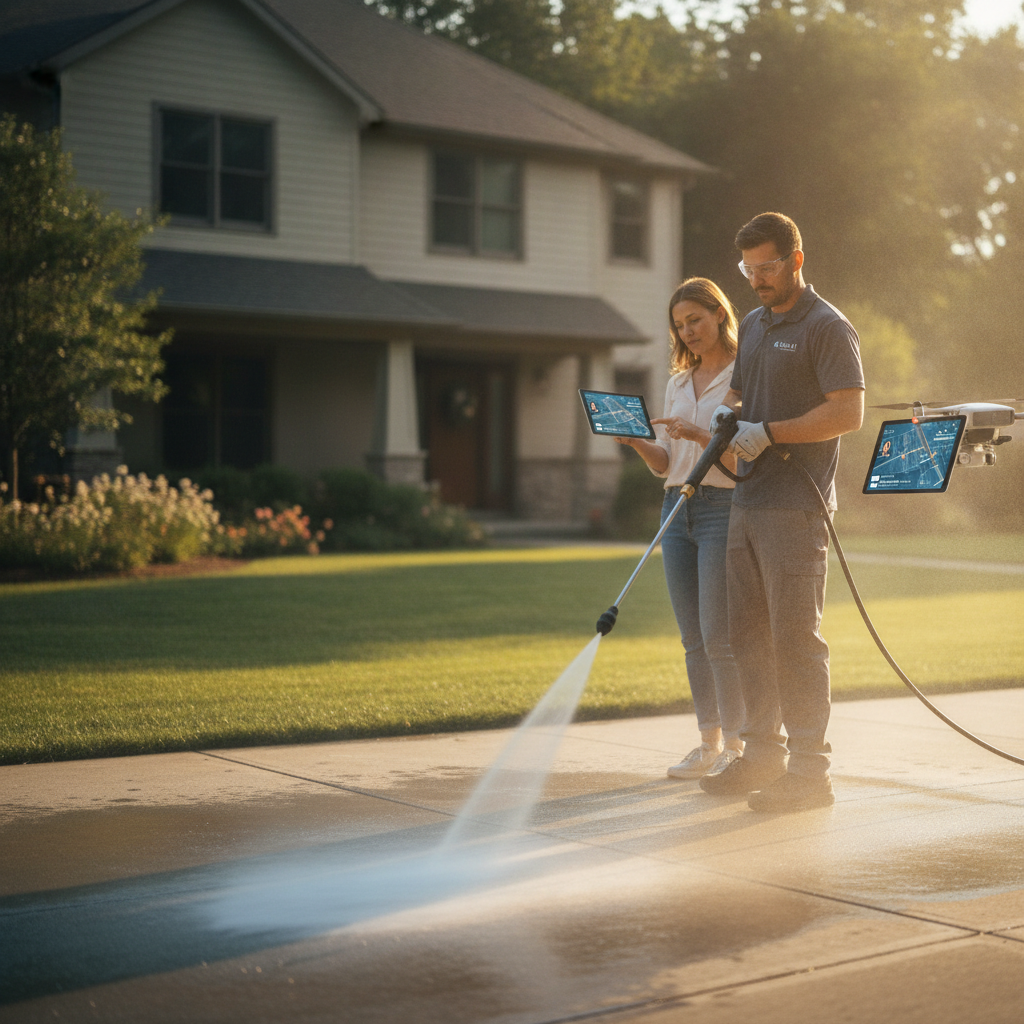
Your driveway, deck, and siding deserve a spotless finish—without the endless phone tag, hidden fees, or surprise damage. Learn exactly what to expect, how to protect yourself, and why the AI‑native workflow on PLMBR is the game‑changer you’ve been waiting for.
Introduction
You’ve probably spent hours on the phone chasing quotes for a simple driveway wash, only to receive a vague “$200‑ish” estimate that balloons once the crew shows up. You’re not alone—33 % of homeowners report surprise billing after a pressure‑washing quote (HomeAdvisor, Home Service Customer Service Report).
Meanwhile, contractors are fed up with lead‑fee scams that charge anywhere from $10 to $200 per lead on platforms like Thumbtack and Angi (7ten.marketing). The result is a market stuck in a 1990s “phone‑tag + vague estimate” loop.
What if you could snap a photo of the stain, type a short description, and instantly receive three line‑item, escrow‑backed quotes—no phone tag, no hidden fees, and no risky DIY experiments? That’s the promise of PLMBR, an AI‑native home services workflow and payments platform that turns a chaotic process into a transparent, one‑click experience.
Below is a step‑by‑step guide that walks you through everything you need to know about pressure washing, the hidden costs and risks, how to vet providers, and exactly how PLMBR solves the broken parts of the traditional hiring workflow.
What Homeowners Need To Know About Pressure Washing
Pressure washing (also called power washing) uses high‑pressure water—sometimes combined with biodegradable detergents—to blast away dirt, mold, mildew, oil stains, and grime from exterior surfaces.
Common Surfaces & Typical Use Cases
| Surface | Why It Needs Washing | Typical Frequency | Typical Pressure (psi) |
|---|---|---|---|
| Driveways & Walkways | Oil, tire marks, algae | Every 1‑2 years | 2,500‑3,000 psi |
| Decks & Patios | Weather stains, moss | Every 1‑3 years | 1,500‑2,500 psi (soft‑wash for wood) |
| House Siding | Dirt, pollen, mildew | Every 2‑3 years | 2,000‑2,500 psi |
| Fences & Gates | Grime, graffiti | Every 1‑2 years | 1,500‑2,500 psi |
| Roof Tiles | Lichen, algae | Every 3‑5 years | Low‑pressure (soft‑wash) |
Scroll to see all columns →
Pro‑Tip: For wood decks, a soft‑wash (≤ 1,500 psi) with a gentle detergent reduces the risk of surface erosion while still removing grime.
When DIY Becomes a Risk
- Surface Damage: Excessive pressure can strip paint, gouge wood, or crack concrete.
- Safety Hazards: High‑pressure jets can cause serious injuries if mishandled.
- Insurance Gaps: DIY work isn’t covered by a contractor’s liability insurance, leaving you liable for any accidental damage.
According to the EPA, many municipalities now regulate water usage and chemical runoff for pressure washing, making professional, eco‑friendly methods increasingly important (EPA, Water Conservation Guidelines).
Cost, Risk, and Hiring Reality
Understanding the price structure helps you avoid surprise billing and set realistic expectations. Below is a realistic pricing table derived from industry data (FrameworkHomeownership.org).
| Service | Typical Price (per sq ft) | Average Cost for a 2,000 sq ft Area | Common Add‑Ons | Typical Risk |
|---|---|---|---|---|
| Driveway | $0.08 – $0.20 | $160 – $400 | Sealer, stain removal | Surface etching if pressure too high |
| Deck/Patio | $0.10 – $0.25 | $200 – $500 | Wood treatment, anti‑mold solution | Wood splintering, moisture intrusion |
| House Siding | $0.12 – $0.30 | $300 – $900 | Paint prep, caulking | Paint stripping, water infiltration |
| Roof (soft‑wash) | $0.15 – $0.35 | $300 – $700 | Algae treatment, gutter cleaning | Roof tile displacement if pressure mis‑applied |
Scroll to see all columns →
Key takeaways
- Transparent line‑item pricing eliminates the “$200‑ish” surprise.
- Progressive billing (milestone payments) is ideal for larger jobs (e.g., full‑home siding) and is supported by PLMBR’s escrow workflow.
How To Vet Providers Without Getting Burned
-
Verify Licensing & Insurance
- Ask for a copy of liability insurance and any required state license.
- PLMBR’s compliance dashboard automatically flags expired documents, saving you a phone call.
-
Check Reviews & Ratings
- Look for consistent five‑star reviews and detailed feedback about surface care.
- Avoid providers whose only reviews are “Great job!” without specifics.
-
Confirm Eco‑Friendly Practices (if important to you)
- Request biodegradable detergents and low‑water‑use methods.
- PLMBR lets you filter for “green‑certified” pros.
-
Ask for a Detailed, Structured Quote
- A good quote lists every line item (e.g., pre‑treatment, pressure level, sealant).
- If the estimate is just a ballpark figure, walk away.
-
Get a Written Scope & Timeline
- Ensure the provider outlines exactly what will be cleaned, the equipment used, and how long the job will take.
Pro‑Tip: The average homeowner spends 2.5 hours chasing quotes (Jobber, Home Service Trends Report). Use AI‑driven tools that automate intake to cut that time dramatically.
Where The Old Workflow Breaks
| Broken Step | Typical Homeowner Pain | Why It Happens |
|---|---|---|
| Phone‑Tag Intake | Endless back‑and‑forth calls; missed appointments. | Contractors rely on manual lead capture; no unified messaging. |
| Vague “Ball‑Park” Quotes | Surprise billing; hidden fees appear after work starts. | Lack of structured quote templates; price research done manually. |
| Lead‑Fee Scams | Paying $10‑$200 per lead with no guarantee of a job. | Platforms like Thumbtack charge per lead regardless of conversion. |
| No Insurance Visibility | Uninsured pros can cause costly damage. | Many directories don’t verify docs. |
| Payment Uncertainty | Paying upfront, then fearing no‑show; or paying after the fact and being overcharged. | No escrow; cash‑on‑delivery still common. |
| Post‑Job Dispute Chaos | Long email threads, no clear evidence, unresolved claims. | No in‑context dispute handling; fragmented communication. |
Scroll to see all columns →
These friction points are why 87 % of homeowners start their search online (ROAR Digital Marketing) but then abandon the process after hitting a dead‑end or hidden cost.
How PLMBR Changes This Workflow
1. AI‑Powered Conversational Intake
- Snap & Describe: Upload a photo of the stained area and type a short description. The AI instantly identifies the trade, surface type, and urgency.
- Smart Follow‑Ups: Only asks clarifying questions that improve match quality—no endless form filling.
Visual: wizard_issue_with_attachment.png shows a homeowner uploading a driveway photo and receiving instant match suggestions.
2. Semantic Search & Matching
- Uses vector embeddings (not simple keyword matches) to pair you with the best‑fit, licensed, insured providers within your city (e.g., Boston, New York City).
3. AI Agent Outreach (Premium)
- One click launches an AI agent that contacts multiple vetted pros simultaneously, tracks each response, and surfaces any needed follow‑up questions.
- You get real‑time status updates—no more wondering if anyone replied.
Visual: seeker_agent_outreach.png displays the multi‑provider outreach UI.
4. Structured Booking Packets & Compare‑Packets
- Every quote arrives as a line‑item packet (pre‑treatment, pressure level, sealant, labor, taxes).
- The compare‑packets view lets you stack up three or more offers side‑by‑side, instantly spotting the best value.
Visual: compare_packets.png shows the side‑by‑side comparison interface.
5. In‑Context Messaging & Escrow Payments
- All communication lives in a single thread. Booking packets, billing requests, and dispute forms appear inline.
- Funds are authorized via Stripe and held in escrow until you confirm the job is complete.
Visual: messages_packet_card.png demonstrates the packet card within the chat thread.
6. Progressive Billing & Dispute Resolution
- For larger jobs (e.g., full‑home siding), you can release payments milestone‑by‑milestone, protecting both parties.
- If something goes wrong, the AI‑mediated dispute system compiles evidence and suggests resolutions, cutting the back‑and‑forth with the contractor.
7. Zero‑Dead‑Lead Pipeline for Providers
- Contractors only see qualified jobs—no wasted time chasing dead leads, and no per‑lead fees.
- The Provider Agent drafts replies and builds quotes in seconds, letting small teams compete with larger firms.
Bottom line: PLMBR replaces the fragmented, phone‑tag‑heavy workflow with a single, transparent, AI‑driven journey that gives you control, clarity, and confidence.
Questions To Ask Before Hiring
- Are you licensed and insured in my state? (Ask for uploaded documents; PLMBR shows expiration dates.)
- What detergents do you use? (Specify biodegradable or low‑water options if you care about the environment.)
- Can you provide a line‑item booking packet? (Look for scope, pressure level, labor hours, and any add‑ons.)
- Do you offer escrow‑backed payment or progressive billing? (Protects you from over‑charging.)
- How do you handle post‑job disputes? (A platform with AI‑mediated resolution is a strong signal of professionalism.)
Conclusion
Pressure washing is one of the simplest ways to boost curb appeal, but the old phone‑tag + vague estimate model still robs homeowners of time, money, and peace of mind. By leveraging AI‑native intake, structured booking packets, escrow‑backed payments, and zero‑lead‑fee provider pipelines, PLMBR turns a chaotic hiring process into a transparent, one‑click experience.
Ready to see how easy it can be?
- Visit the PLMBR homepage and start your AI‑driven intake.
- Find Pressure Washing pros on PLMBR for instant, line‑item quotes in your city.
- Compare quotes on PLMBR and choose the best value with confidence.
Your home deserves a spotless finish—without the hidden fees, phone tag, or surprise damage. Let AI do the heavy lifting so you can enjoy a clean, refreshed exterior today.
Further Reading & Resources
- EPA – Water Conservation Guidelines (environmental regulations for pressure washing)
- BBB – Avoid $99 Advance‑Fee Scams (understanding lead‑fee traps)
- HomeAdvisor – Home Service Customer Service Report (surprise‑billing statistics)
- FrameworkHomeownership.org – Common Home Repair Costs (price benchmarks)
- 7ten.marketing – Thumbtack Lead Fees Explained (competitor fee insight)
Take control of your pressure‑washing project with the power of AI—because a clean home should never come with hidden hassles.