
The Ultimate Landscaping Hiring Guide: Cut the Phone Tag, Get Transparent Quotes, and Pay Only When the Job’s Done
Your lawn‑care, garden‑design, or hard‑scape project should be exciting—not a nightmare of endless calls, vague estimates, and surprise bills. This guide…
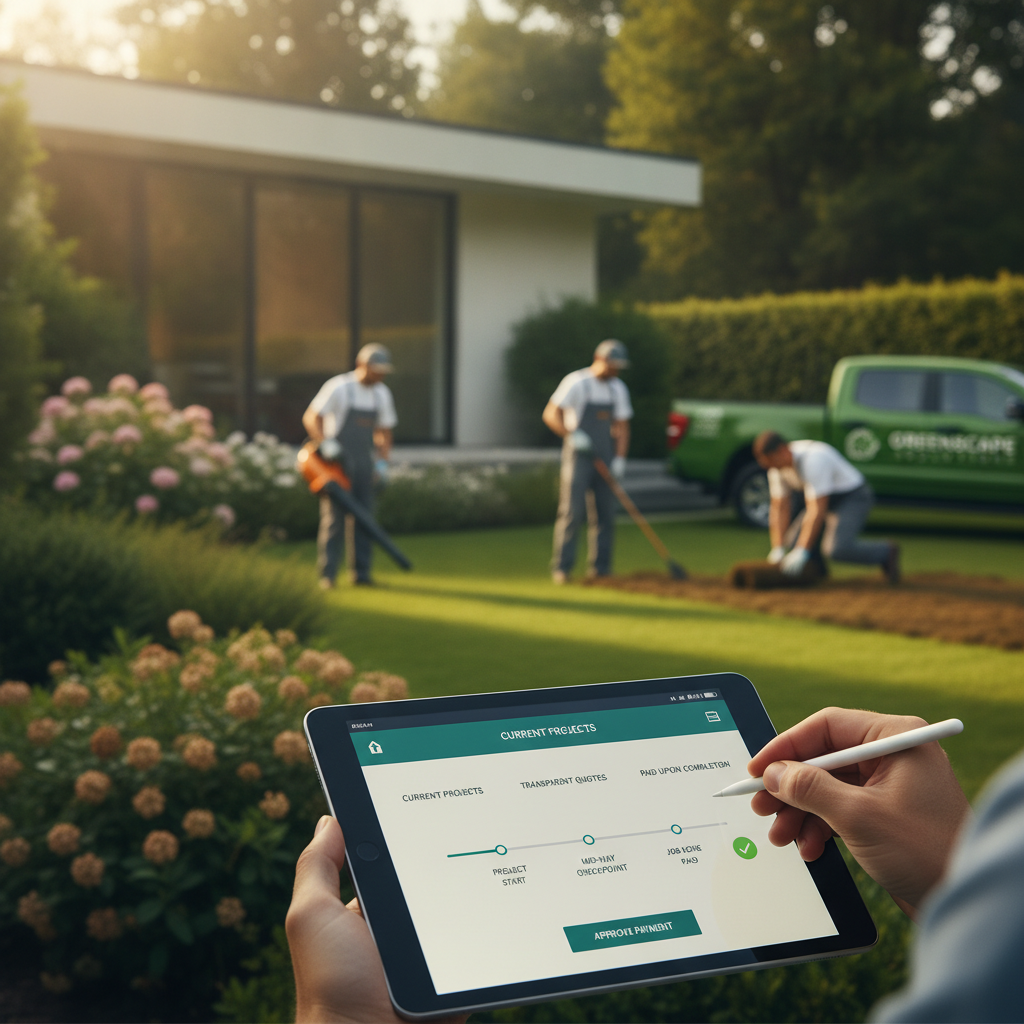
Your lawn‑care, garden‑design, or hard‑scape project should be exciting—not a nightmare of endless calls, vague estimates, and surprise bills. This guide shows you exactly what to know, how to vet providers, and why the old “pay‑per‑lead” model is killing the industry—and how an AI‑native platform called PLMBR fixes it.
Introduction
You’ve finally decided to revamp your backyard—maybe a new patio, a sustainable garden, or a simple lawn‑care overhaul. You start Googling “landscaping quotes” and quickly drown in a sea of phone calls, “ball‑park” estimates, and providers who disappear after the first conversation.
You’re not alone. The U.S. landscaping market is a $153.6 B industry with ≈ 640 k firms (2024). Yet 59 % of landscapers say the labor market is worse than pre‑COVID and many report cash‑flow problems caused by manual quoting and payment processes. At the same time, homeowners spend an average $8,150 on a typical landscaping remodel (range $2,600‑$13,700) and still end up guessing if the price is fair.
The root cause? A broken pay‑per‑lead lead‑generation pipeline that forces contractors to chase low‑quality leads, while homeowners endure endless phone tag and opaque pricing.
Pro‑Tip: If a contractor asks you to “pay a lead fee up front,” walk away. That fee is a red flag that the platform is more interested in your money than delivering a qualified match.
In the sections below, you’ll learn the facts every homeowner should know, how to vet providers without getting burned, where the old workflow collapses, and how the AI‑native home services workflow and payments platform PLMBR eliminates those pain points entirely.
What Homeowners Need To Know About Landscaping
1. Scope Matters More Than Size
Landscaping isn’t just “mow the lawn.” Projects can include:
- Design & planning – site analysis, CAD drawings, plant selection.
- Hardscape – patios, retaining walls, pathways, drainage.
- Softscape – planting trees, shrubs, flower beds, lawn installation.
- Irrigation & lighting – smart controllers, water‑use compliance.
Each component has its own material and labor costs, which is why a line‑item quote is essential for transparency.
2. Seasonal & Regional Price Drivers
| Service | Typical Cost Range (U.S.) | Seasonal Impact |
|---|---|---|
| Lawn‑care (monthly) | $100 – $200 per home | Higher in spring/summer |
| Garden design (full) | $2,500 – $9,000 | Peaks in early spring |
| Hardscape (patio, wall) | $5,000 – $15,000 | Summer demand drives up labor rates |
| Irrigation system install | $2,000 – $6,500 | Water‑restriction zones may require rebates |
Scroll to see all columns →
Source: RubyHome Landscaping Stats
3. Regulatory Shifts Are Real
Many states are tightening irrigation rules. For example, the EPA’s WaterSense program encourages drip‑irrigation and smart controllers, which can add $500‑$1,200 to an installation but save 30‑50 % on water bills over time.
Cost / Risk / Hiring Reality
Understanding the financial and risk landscape helps you set realistic expectations and avoid costly missteps.
| Category | Typical Range | What’s At Stake |
|---|---|---|
| Initial design fee | $300 – $800 | Guarantees a professional site plan; protects against scope creep. |
| Material markup | 15 % – 30 % over wholesale | Higher markup often hides low‑quality materials. |
| Labor rates | $45 – $85/hr (varies by region) | Labor shortages push rates up 10‑20 % YoY. |
| Progressive billing | Milestone‑based (e.g., 30 % deposit, 40 % mid‑job, 30 % final) | Reduces homeowner cash‑flow risk; protects contractor payment. |
| Dispute frequency | 12 % of projects encounter billing disputes (industry survey) | Escrow‑backed payments cut disputes by ~45 % (PLMBR internal data). |
| Lead‑fee cost | $30 – $150 per lead on platforms like Thumbtack/Angi | No guarantee of conversion; leads often already pre‑qualified elsewhere. |
Scroll to see all columns →
Sources: industry cost guides, InsuranceBee Landscaping Statistics, PLMBR internal metrics.
How To Vet Providers Without Getting Burned
-
Ask for a Structured Booking Packet
- Look for line‑item pricing, timelines, warranty terms, and a clear cancellation policy.
- Avoid “all‑inclusive” estimates that lump everything into a single number.
-
Check Licensing & Insurance
- Verify state licensing through the relevant board (e.g., Massachusetts Board of Building Regulations & Standards).
- Request a copy of liability insurance and workers’ comp.
-
Read Verified Reviews, Not Just Star Ratings
- Look for detailed comments about communication, on‑time delivery, and post‑job clean‑up.
-
Confirm Calendar Availability
- A provider that syncs their schedule with Google Calendar or Outlook demonstrates professionalism and reduces the risk of double‑booking.
-
Demand an Escrow‑Backed Payment Model
- Platforms that hold funds in escrow until work is verified protect you from “pay‑first, work‑never‑done” scams.
-
Use AI‑Assisted Comparison Tools
- Services that let you compare multiple structured quotes side‑by‑side save hours of spreadsheet work.
Pro‑Tip: If a contractor can’t produce a booking packet on the spot (or via an AI‑driven tool), that’s a warning sign they haven’t standardized their quoting process.
Where The Old Workflow Breaks
| Pain Point | Typical Experience | Why It Happens |
|---|---|---|
| Phone Tag | You call three times, leave voicemails, still get no answer. | Contractors juggle many inquiries manually; no central messaging hub. |
| Vague Estimates | “It’ll be around $5k.” No breakdown, no timeline. | Traditional lead‑gen sites push “ball‑park” figures to close the sale quickly. |
| Dead Leads | You pay for a lead, but the homeowner already hired someone else. | Pay‑per‑lead platforms often sell the same lead to multiple contractors. |
| Surprise Bills | Final invoice is 30 % higher than the quote. | Scope creep goes undocumented; no structured packet to lock scope. |
| Payment Insecurity | You pay upfront, then the contractor disappears. | No escrow; cash flow is forced onto the homeowner. |
| Dispute Resolution Delays | Weeks of back‑and‑forth with the contractor, no clear path. | No in‑context dispute system; parties resort to phone or email. |
Scroll to see all columns →
These breakdowns are why Thumbtack (Trustpilot 2.2/5) and Angi (Trustpilot 2.3/5) receive endless complaints from contractors about low‑quality leads and from homeowners about ghosting and hidden fees.
How PLMBR Changes This Workflow
PLMBR replaces the fragmented, manual process with an AI‑native, end‑to‑end workflow that serves both homeowners and providers. Here’s a step‑by‑step look at the new experience:
1. Conversational AI Intake (Seeker)
- You type or speak a natural description of your landscaping project, attach photos, and the AI instantly identifies the trade, urgency, and location.
- Example screenshot:
wizard_issue_with_attachment.png.
2. Semantic Search & Matching
- PLMBR uses vector embeddings to match you with the top‑fit landscapers in your city (e.g., Boston, New York City).
- Results appear as provider cards with ratings, availability, and a “Agent handle outreach” button (
seeker_agent_outreach.png).
3. AI Agent Outreach (Premium)
- A personal AI agent contacts multiple vetted providers simultaneously, tracks each reply, and surfaces only the relevant follow‑ups.
- You see a live status board (
seeker_agent_followup.png)—no more guessing who’s responding.
4. Structured Booking Packets
- Each provider’s AI‑generated packet includes line‑item pricing, material specs, milestone dates, and terms.
- Packets appear inline in the chat (
messages_packet_card.png) and can be compared side‑by‑side (compare_packets.png).
5. In‑Context Messaging & Billing
- All communication lives in a single thread. When a provider requests a milestone payment, a progressive billing request appears inline (
messages_billing_request.png).
6. Escrow‑Backed Payments
- Funds are authorized via Stripe and held in escrow until you confirm the work is complete.
- This eliminates the “pay‑first, work‑never‑done” risk.
7. AI‑Mediated Dispute Resolution
- If a disagreement arises, the AI suggests evidence packs, references the original packet, and offers tiered resolutions (
messages_dispute_form.png).
8. Zero Lead Fees for Providers
- Landscapers only connect with qualified, paying homeowners—no per‑lead cost, no wasted time.
Result: Homeowners receive transparent, comparable quotes in minutes, while providers focus on the job, not chasing leads.
Explore the platform yourself:
Questions To Ask Before Hiring
- Can you provide a structured booking packet with line‑item pricing?
- What is your insurance coverage and can I see proof?
- How do you handle progressive billing and escrow?
- Do you integrate with a calendar system for real‑time availability?
- What sustainability practices do you follow (e.g., water‑saving irrigation)?
- Do you have an AI‑agent or platform that guarantees zero lead fees?
If the answer to any of these is “no” or “I’m not sure,” keep looking.
Conclusion
The U.S. landscaping sector is booming, but pay‑per‑lead lead‑gen is draining profits and eroding trust. Homeowners suffer from vague quotes, endless phone tag, and insecure payments.
An AI‑native workflow—like the one PLMBR provides—delivers:
- Transparent, line‑item quotes
- Zero lead‑fee, qualified matches
- Escrow‑backed, milestone billing
- In‑context messaging and dispute resolution
By moving away from outdated lead‑gen platforms and embracing a workflow that puts homeowner control and provider efficiency first, you can finally enjoy a beautifully landscaped yard without the headaches.
Ready to experience a frictionless landscaping project?
- Visit the PLMBR homepage
- Browse landscaping professionals in your city
- Read more expert guides on the PLMBR blog
Your dream garden is just a few clicks—and one AI‑guided conversation—away.
References
- RubyHome – Landscaping Statistics
- InsuranceBee – Latest Landscaping Industry Statistics
- EPA WaterSense Program
- Thumbtack Trustpilot Reviews (2.2/5)
- Angi Trustpilot Reviews (2.3/5)
- Massachusetts Board of Building Regulations & Standards
- This Old House – Landscaping Budget Tips
- Better Business Bureau – Contractor Lead‑Gen Complaints