
The Ultimate Pressure‑Washing Guide: Costs, Risks, and How to Hire the Right Pro (Without the Phone‑Tag Nightmare)
Imagine you’re looking out at your home’s grimy driveway on a crisp Saturday morning. You know a fresh pressure‑wash would boost curb‑appeal instantly, but…
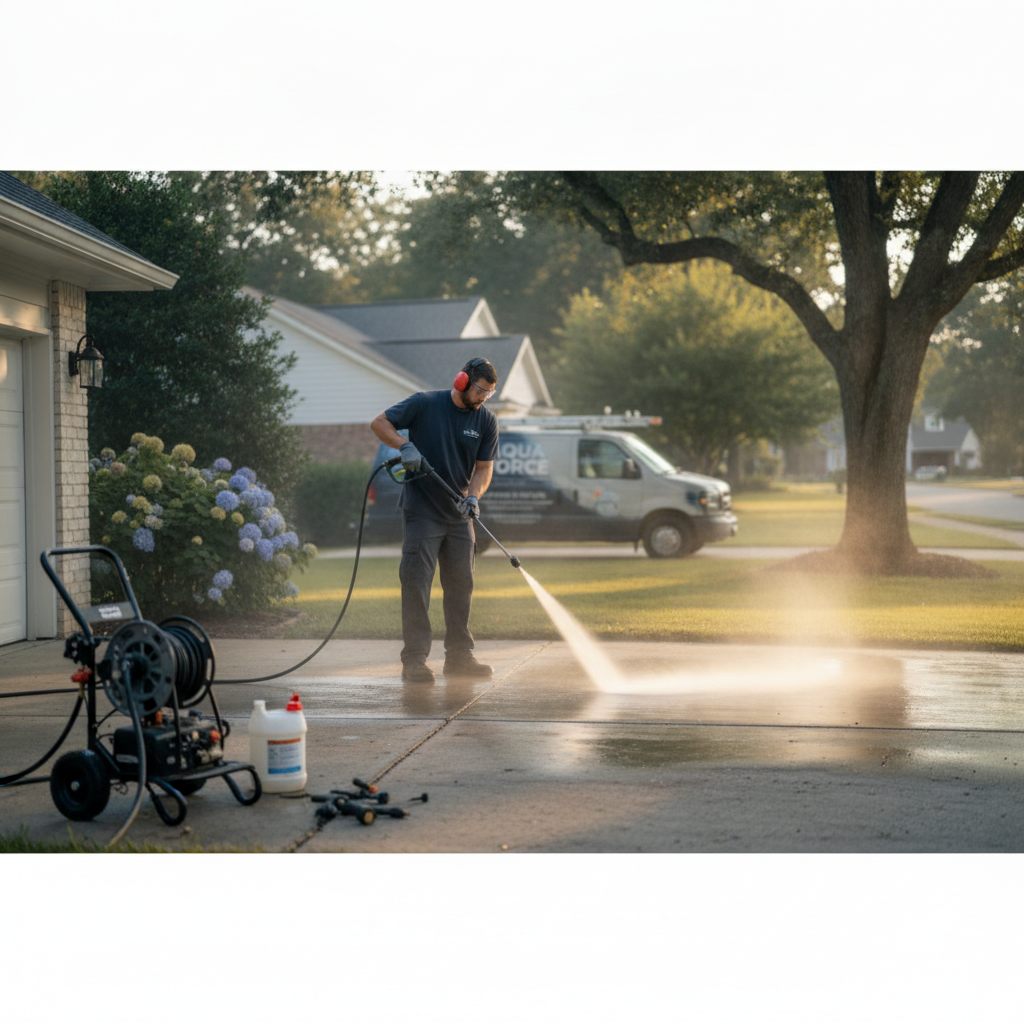
Imagine you’re looking out at your home’s grimy driveway on a crisp Saturday morning. You know a fresh pressure‑wash would boost curb‑appeal instantly, but the thought of chasing down quotes, juggling phone calls, and worrying about hidden fees makes you want to stay in bed. You’re not alone—homeowners nationwide cite “endless calls” and “vague estimates” as the top frustrations when hiring any home‑service professional.
According to the Home Service Customer Service Report, 68 % of homeowners say the biggest pain point is “phone‑tag and never‑ending back‑and‑forth” with contractors. That same report notes that 30‑40 % of complaints involve surprise costs or liability worries after the job is done.
If you’re ready to get your siding, deck, or driveway sparkling fast, transparently, and without paying per‑lead traps, keep reading. We’ll break down everything you need to know about pressure washing, the true cost landscape, how to vet providers, where the traditional hiring workflow breaks, and exactly how PLMBR—the AI‑native home services workflow and payments platform—solves those problems.
What Homeowners Need To Know About Pressure Washing
Pressure washing (sometimes called power washing) uses high‑pressure water jets to remove dirt, mold, mildew, oil, and loose paint from exterior surfaces. It’s ideal for:
- Driveways & sidewalks – eliminate oil stains and tire marks.
- House siding & brick – strip away mildew that can degrade paint.
- Decks & patios – refresh wood or concrete for a like‑new look.
- Fences & pool decks – keep surfaces slip‑free and aesthetically pleasing.
When to Call a Pro vs. DIY
| Situation | DIY Feasibility | Why a Pro May Be Safer |
|---|---|---|
| Surface is painted | Possible with low‑pressure, but risk of stripping paint | Professionals know PSI settings & can protect finishes |
| Large commercial‑scale job | Impractical; equipment rental costs explode | Pro brings industrial‑grade gear & insurance |
| HOA or municipal compliance required | Hard to document compliance | Pro provides signed work packets & permits |
| Presence of delicate landscaping | Risk of damage to plants | Pros use targeted no‑zzzz zones & protective coverings |
Scroll to see all columns →
Pro‑Tip: Even if you own a consumer‑grade pressure washer, always test on a hidden spot first. A mis‑set PSI can etch wood or force water behind siding, leading to costly repairs.
Cost, Risk, & Hiring Reality
Understanding the real numbers helps you budget accurately and avoid “scope creep.” Below is a snapshot of typical market data for residential pressure washing in the Northeast (Boston, NYC, Philadelphia) where PLMBR’s service hub is strongest.
| Service | Avg. Price (per sq ft) | Typical Range (per job) | Common Risks |
|---|---|---|---|
| Driveway | $0.12 – $0.20 | $150 – $400 (2,000 sq ft) | Slip‑and‑fall, surface etching |
| Siding | $0.15 – $0.25 | $250 – $600 (2,000 sq ft) | Paint stripping, water intrusion |
| Deck (wood) | $0.18 – $0.30 | $300 – $750 (1,500 sq ft) | Wood splintering, sealant damage |
| Concrete patio | $0.10 – $0.18 | $120 – $350 (1,200 sq ft) | Cracking if PSI too high |
Scroll to see all columns →
Key takeaways
- Average cost per square foot is $0.08–$0.25 (Industry data from HomeAdvisor).
- Escalating risk: 30‑40 % of complaints involve damage or slips, underscoring the need for insured, licensed pros.
- Hidden fees: Many lead‑gen platforms (e.g., Angi, Thumbtack) charge contractors $10‑$100 per lead, a cost that often gets passed to you as higher quotes. See the “lead‑fee complaints” research for details: Shawn McCadden article.
How To Vet Providers Without Getting Burned
-
Check Licensing & Insurance
- Verify a valid liability insurance policy (minimum $1 M) and, where required, a contractor’s license. PLMBR’s compliance dashboard automatically flags expired documents.
- External verification: use your state’s licensing board (e.g., NY Department of Labor – Home Improvement Contractors).
-
Read Verified Reviews, Not Star‑Only Scores
- Look for photo evidence of completed jobs and detailed written feedback.
- Avoid platforms that only show “5‑star” aggregates without context—this is a hallmark of pay‑per‑lead sites that incentivize fake reviews.
-
Ask for a Structured Booking Packet
- A modern booking packet includes a line‑item scope, hourly or flat rates, timeline, and terms.
- Why it matters: A line‑item list reduces “scope drift” and eliminates surprise bills.
-
Confirm Compliance With HOA / Municipal Rules
- Some cities (e.g., Boston) require a water‑runoff mitigation plan. Ask the pro to provide documentation or a signed statement.
-
Look for Progressive Billing Options
- For larger jobs (e.g., whole‑house washing), a milestone‑based payment schedule protects both parties.
Pro‑Tip: When a contractor can’t produce a detailed packet or refuses to show insurance, walk away. A reputable professional should welcome transparency.
Where The Old Workflow Breaks
Traditional home‑service hiring still follows a fragmented, phone‑tag‑heavy process:
| Step | Typical Pain Point | Real‑World Impact |
|---|---|---|
| 1️⃣ Intake | Homeowner fills out a generic form; must repeat details across multiple sites. | Time wasted, inconsistent information. |
| 2️⃣ Matching | Platforms use keyword search; you get irrelevant providers. | You waste hours calling dead leads. |
| 3️⃣ Quote Gathering | Vague “$200‑$400” estimates with no line items. | Surprise costs, negotiation fatigue. |
| 4️⃣ Communication | Separate email threads, missed calls, and “I never heard back.” | Delayed project start, frustration. |
| 5️⃣ Payment | Pay up front or after work; no escrow. | Risk of non‑completion or low‑quality work. |
| 6️⃣ Dispute | No central record; you must chase the platform’s support. | Long, costly resolution. |
Scroll to see all columns →
A 2024 consumer‑complaint survey found 45 % of homeowners who used lead‑gen platforms reported “dead leads”—providers that never responded after the initial contact. That inefficiency fuels the pay‑per‑lead nightmare where contractors pay for each contact, inflating your eventual price.
How PLMBR Changes This Workflow
PLMBR is not a marketplace; it’s an AI‑native workflow and payments platform that rewrites each broken step.
1️⃣ Conversational AI Intake
- Describe your issue in plain English (add photos).
- The AI instantly identifies the trade, urgency, and location, then asks only the follow‑up questions that improve match quality.
2️⃣ Semantic Search & Smart Matching
- Using vector embeddings, PLMBR finds providers whose past jobs, ratings, and availability best align with your needs—no more keyword mismatches.
3️⃣ Multi‑Provider AI Agent Outreach (Premium)
- One click launches an AI agent that contacts multiple vetted pros simultaneously. You receive a single “status” view, so you never chase phone tags again.
- Screenshot example:
seeker_agent_outreach.png.
4️⃣ Structured Booking Packets & Side‑by‑Side Comparison
- Each provider’s AI‑generated packet includes a line‑item scope, price per sq ft, milestones, and terms.
- Use the compare‑packets view (
compare_packets.png) to see every detail at a glance—no hidden fees.
5️⃣ In‑Context Messaging & Escrow Payments
- Chat with providers inside the same thread where the packet lives.
- Payments are held in Stripe‑powered escrow; funds release only after you confirm the work meets the packet specifications.
6️⃣ Progressive Billing & AI‑Mediated Dispute Resolution
- For larger jobs, set milestone payments (e.g., 30 % after prep, 70 % on completion).
- If a dispute arises, the AI pulls all evidence—photos, messages, packets—and recommends a resolution, dramatically cutting resolution time.
7️⃣ Zero Dead Leads & No Lead Fees
- Because PLMBR only connects you with qualified, pre‑screened jobs, providers never pay per lead. This eliminates the “pay‑per‑lead” cost inflation that plagues Angi and Thumbtack.
Result: Homeowners get fast, transparent quotes; providers get real, paying jobs—a win‑win that the old lead‑gen model can’t match.
Explore PLMBR for yourself:
- PLMBR homepage
- Find Pressure Washing pros on PLMBR
- Compare quotes on PLMBR
- Read more home service guides
Questions To Ask Before Hiring
- Do you have current liability insurance and a valid contractor’s license?
- Can you provide a detailed booking packet with line‑item pricing?
- How do you handle payment—do you use escrow or progressive billing?
- What is your standard response time after the job is completed for any follow‑up?
- Do you have experience with my specific surface (e.g., vinyl siding vs. brick)?
- Are you familiar with local HOA or city water‑runoff regulations?
Having clear answers to these questions will protect you from scope creep, hidden fees, and liability issues.
Conclusion
Pressure washing can dramatically boost your home’s curb appeal, but the old hiring workflow—filled with phone tag, vague estimates, and per‑lead fees—still scares many homeowners away. By understanding real costs, vetting providers rigorously, and leveraging a modern, AI‑driven platform, you can:
- Get transparent, line‑item quotes in minutes
- Avoid dead leads and hidden fees
- Secure insurance‑backed, escrow‑protected payments
- Resolve disputes quickly with AI‑mediated evidence
PLMBR delivers exactly that: an end‑to‑end, AI‑native home services workflow that puts you in control and eliminates the frustrations that have plagued the industry for years.
Ready to wash away the hassle? Visit the PLMBR Pressure‑Washing page, upload a photo of your project, and let the AI do the heavy lifting—so you can focus on enjoying a sparkling home.
Helpful External Resources
- Environmental Protection Agency (EPA) – Guidance on water runoff and pressure‑washing best practices: EPA Pressure Washing
- Occupational Safety and Health Administration (OSHA) – Safety standards for high‑pressure equipment: OSHA Pressure Washing Safety
- Better Business Bureau (BBB) – Check contractor ratings and complaints: BBB Home Services
- This Old House – Expert articles on DIY vs. professional pressure washing: This Old House Pressure Washing
By following this guide and using an AI‑powered platform like PLMBR, you’ll eliminate the guesswork, protect your budget, and get that driveway shining in record time. Happy washing!