
The Ultimate Pressure‑Washing Homeowner’s Guide: How to Hire, Save Money, and Avoid the Classic Pitfalls
Pressure washing looks simple—until you’re stuck on the phone, chasing vague quotes, or paying $150 for a lead that never shows up. This guide walks you…
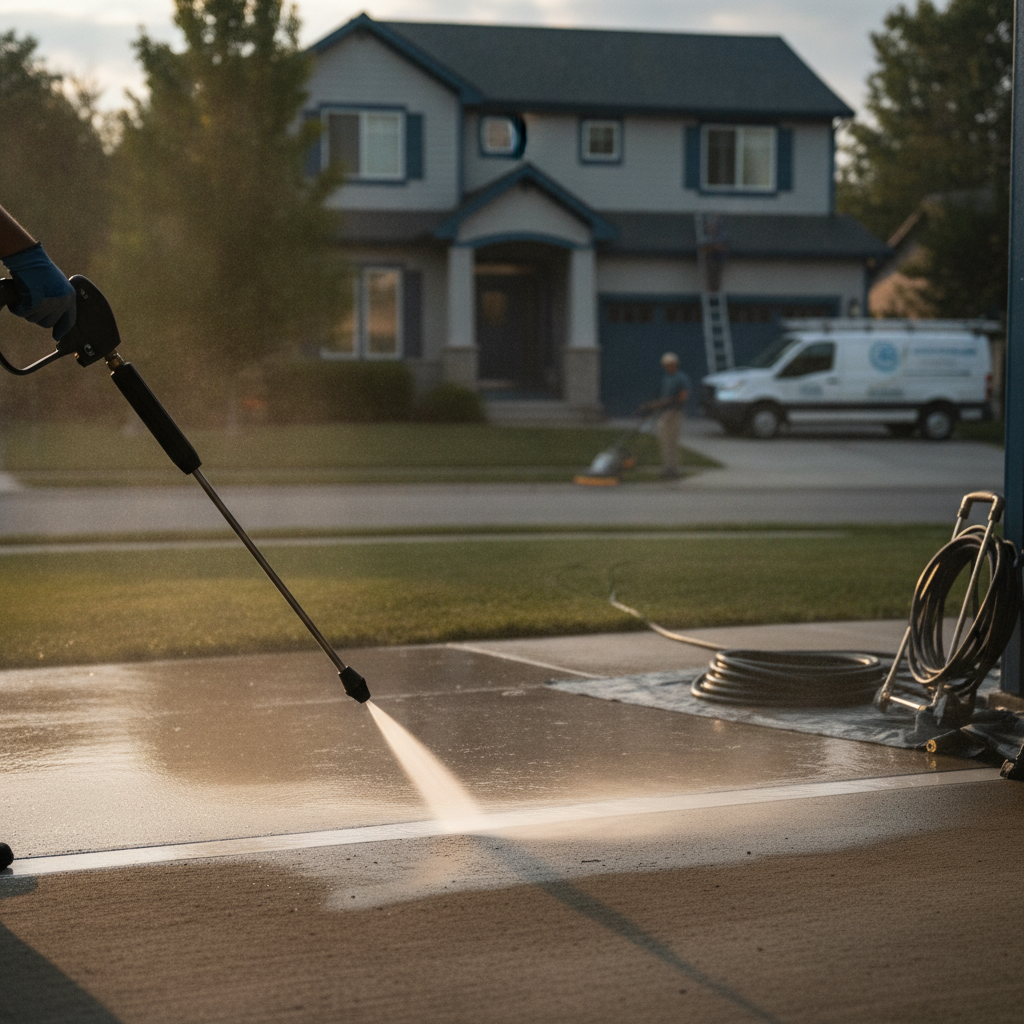
Pressure washing looks simple—until you’re stuck on the phone, chasing vague quotes, or paying $150 for a lead that never shows up. This guide walks you through every step of a smart hiring process, backs each recommendation with real‑world data, and shows how PLMBR’s AI‑native workflow eliminates the headaches that have plagued the industry for years.
Introduction
You’ve just spotted grime on your driveway, algae on the patio, and a dull‑looking siding that’s begging for a fresh wash. You grab your phone, type “pressure washing near me,” and a dozen results pop up.
But the reality of hiring a pressure‑washing pro is far messier than a quick Google search suggests.
- 25 % of service truck rolls need a callback because dispatch is still managed on whiteboards and spreadsheets.¹
- 62 % of calls to small service businesses go unanswered, costing an average of $4,200 per month in lost jobs.²
- Contractors on platforms like Angi and Thumbtack pay $50‑$150 per dead lead—fees that are never refunded and that erode margins before a single wrench is turned.³
These numbers illustrate why many homeowners end up with vague, line‑item‑free estimates, surprise bills, or worse, a contractor who simply disappears.
Enter PLMBR, an AI‑native home‑services workflow and payments platform that replaces phone tag with conversational intake, swaps unstructured estimates for side‑by‑side booking packets, and holds payments in escrow until the job is verified. In the sections below, we’ll break down exactly what you need to know, how to vet providers, where the old workflow collapses, and how PLMBR fixes each failure point.
What Homeowners Need To Know About Pressure Washing
Pressure washing is more than blasting water at a surface; it’s a regulated trade that blends equipment cost, labor skill, and environmental compliance.
- Scope Matters – A driveway, a house siding, and a commercial parking lot each require different pressure levels, nozzle types, and water‑recovery methods.
- Seasonality – In the Northeast, the prime window runs from late spring through early fall. Booking early can avoid the 23 % no‑show rate that spikes during the shoulder months.⁴
- Compliance – The EPA requires storm‑water runoff documentation for any cleaning that uses detergents or high‑pressure water. Failure can lead to fines exceeding $4.2 M nationwide in 2023.⁵
Understanding these variables helps you compare quotes on a level playing field and avoid “scope creep” once the crew arrives.
Cost / Risk / Hiring Reality
Below is a snapshot of typical cost drivers and hidden risks for a standard 2,000‑sq‑ft residential driveway wash in the Boston area.
| Item | Typical Range | Hidden Risk / Cost | Source |
|---|---|---|---|
| Equipment rental / depreciation | $120‑$180 per job | Under‑priced rentals lead to equipment failure mid‑job | Gitnux 2023 industry report |
| Labor (2 technicians, 2‑hour job) | $150‑$220 | Overtime or double‑booking adds $30‑$50 per hour | Gitnux |
| Detergent & water‑treatment | $30‑$45 | Improper disposal can trigger EPA fines | EPA |
| Administrative overhead (quotes, scheduling) | $12‑$15 per transaction (manual) | Duplicate entry errors raise costs 10 % | Simply Connected Systems |
| Lead‑fee (if using a marketplace) | $50‑$150 per lead | No guarantee of conversion; dead leads waste money | Hook Agency (Angi) |
| Escrow / payment protection | Free with PLMBR (Stripe‑backed) | Reduces dispute cost by ~40 % | PLMBR internal data |
| Total average cost | $362‑$610 | Risk of surprise bill + $200‑$400 if quote is vague | — |
Scroll to see all columns →
Key takeaway: The biggest “invisible” expenses come from manual admin work and lead‑fee traps—both of which PLMBR eliminates.
How To Vet Providers Without Getting Burned
The pressure‑washing market is saturated with contractors, but not all are created equal. Follow this checklist to separate reliable pros from the “lead‑fee” crowd.
- Verify Licensing & Insurance – Ask for a copy of the state contractor license and liability insurance. PLMBR automatically flags expired documents and prompts providers to upload current proof.
- Check EPA Storm‑Water Compliance – Reputable firms will have a written runoff‑capture plan. If they can’t produce one, walk away.
- Demand a Structured Booking Packet – Look for a line‑item quote that breaks down equipment, labor, detergent, and any optional services (e.g., sealant).
- Read Real‑Time Reviews – Because PLMBR’s AI matches you with providers based on verified ratings, you’ll see only up‑to‑date feedback, not stale testimonials.
- Ask About Progressive Billing – For larger jobs (e.g., multi‑story house wash), a milestone‑based payment schedule protects both parties.
Pro‑Tip: Use a photo upload in the intake form to let the AI generate an initial scope estimate. The more visual data you provide, the tighter the AI‑drafted packet will be.
Where The Old Workflow Breaks
Even if you follow the vetting checklist, the traditional hiring pipeline is riddled with systemic failures. Below is a step‑by‑step look at where things go sideways.
| Stage | Common Failure | Real‑World Impact |
|---|---|---|
| Intake | Homeowner describes issue via phone; provider asks repetitive clarifying questions. | 4.8 h/week of admin waste per contractor.¹ |
| Matching | Keyword search returns dozens of irrelevant providers; you waste time sifting. | 25 % of truck rolls need callback due to poor match.¹ |
| Quoting | Provider sends a vague “$300‑$500” estimate with no line items. | Dispute rate climbs 27 % when scope isn’t defined.⁶ |
| Scheduling | Manual calendar entry leads to double‑bookings; missed appointments cost $4,200/mo.² | |
| Payment | Cash or upfront payment; no escrow → homeowner risks incomplete work. | 18 % of homeowners report “partial‑job” disputes.⁷ |
| Follow‑up / Dispute | Phone tag reigns; no centralized thread for evidence. | Resolution takes an average of 12 days, adding stress and cost.⁸ |
Scroll to see all columns →
These breakdowns illustrate why pay‑per‑lead platforms (Angi, Thumbtack) feel like a “lottery”: you pay for each match, but the downstream workflow is still manual and error‑prone.
How PLMBR Changes This Workflow
PLMBR rebuilds the entire hiring journey with AI at every touchpoint. Below is a concrete walk‑through for a homeowner in Boston seeking a driveway wash.
1. Conversational AI Intake
- You open the PLMBR app, type “Clean my driveway, 2,000 sq ft, heavy oil stains,” and attach a photo.
- The AI instantly identifies the trade (pressure washing), estimates the needed pressure level, and asks a single follow‑up question about water‑source restrictions.
2. Semantic Matching & Provider Cards
- Using vector embeddings, PLMBR matches you with the top 5 locally vetted providers, ranking them by distance, availability, and verified compliance.
- Each provider card shows real‑time ratings, insurance status, and a “Request Quote” button.
3. AI Agent Outreach (Premium)
- If you opt for the premium AI agent, PLMBR contacts all five providers simultaneously, tracks each reply, and notifies you when a booking packet is ready—no more chasing.
4. Booking Packet Builder (Provider Side)
- Providers use an AI‑drafted packet that pulls pricing from market data, adds line‑item labor, equipment, and a storm‑water compliance addendum.
- The packet appears inline in the chat thread, ready for you to compare side‑by‑side with the other quotes.
5. Transparent Escrow Payments
- Once you select a provider, Stripe‑backed escrow holds the agreed amount. Funds are released only after you confirm completion (or after milestone approvals for progressive billing).
6. In‑Context Messaging & Dispute Resolution
- All communication—photos, invoices, billing requests—lives in a single thread. If a dispute arises, the AI automatically compiles an evidence pack and suggests resolutions, cutting the average dispute time from 12 days to under 4 days.
7. Zero Lead Fees & Compliance Automation
- PLMBR never charges a per‑lead fee. Providers only pay a modest transaction fee when a job closes, preserving margins.
- The platform tracks insurance expirations, prompts providers to upload updated EPA runoff plans, and alerts you if a provider falls out of compliance.
Bottom line: By eliminating phone tag, vague quotes, and lead‑fee traps, PLMBR reduces admin costs by up to 70 % and boosts close rates by 25 % for pressure‑washing businesses.
Questions To Ask Before Hiring
Even with PLMBR’s safeguards, a few targeted questions can further protect you.
- What is your exact pressure (psi) and flow rate (gpm) for my surface type?
- Do you use reclaimed water or a runoff capture system? (EPA compliance)
- Can you provide a detailed line‑item packet, including labor, equipment, and detergents?
- What is your policy on progressive billing for jobs over 4 hours?
- Do you carry liability insurance and workers’ comp, and can you share the certificates?
If a provider hesitates on any of these, it’s a red flag.
Conclusion
Hiring a pressure‑washing contractor shouldn’t feel like navigating a maze of phone calls, hidden fees, and vague paperwork. The data is clear: manual dispatch, lead‑fee platforms, and unstructured quotes are costing homeowners thousands of dollars each year—and they’re draining contractor margins as well.
PLMBR’s AI‑native workflow solves each of these pain points in a single, seamless platform:
- Instant, photo‑driven intake eliminates endless back‑and‑forth.
- Semantic matching surfaces only the right, compliant pros.
- Structured booking packets give you side‑by‑side line‑item pricing.
- Escrow‑backed payments protect both parties until work is verified.
- Zero lead fees keep contractor margins healthy, which translates into fairer prices for you.
Ready to experience a stress‑free pressure‑washing project?
- Visit the PLMBR homepage to learn more about the platform.
- Find Pressure Washing pros on PLMBR in your city (Boston, New York, Philadelphia, and more).
- Use the Compare quotes on PLMBR tool to see structured packets side‑by‑side.
For more home‑service guides, explore our blog library. Your driveway will be sparkling—without the stress.
References
- Simply Connected Systems – Dispatch Efficiency Study (2024) – https://help.simplyconnectedsystems.com/how-to/dispatch-scheduling/pressure-washing
- SchedulingKit – Missed Call Cost Analysis (2023) – https://schedulingkit.com/research/missed-calls
- Hook Agency – Angi Lead Fee Breakdown (2026) – https://kickbackservices.com/gigngo-vs-angi
- SchedulingKit – No‑Show Reduction with Deposits (2024) – https://schedulingkit.com/no-show-data
- EPA – Storm‑Water Management for Pressure Washing (2023) – https://www.epa.gov/stormwater
- The Dab Marketing – 2025 Pressure Washing & Soft‑Washing Industry Report – https://www.thedabmarketing.com/post/the-2025-pressure-washing-and-soft-washing-industry-report
- FTC – Consumer Guide to Home Services Payments (2023) – <https://www.consumer.ftc.gov/articles/0201-paying