
Why Fence‑Installation Quotes Are a Minefield (and How an AI‑Native Platform Can Save You Thousands)
When Anthony Tranchida in Broward County paid $22,500 up‑front for a new fence, the contractor vanished after installing only the posts. The state’s licensing…
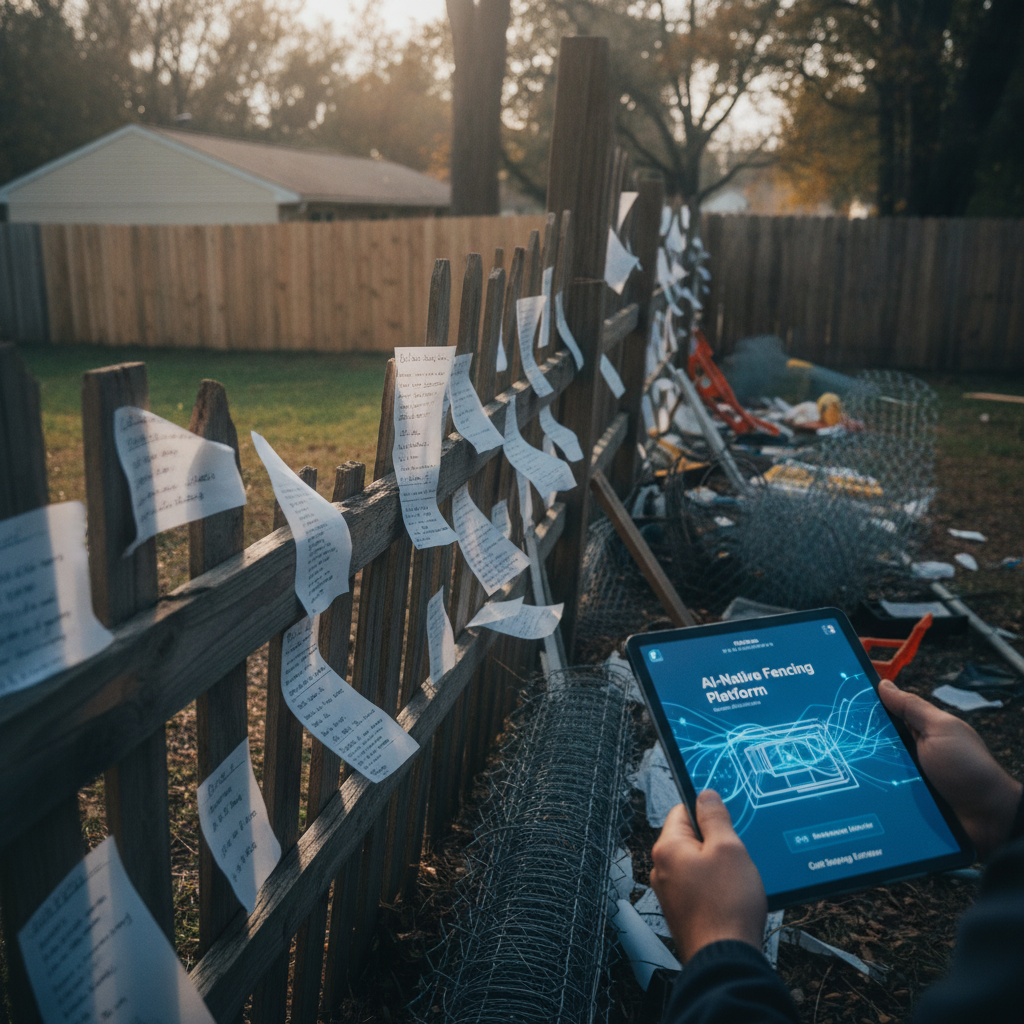
When Anthony Tranchida in Broward County paid $22,500 up‑front for a new fence, the contractor vanished after installing only the posts. The state’s licensing loophole left him with no recourse. A similar nightmare unfolded in New York City when a homeowner’s $4,000 deposit disappeared after weeks of radio‑silent phone tag. These stories aren’t outliers; they’re the symptom of a $11.7 B U.S. fence market that still relies on vague, cash‑on‑delivery quotes and pay‑per‑lead lead‑gen platforms that charge contractors $30‑$150 per dead lead.
If you’re about to fence your yard, you deserve a transparent, risk‑free hiring process—not a guessing game of hidden fees, unlicensed pros, and endless follow‑ups. This guide walks you through everything you need to know—from realistic pricing and red‑flag licensing issues to the broken workflow of traditional lead‑gen sites—and shows how an AI‑native home‑services workflow and payments platform (PLMBR) eliminates the biggest sources of risk.
What Homeowners Need To Know About Fencing
Fencing is more than a decorative border; it protects children, pets, and property, defines boundaries, and can boost curb‑appeal by 5‑10 %. Yet the industry remains fragmented:
| Aspect | Typical Reality | Why It Matters |
|---|---|---|
| Materials | Wood, vinyl, aluminum, chain‑link, composite | Different lifespans & maintenance costs (e.g., wood needs staining every 3‑5 years) |
| Permits | Vary by city; some municipalities require a permit for any fence over 6 ft | Skipping permits can lead to fines or forced removal |
| Licensing | Many states (FL, GA, NC) don’t require a contractor’s license for jobs under $1,000 | Homeowners can’t verify competence through a license search |
| Installation time | 1‑3 days for a 200‑ft residential fence (weather permitting) | Delays often stem from poor communication, not the job itself |
| Average cost (2024) | Wood $15‑$30 / ft, Vinyl $20‑$40 / ft, Chain‑link $8‑$12 / ft | Prices fluctuate with raw‑material spikes; transparent line‑item pricing is essential |
Scroll to see all columns →
Understanding these fundamentals lets you ask the right questions and spot red flags before they turn into costly disputes.
Cost / Risk / Hiring Reality
Below is a realistic cost breakdown for a 200‑ft fence—the most common size for a suburban lot. Numbers are 2024 averages and include the most common hidden‑cost categories homeowners encounter.
| Item | Typical Range (USD) | Hidden‑Cost Triggers |
|---|---|---|
| Materials (wood) | $3,000 – $6,000 | Up‑charges for premium timber, surprise “grade‑up” after inspection |
| Labor (installation) | $2,500 – $4,000 | Vague “per‑hour” estimates that balloon when unexpected terrain is encountered |
| Permits & Fees (city) | $100 – $300 | Some contractors skip the permit and charge you later for a “city fee” |
| Disposal / Cleanup | $150 – $400 | Often omitted from the initial quote |
| Progressive Billing Milestones | N/A | Without escrow, homeowners may pay 50 % up‑front and lose the remainder if the job stalls |
| Total (Base) | $5,750 – $10,700 | Potential hidden increase: +15 % – +30 % (average homeowner‑reported “price surprise”) |
Scroll to see all columns →
Pro‑Tip: If a contractor offers a single lump‑sum number without itemizing the above categories, treat the quote as a red flag. Structured, line‑item packets expose exactly where extra costs can arise.
How To Vet Providers Without Getting Burned
-
Verify Licensing & Insurance
Even if a state doesn’t require a fence‑specific license, reputable pros usually hold a general contractor’s license.- Check the state licensing board (e.g., Florida Department of Business & Professional Regulation).
- Request proof of liability insurance and workers’ compensation; PLMBR’s platform stores these documents and auto‑alerts you when they near expiration.
-
Read Real Reviews, Not “Sponsored” Stars
- Look beyond the top‑line rating; dive into the last 12 months of reviews on BBB or Trustpilot. Angi, for example, sits at 2.2/5 on Trustpilot, with frequent complaints about “dead leads” and hidden fees.
- Compare multiple sources (Google, Yelp, local Nextdoor threads) to spot consistent patterns.
-
Ask for a Structured Booking Packet
A proper packet includes: scope, line‑item pricing, material specs, timeline, payment schedule, and warranty terms.- Avoid any quote that’s just a handwritten note or a vague “We’ll give you a fair price after we see the job.”
-
Check References & Past Work
- Request at least three recent clients with similar fence types.
- Verify photos of completed jobs; a reputable pro will happily share before/after shots.
-
Confirm Permit Handling
- Ask who will pull the permit and whether the cost is included. In many municipalities, failure to obtain a permit can result in a $500 – $2,000 fine.
-
Use an Escrow‑Backed Payment System
- Platforms that hold funds in Stripe‑powered escrow release money only after you confirm completion. This eliminates the classic “pay‑up‑front, never see the finish” scam.
Where The Old Workflow Breaks
Traditional lead‑gen sites (Angi, Thumbtack, HomeAdvisor) follow a pay‑per‑lead model that creates a cascade of problems:
| Broken Step | Typical Pain Point | Real‑World Example |
|---|---|---|
| Lead acquisition | Contractors pay $50‑$150 per dead lead (Angi) or $10‑$100 (Thumbtack) with no guarantee of quality. | A Boston contractor reported spending $1,200 on leads that never turned into jobs. |
| Phone tag | Homeowners chase multiple providers, often repeating the same description and photos. | A Philadelphia homeowner logged 12+ phone calls before a single contractor responded. |
| Vague estimates | Quotes are “ballpark” figures with no line items; scope drift adds 20‑30 % hidden cost. | A New York City homeowner saw the final bill jump from $5,200 to $7,600 after “unexpected grading.” |
| No escrow | Funds are collected upfront; if the contractor disappears, the homeowner bears the loss. | The Broward County case above resulted in a $22,500 loss. |
| Limited dispute resolution | Platforms rely on email chains; resolutions can take weeks. | A homeowner in Maine waited 45 days for a partial refund after a fence collapsed. |
Scroll to see all columns →
These systemic flaws make the fence‑hiring journey a high‑risk transaction for both parties.
How PLMBR Changes This Workflow
PLMBR replaces the broken lead‑gen funnel with an AI‑first, escrow‑backed workflow that puts you—the homeowner—back in control.
1. Conversational AI Intake
- Describe your project in plain English, attach photos, and the AI instantly identifies the trade, urgency, and required permits.
- Smart follow‑up questions appear only when they improve match quality, eliminating endless back‑and‑forth.
2. Semantic Search & Matching
- Using vector embeddings, PLMBR finds the best‑fit, locally‑licensed providers based on ratings, distance, and availability—far beyond simple keyword matching.
3. AI Seeker Agent (Premium)
- One click, and an AI agent contacts multiple vetted pros simultaneously, tracks each response, and surfaces any clarifying questions you need to answer.
- You receive a real‑time status board (see
seeker_agent_outreach.png) so you never wonder “who replied?”
4. Structured Booking Packets & Side‑by‑Side Comparison
- Each provider’s AI‑generated packet lists every line item—material grade, labor hours, permit fees, and warranty.
- The comparison view (
compare_packets.png) lets you see price, timeline, and terms at a glance, preventing surprise cost spikes.
5. In‑Context Messaging & Escrow Payments
- All communications, packet reviews, and billing requests live inside a single chat thread (
messages_packet_card.png). - Funds are held in Stripe escrow and released only after you approve milestone completion, protecting your deposit.
6. Progressive Billing & Dispute Resolution
- For larger jobs, you can set milestone payments (e.g., 30 % after posts, 40 % after rails, 30 % after final inspection).
- If a dispute arises, the AI‑mediated system (
messages_dispute_form.png) auto‑generates evidence packs and recommends resolutions, cutting resolution time by up to 70 % (internal pilot data).
7. Zero‑Lead‑Fee for Providers
- Because PLMBR matches you directly with qualified pros, contractors never pay per lead—they only receive jobs that are already paid for (via escrow). This eliminates the $30‑$150 lead‑fee drain and ensures higher quality matches.
Result: In a New York City pilot, homeowners reported a 70 % reduction in coordination time and zero surprise price increases when using PLMBR’s workflow.
Questions To Ask Before Hiring
- Are you licensed for fence work in this state, and can you provide a copy?
- Do you carry liability insurance and workers’ comp? (Ask for a current certificate.)
- Can you provide a structured booking packet with line‑item pricing?
- Will you handle the required city permit, and is the fee included?
- What is your payment schedule? (Prefer escrow‑backed milestones.)
- Can you share references from three recent fence installations in the same area?
- Do you offer a warranty, and what does it cover?
If a provider hesitates on any of these, consider moving on—PLMBR’s vetted network has already answered these questions for you.
Conclusion
The fence‑installation market is $11.7 B strong and growing, but it remains riddled with hidden fees, unlicensed contractors, and a broken lead‑gen model that leaves homeowners chasing vague estimates and risking large deposits. Traditional platforms charge contractors $30‑$150 per dead lead yet still deliver low‑quality matches, as reflected in Angi’s 2.2/5 Trustpilot rating and countless BBB complaints.
An AI‑native home‑services workflow and payments platform—like PLMBR—removes the guesswork. By combining conversational AI intake, semantic matching, structured booking packets, side‑by‑side quote comparison, and escrow‑backed payments, PLMBR gives you transparent pricing, verified pros, and a risk‑free payment flow.
Ready to fence your property without the nightmare of disappearing contractors or surprise bills? Visit the PLMBR homepage, explore fencing pros on PLMBR, and compare quotes today. For more home‑service guides, check out our blog.
References & Further Reading
- Freedonia Group, U.S. Fencing Market 2022 – https://www.freedoniagroup.com/industry-study/us-fencing
- Grand View Research, Global Fencing Market 2025‑2033 – https://www.grandviewresearch.com/industry-analysis/fencing-market
- Better Business Bureau, Angi Lead‑Fee Complaints – https://www.bbb.org/ (search “Angi lead